Using this Custom Labels Cost Guide for sourcing helps procurement managers bypass the high setup fees and over-engineered materials that directly shrink product margins. Fragmented ordering cadences and misaligned printing methods frequently inflate packaging budgets by up to forty percent.
This analysis benchmarks standard label materials against industry standards. We evaluate per-unit baseline pricing from two cents to fifty cents and order volume amortization curves to help you secure a scalable result.
कस्टम लेबल की लागत कितनी है
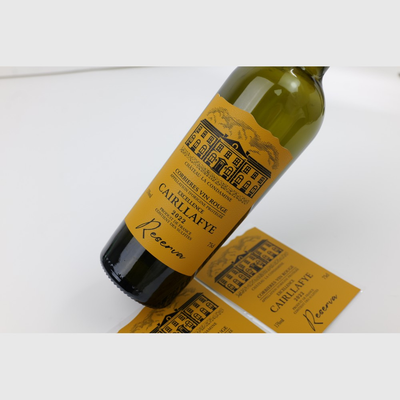
Custom labels typically range from a few cents to several dollars per piece, depending on material selection, order volume, मुद्रण विधि, and finishing requirements.
Calculating your custom labels cost requires looking beyond a single label price to analyze how materials, print setups, and production scale interact. While standard applications may remain cost-effective, specialty materials and advanced finishing options can significantly increase the overall unit cost based on your production requirements.
Overall Market Pricing and Industry Benchmarks
Standard packaging operations utilize distinct pricing tiers based on product type and baseline volume. While entry-level runs carry a premium, high-volume production schedules bring baseline costs down significantly.
- Standard product labels: General consumer goods like cosmetics, food, or dietary supplements typically fall into a mid-range pricing category, with final costs depending on material selection, label size, order volume, and finishing requirements.
- Low-volume premium runs: Small batches or specialized designs typically have higher unit costs due to setup requirements, specialty materials, and premium finishing processes.
- High-volume utility runs: Basic shipping, barcode, and simplified paper labels achieve lower unit costs when produced in large quantities due to improved production efficiency and reduced setup impact.
Price Variance by Material Selection
Substrate selection dictates both the aesthetic quality and the physical durability of your label. Matching your material to the exposure environment prevents over-engineering and keeps budgets balanced.
Paper labels are generally the most economical option for standard applications. Synthetic materials such as बीओपीपी, PET, and vinyl usually cost more because they provide better durability, moisture resistance, and performance. विशेष सामग्री, including metallic films, textured stocks, and premium papers, are typically used for premium packaging and luxury products.
The Impact of Order Volume and Packaging Format
Your production volume remains the primary lever for lowering unit costs. Amortizing setup fees over longer runs creates a steep price curve that rewards bulk commitments.
- Scale discounts: Increasing order quantities typically reduces the per-label cost because fixed setup expenses are distributed across more labels, improving overall production efficiency.
- Roll-form BOPP: It usually becomes more cost-effective as order volumes increase because larger production runs help reduce the impact of setup and preparation costs.
- Sheet custom labels: Unit costs are typically much higher for ultra-low runs and decrease as order quantities increase, making larger production volumes more economical for ongoing packaging needs.
Print Methods, Finishes, and Setup Fees
The printing technology and secondary finishing steps apply direct cost additions to the base substrate. Selecting digital methods eliminates initial tooling overhead, while analog methods offer superior long-run economy.
- Printing technology: Digital printing is generally more suitable for short runs, multiple SKUs, and flexible customization, while offset and flexographic printing usually become more economical for larger production volumes.
- Finishing & coatings: Glossy or matte lamination and protective UV coatings can increase label costs depending on the material, coverage area, finishing method, and order quantity.
- Plate & setup charges: raditional physical press runs may involve one-time setup costs for plate preparation, machine calibration, and production setup, whereas digital printing typically requires fewer upfront preparation steps.
कस्टम लेबल मूल्य निर्धारण को प्रभावित करने वाले कारक

How do print manufacturers calculate custom labels pricing, and why does one batch cost pennies while another runs a dollar per unit? Understanding the hidden drivers of these manufacturing charges helps you optimize your packaging budget without sacrificing shelf appeal.
Custom label costs depend on order volume, substrate chemistry, and structural complexity, with bulk runs diluting setup costs to achieve up to 70% per-unit savings.
| Pricing Tier | Common Materials & Finishes | Typical Unit Cost |
|---|---|---|
| Economy | Standard paper, uncoated, basic permanent adhesive | Starting from a few cents per label, depending on order volume and specifications |
| Standard | White BOPP, matte or gloss lamination | Generally higher than paper labels due to improved durability and finishing requirements |
| Premium | Clear BOPP, विनाइल, soft-touch lamination, spot UV | Higher unit costs due to specialty materials and additional finishing processes |
| Luxury / Specialty | Metallic films, holographic stocks, hot foil stamping, embossing | Premium pricing category influenced by material selection, tooling, and production complexity |
Material Selection and Construction
Choosing standard paper instead of durable films keeps your initial bill low. But paper fails instantly when exposed to moisture, तेल, or heavy handling. Your application environment dictates your base material cost.
- Standard Paper: Generally the most cost-efficient material choice for dry, indoor applications where basic print quality and affordability are the main priorities.
- बीओपीपी & Synthetic Films: Typically cost more than paper labels while providing improved water resistance, टिकाऊपन, and tear resistance for applications such as cosmetics, food, and beverage packaging.
- Specialty Adhesives & Liners: Cold-temperature, high-tack, or removable adhesives may increase costs depending on performance requirements. Premium liners designed for high-speed automation can also add expense due to their enhanced durability and processing needs.
Over-engineering your substrate wastes capital. Match your material strictly to the real-world conditions your product will face during transport and retail display.
Label Dimensions and Shape Complexity
Every square inch of your design directly impacts raw material consumption. Large wrap-around labels naturally require more face stock, गोंद, and liner, which pushes up the final unit price.
- Standard Shapes: Circles, squares, and rectangles utilize pre-existing house dies. Opting for these standard geometries eliminates upfront tooling charges.
- Custom Die-Cut Shapes: Custom shapes may require additional tooling costs depending on the design complexity, label size, and production requirements. Standard shapes usually help reduce these additional expenses.
- Web Utilization: Complex shapes often leave wide, unusable gaps on the press web, increasing material waste during the converting process.
Optimizing label dimensions can reduce material waste and improve production efficiency, especially for large-volume orders.
Order Volume and Run Strategy
Fixed prepress, machine setup, and calibration costs dominate short runs. Spreading these fixed expenses across a larger quantity sharply dilutes your cost per unit.
- Low-Volume Runs (250 units): Typically have higher per-label costs because setup, prepress, and machine preparation expenses are distributed across fewer labels.
- Wholesale Volumes (10,000+ units): Usually achieve lower unit costs because production setup expenses are spread across a larger number of labels, with final pricing depending on materials and specifications.
- SKU Consolidation: Combining multiple designs of the same size and material into a single pooled production run bypasses individual setup penalties.
Buying in fragmented, smaller batches instead of placing consolidated orders can increase overall costs because repeated setup, production preparation, and shipping expenses are incurred more frequently.
Printing Method and Graphic Complexity
The setup-to-run cost ratio changes entirely depending on whether your manufacturer runs your job on a digital press or an analog line.
- Digital Printing: Eliminates plate fees and complex setup overhead, making it highly competitive for short runs under 10,000 लेबल.
- Flexographic & Offset Printing: Require physical plate fabrication and intensive press calibration, which only yield major financial advantages at runs exceeding 15,000 units.
- Ink and Color Complexity: Traditional flexo lines penalize complex artwork. Every additional spot color or specialty ink requires a dedicated print station and separate physical plates.
Digital printing is well suited for variable data, multiple SKUs, and shorter production runs. Flexographic printing is often preferred for stable, high-volume label production where setup costs can be distributed across larger quantities.
Finishes, Embellishments, and Durability Requirements
Protective coatings guard against scuffing and moisture, but decorative embellishments act as major cost adders that significantly inflate your base quote.
- Protective Finishes: Basic varnishes and UV coatings are relatively cost-effective upgrades that can increase label costs depending on the coating coverage, सामग्री चयन, and production volume.
- Laminations: Matte, gloss, or premium soft-touch films provide improved protection against moisture, रसायन, and physical wear while increasing costs based on film type, application method, and order quantity.
- High-End Embellishments: Foil stamping, embossing, and tactile textures require additional tooling, specialized materials, and extra production steps, making them a premium finishing option for brands seeking enhanced visual impact.
Reserve multi-step luxury finishes for flagship SKUs. Using a metallized film substrate instead of traditional foil stamping can deliver a premium look at a fraction of your budget.
Balancing these technical variables allows you to scale your production efficiently. Engaging your supplier early in the design phase ensures your specifications align perfectly with existing press setups, protecting your margins as order volumes grow.
Elevate Your Brand With Premium Labels
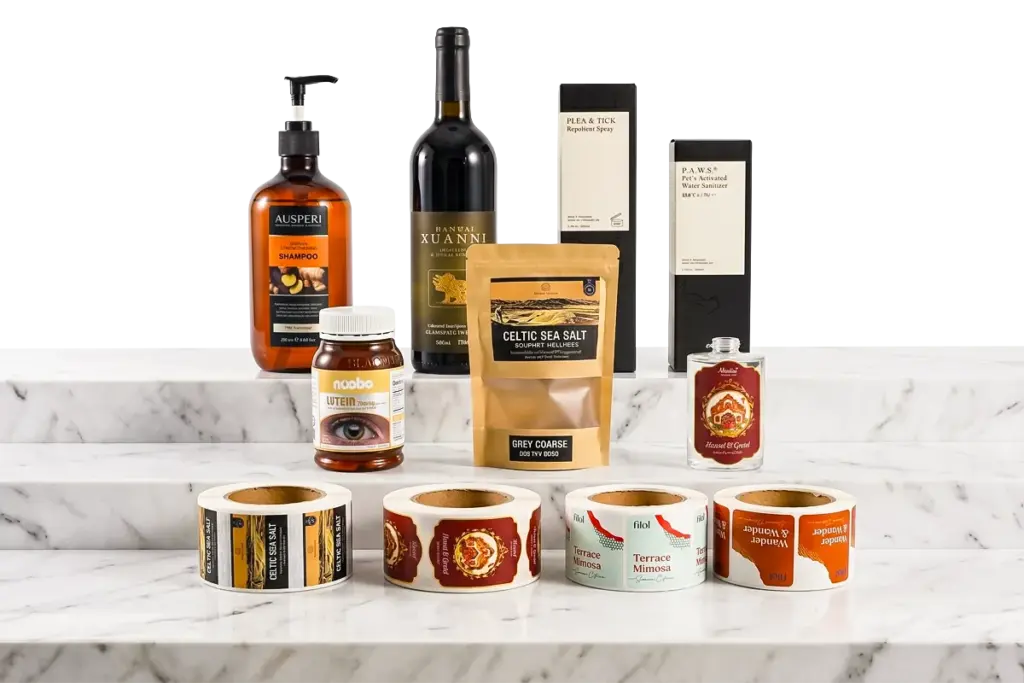
Custom Labels Material and Finishing Cost Differences
Material selection dictates your baseline custom label cost, while finishing options add incremental premiums that scale with production complexity and durability requirements.
Material Substrates as the Primary Cost Driver
Your choice of face stock acts as the foundation for your overall label budget. While basic paper keeps upfront costs low for indoor applications, switching to synthetic films or heavy-duty materials introduces a permanent cost tier shift.
- Standard paper: Typically one of the most economical label options, with standard paper labels often starting from a few cents per piece depending on order volume, specifications, and production requirements.
- Synthetic films: White and clear BOPP labels generally cost more than paper labels because they offer better moisture resistance, टिकाऊपन, and a premium appearance.
- Premium substrates: Heavy-duty vinyl labels are designed for demanding applications where durability is important. Metallic films, holographic materials, and other specialty substrates usually fall into a higher price category due to their appearance, material properties, and manufacturing complexity.
Finishing Upgrades and Decorative Add-Ons
Finishes protect printed ink from scuffing and elevate the visual appeal on retail shelves. The cost of these coatings scales based on whether the application requires a simple flood coat or specialized physical tooling.
- Standard protective finishes: Protective finishes such as UV coatings, gloss lamination, matte lamination, and soft-touch coatings can increase label costs depending on the material, application method, and order quantity.
- Specialty tactile options: Soft-touch lamination and spot UV coatings can add additional costs depending on the coverage area, सामग्री चयन, and production requirements.
- High-end decorative processes: Foil stamping and tactile embossing increase label costs due to additional materials, custom tooling, and extra production steps required for premium visual effects.
Core Factors Driving the Label Price Gap
Understanding why certain configurations cost more than double others requires looking at the physical constraints of production. Three main variables dictate these pricing swings.
- Substrate chemistry: Waterproof, freezer-safe, and chemical-resistant synthetics demand higher base material costs than standard paper.
- Adhesive choices: Specialized adhesives like removable, high-tack, or ultra-strong options increase unit rates compared to standard permanent adhesives.
- Production complexity: Multi-step decorative finishes limit press speeds and require specialized workflows, inflating setup fees on shorter runs.
Strategic Material and Finish Combinations by Budget Tier
To balance packaging performance with budgetary constraints, matching your material and finish specification directly to your target product tier keeps costs predictable.
- Economy setups: Uncoated or UV-coated paper labels work best for temporary indoor packaging, logistics, and applications where cost efficiency is the primary consideration.
- Standard packaging: White BOPP paired with gloss or matte lamination provides a balance of moisture resistance, टिकाऊपन, and visual appeal for retail packaging applications.
- Premium and luxury designs: Clear BOPP, metallic films, spot UV, foil stamping, and other specialty finishes create enhanced shelf appeal for high-end consumer brands while increasing production complexity and overall costs.
How Order Quantity Impacts Custom Labels Pricing

Order volume is the primary driver of custom label costs. Increasing run sizes dilutes high fixed setup fees, rapidly lowering your cost per unit.
Fixed vs. Variable Costs in Custom Label Production
How does order volume dictate your final invoice? Understanding how order quantity impacts custom labels pricing is the fastest way to stop overpaying for your packaging runs.
- Fixed Setup Costs: Includes plate-making, prepress file preparation, machine calibration, and make-ready waste. These stay identical whether you print 100 or 10,000 units.
- Variable Run Costs: Includes the face stock (paper or film), चिपकने, ink volume, and direct press labor. These scale linearly with the run length.
- Amortization Curve: Fixed production costs have a greater impact on smaller orders because they are distributed across fewer labels. Larger production runs usually reduce the unit cost by spreading these expenses across more units.
When you increase your volume, variable costs become the main driver of the invoice, while setup overhead is diluted to pennies.
Price Breaks, Volume Tiers, and Minimum Order Quantities
Printers rarely calculate custom label jobs piece-by-piece at the quoting stage. Instead, they operate on a “per thousand” model, meaning running just under a volume threshold penalizes your margins.
- Standard Volume Tiers: Unit pricing typically decreases as order quantities increase because setup costs and production preparation expenses are distributed across more labels. Larger volume orders often qualify for better pricing efficiency.
- The “Near-Tier” Penalty: Ordering slightly below a common volume threshold may result in a higher unit cost because fixed production expenses are spread across fewer labels. Increasing the order quantity can sometimes reduce the overall cost per label while providing additional inventory.
- Minimum Order Quantities: Setting up an analog press consumes hours of labor and setup waste. MOQs help manufacturers maintain production efficiency and make short-run projects more cost-effective.
Analyzing unit rates right above your target volume often yields better overall purchase value for stable product lines.
The Impact of Ordering Cadence: Consolidated vs. Fragmented Runs
How often you order is almost as critical as how much you order. Fragmenting your label procurement over monthly intervals forces repetitive setup charges onto your billing history.
- Fragmented Run Costs: Placing multiple smaller orders over time may increase total costs because each production cycle requires additional setup, preparation, and handling expenses.
- Consolidated Run Costs: Combining multiple requirements into a larger production run can reduce overall costs by minimizing repeated setup procedures and improving production efficiency.
- Blanket Purchase Orders: You commit to an annual high-volume target to lock in low per-unit pricing, but the labels manufacturer releases the inventory in scheduled batches.
This purchasing strategy balances cheap unit costs with your warehouse storage capacity limits.
How Run Size Dictates the Print Method
Printers route your job to specific machinery based on your target quantity. The mechanical setup of digital presses is fundamentally different from traditional analog presses.
- Digital Printing: Economical for short runs, multiple SKUs, and projects requiring frequent design changes. It uses digital files instead of plates, reducing upfront tooling requirements and providing greater production flexibility.
- Flexographic Printing: More suitable for larger production runs where higher printing speeds and production efficiency can reduce the average unit cost. While plate preparation adds upfront costs, these expenses are distributed across larger quantities.
- The Transition Point: Shifting a product line from digital to flexographic printing as your business scales is the single largest structural cost-down opportunity in packaging.
Comparing digital and flexographic printing options helps identify which production method is more cost-effective based on order volume, artwork requirements, and long-term purchasing plans.
Navigating Industry Run Variations and Specialty Material Costs
Material characteristics, finishing requirements, and production specifications can influence the final label cost. Brands should also confirm quantity tolerances and quality standards with suppliers before large-scale production.
- The ±10% Variance Rule: Traditional label converters operate under a standard overs/unders allowance. An order for 10,000 labels may yield and bill for anywhere between 9,000 and 11,000 लेबल.
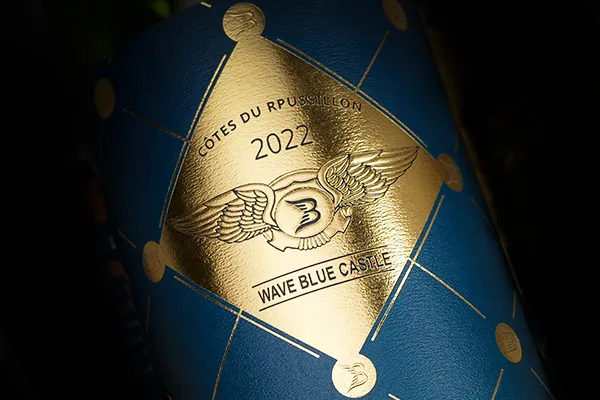
- Specialty Substrates: Materials like metallic film, foil stamping, or textured wine stocks maintain high baseline material costs, but large runs still dilute the associated tooling setup fees.
- Finishing Complexity: Adding details like spot UV, embossing, or custom die-cut contours slows the press lines down. Running these complex designs in bulk prevents the short-run penalty from blowing out your budget.
Aligning your finishing expectations with real-world print runs keeps your production expenses aligned with market realities.
How to Reduce Custom Labels Production Costs
Reducing custom labels production costs relies on a mix of dimensional optimization, material downgrade, and batch ordering to dilute setup waste.
Every millimeter of face stock contributes directly to your total material spend. Modifying the physical footprint of your packaging is often the fastest route to reduce custom labels production costs.
Optimize Label Dimensions and Tooling
Unnecessary margin space and complex custom shapes waste raw materials and drive up labor costs during press setup.
- Dimension Reductions: Adjusting label width and length can reduce raw material waste and improve roll efficiency by allowing more labels to be produced from the same material.
- Standardized Shapes: Using standard shapes and sizes across SKUs allows reuse of existing die-cut tools, which avoids expensive custom tooling charges.
- Nesting Efficiency: Nesting layouts efficiently on the press web minimizes edge waste and maximizes throughput per print run.
Custom die-cut shapes may require additional tooling costs depending on the complexity of the design and production requirements. Standard shapes are often more cost-efficient because they can simplify tooling and production preparation.
Select Cost-Effective Materials and Finishes
Over-specifying material performance for benign environments is a common budget leak in packaging procurement.
- Low-Gauge Stocks: Switching to thinner films or lighter paper stocks maintains application performance while lowering raw material costs.
- Foil Alternatives: Replacing hot foil stamping with metallized facestock or metallic inks achieves a high-end look at lower labor and material costs.
- Adhesive Matching: Matching material and adhesive specifications directly to the actual storage conditions prevents costly over-engineering.
Premium decorative finishes may increase the unit cost depending on the number of processes involved. Applying complex effects selectively can help brands maintain a balance between packaging appearance and production budget.
Align Printing Technology with Order Volume
Selecting the wrong printing press for your order volume leads to excessive setup waste or uncompetitive running charges.
- Digital for Short Runs: Using digital printing for short runs under 10,000 labels avoids upfront plate costs and reduces setup waste.
- Flexography for Volume: Reserving flexographic printing for high-volume, stable SKUs reduces the unit cost once plates and setup costs are amortized.
- Job Grouping: Grouping similar product label runs together streamlines changeovers and maximizes press uptime.
Digital presses carry zero plate overhead, making them ideal for high-mix, low-volume product lines, but analog flexo continues to dominate unit economics at production scale.
Consolidate SKUs and Standardize Design Layouts
Managing dozens of slightly different label designs multiplies your prepress and administrative costs.
- Master Templates: Creating consistent master templates across SKUs reduces prepress setup times and design complexity.
- Variable Data Fields: Rationalizing similar labels into single designs with variable data fields cuts down administrative and plate costs.
- सीएमवाईके Process Color: Reducing total ink coverage and utilizing CMYK process color instead of multiple spot colors lowers printing and press clean-up costs.
Restricting unique product information to defined variable fields allows you to run multiple SKUs consecutively without stopping the press for full wash-ups.
Leverage Strategic Ordering and Vendor Partnerships
Inconsistent ordering patterns prevent printers from optimizing raw material procurement and production scheduling.
- Blanket Orders: Placing blanket orders and utilizing vendor-managed inventory secures quantity price breaks and stabilizes material costs.
- Quarterly Batches: Consolidating separate departmental orders into quarterly or semiannual batches reduces logistics and setup overhead.
- Early Vendor Integration: Involving label manufacturers early in the design cycle ensures artwork aligns with press web widths and standard tooling.
Consolidating split monthly orders into unified bulk runs lowers the total cost of ownership by eliminating repeated administrative setup fees and shipping costs.
अक्सर पूछे जाने वाले प्रश्नों
How much do custom labels typically cost?
Your baseline custom labels cost typically ranges from a few cents per label for standard high-volume applications to significantly higher prices for specialty materials and advanced finishing options. Standard product labels usually fall into a moderate price range, while smaller orders often have higher unit costs due to setup and production preparation expenses. Larger volume orders generally achieve lower per-label pricing because fixed costs are distributed across more units. Specialty options such as holographic films, premium finishes, or smart labels usually require additional materials and processing, resulting in higher overall costs.
Why do custom labels seem expensive in small batches?
Small runs carry a high per-unit cost because printing custom labels involves heavy upfront preparation. Press operators must perform file pre-press checks, machine calibration, load specific material-adhesive combinations, and fabricate custom physical dies or plates. These setup costs remain identical whether you print 100 labels or 10,000. When spread across small runs, these fixed setup costs make the individual price per label feel high compared to generic mass-produced alternatives.
How does the choice of label material affect the overall price?
Material selection sets your pricing baseline. Standard paper labels are generally the most economical option for indoor and general-purpose applications. Plastic and film substrates such as polypropylene (बीओपीपी) typically cost more due to their improved moisture resistance, टिकाऊपन, and performance characteristics.
What is the typical Minimum Order Quantity (MOQ) for custom labels?
Minimums depend heavily on the printing technology. Digital printing offers the lowest barrier, with standard MOQs starting around 250 to 500 labels per SKU, and some online setups offering no minimums on basic paper runs. Roll labels optimized for automated application typically require 1,000 to 2,500 लेबल. Conventional flexographic printing requires much larger minimums of 5,000 to 25,000 labels because the setup time and plate costs are too high to justify smaller runs.
Are custom labels cheaper when purchased in bulk?
हाँ, custom labels are generally more cost-effective when purchased in bulk because larger production runs help distribute fixed setup expenses across more units. Smaller orders often have higher per-label costs due to setup, preparation, and production efficiency factors. Increasing order quantities can reduce unit costs, especially for standard materials and repeat production runs.
How much do premium finishes like foil stamping or embossing cost?
Premium finishes introduce additional material costs, specialized tools, and extra production steps. Options like hot foil stamping, embossing, and tactile effects usually increase the overall label cost due to added processing requirements and production complexity. The final price depends on factors such as finish type, coverage area, label material, and order quantity.
What are the most effective ways to reduce custom label costs?
You can lower your custom label expenses by focusing on standardization and layout efficiency:
- Standardize sizes and shapes: Use identical label dimensions across different SKUs to reuse physical dies and avoid tooling fees.
- Right-size dimensions: Minimize label dimensions to cut down on material and ink usage.
- Consolidate orders: Combine multiple SKU runs into larger bulk orders to secure volume discounts.
- Simplify artwork: Avoid full-bleed solid backgrounds and limit high-cost embellishments like hot foil stamping.
अंतिम विचार
While cheap, unmanaged generic labels offer lower upfront costs, adhering to our Quality Factory Standard is the only way to safeguard your brand reputation against peeling, smudging, and application failures.
Lower-cost materials may not always provide the durability or application performance required for specific environments. Selecting suitable label specifications early can help reduce issues related to adhesion, टिकाऊपन, or production efficiency.
Investing in engineered substrates and verified production tolerances secures your packaging durability and maintains clean retail shelf appeal.
We recommend requesting a material sample kit to test our finishes directly on your packaging surfaces under real-world conditions. You can also share your vector artwork and roll direction requirements with our team to receive an exact OEM quote tailored to your application equipment.
Let our technical specialists review your dimensions to identify immediate design optimization savings before your next production run.
📖 Complete Guide
← Back to “कस्टम लेबल क्या हैं??” — The Complete Guide
Learn everything about custom labels: types, सामग्री, printing techniques, cost factors, and how to choose the right solution for your brand.
Related Products You May Like
Want to know more about Meikei? Visit check our FAQ or explore explore our custom label printing services.