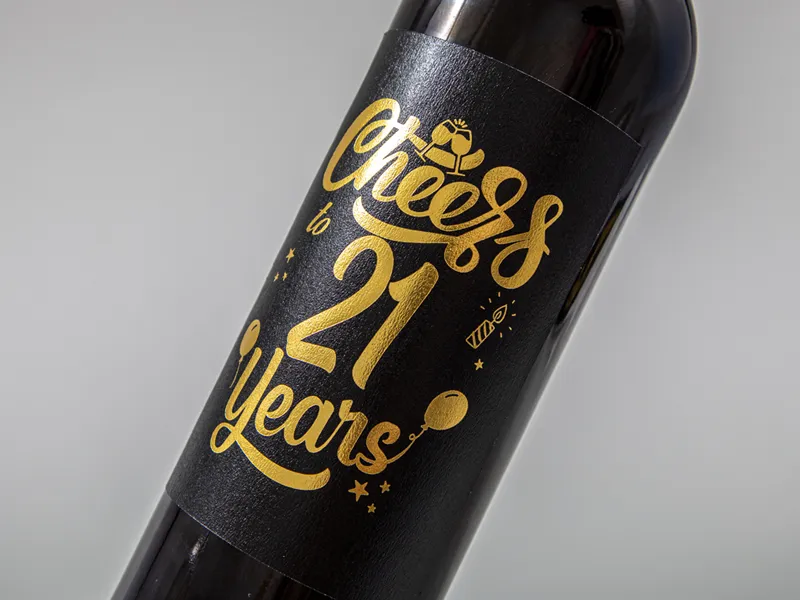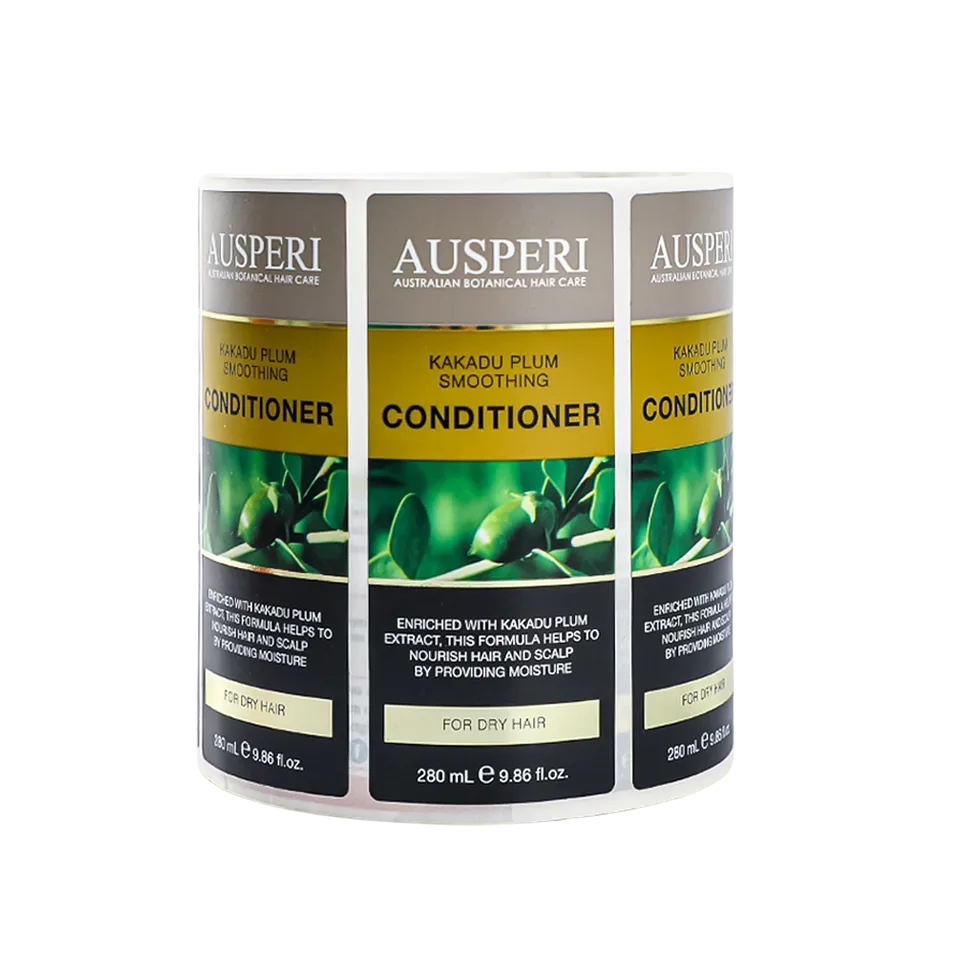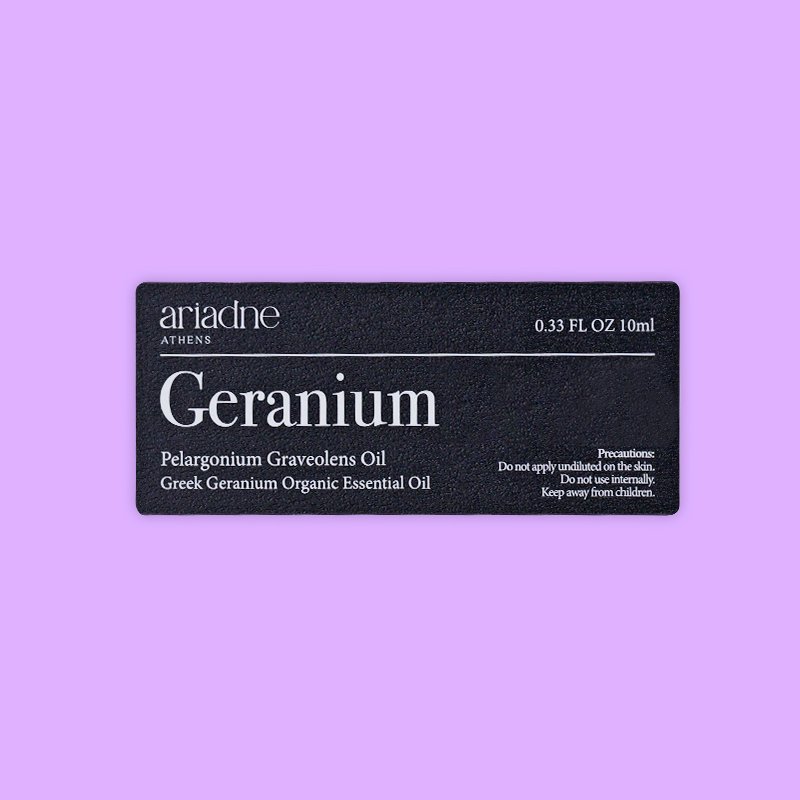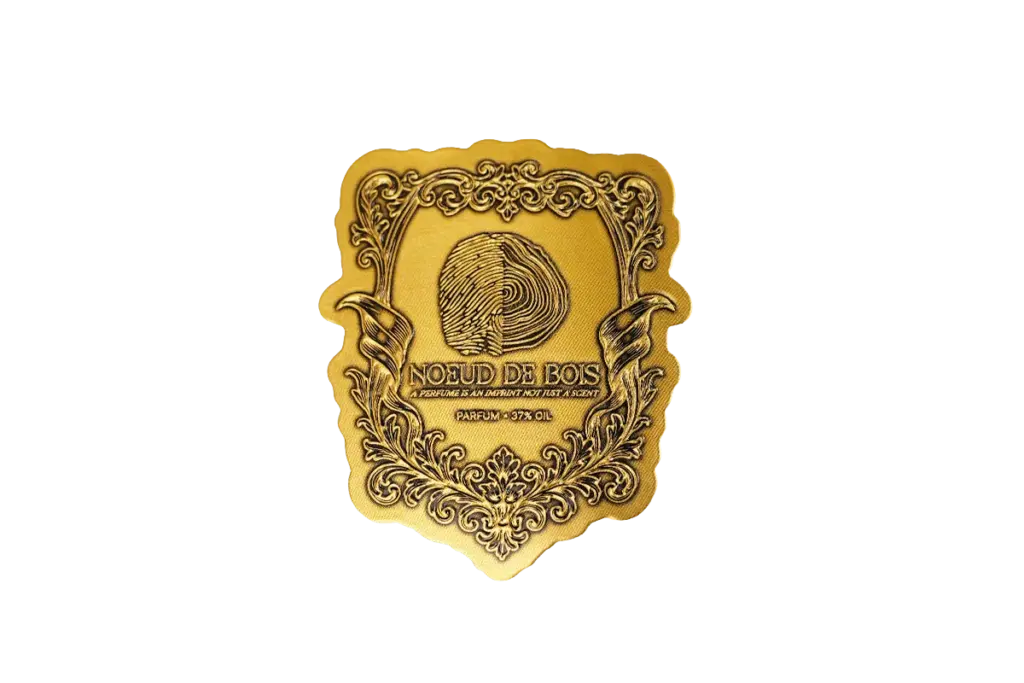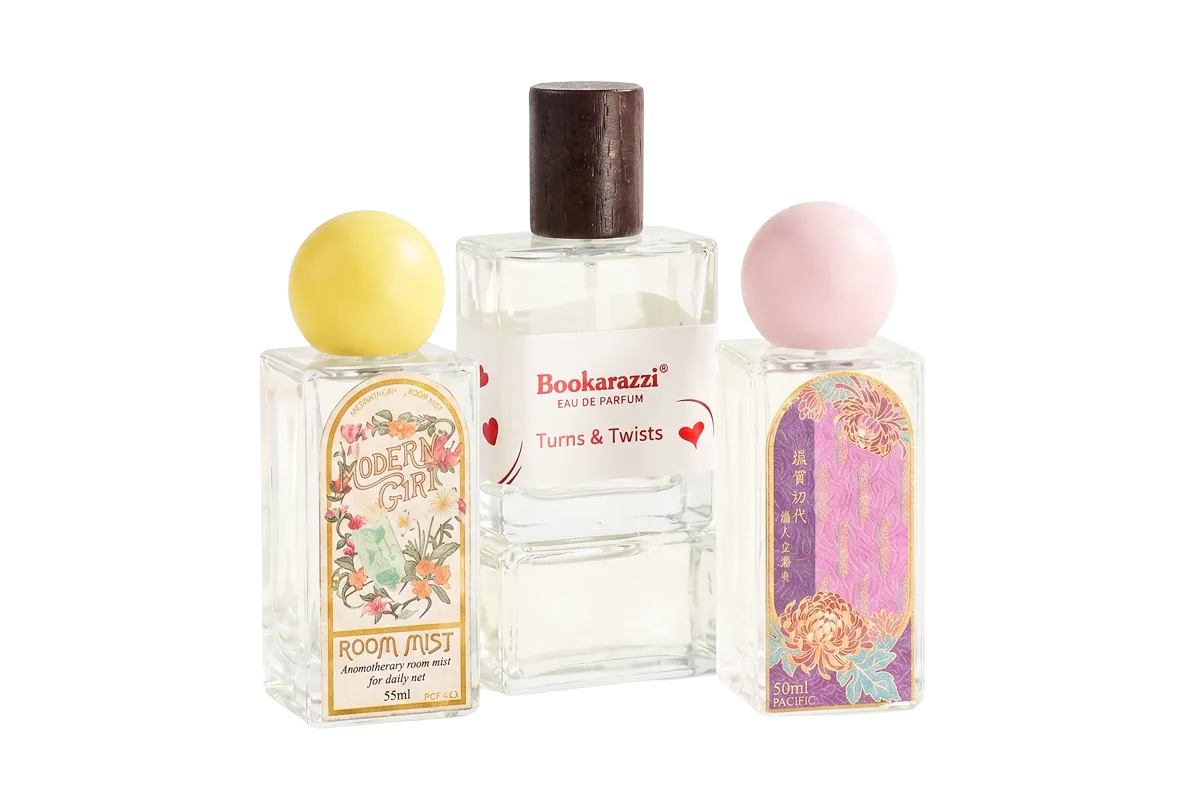
Product labels come in ten working types, and the list is shorter than it looks once you sort by how the label reaches the package. Four types stick on from a roll or stack, three wrap or shrink around the container, one fuses into the package as it is formed, and two — clear and booklet constructions — carry special jobs on top of a base format. For an overview across the full range, start with how to choose custom labels for your products.
One correction before the list: Folienprägung, Prägung, and textured stocks are finishes, not label types — they apply across the ten types below rather than forming an eleventh. The ten are attachment formats, and the package’s shape, opening, and environment pick among them.
1. Paper Pressure-Sensitive Labels
The pressure-sensitive label carries its own adhesive behind a liner and applies with pressure alone — no glue pot, no heat. The paper version is the entry format of retail labeling: matte, gloss, vellum, and kraft stocks print sharply, cost the least per label, and run on any packaging line from hand application to high-speed rolls. Kraft stocks carry their own character, as our kraft paper label guide shows.
Its limit is environment. Paper serves dry shelves and straight panels well, and it fails where condensation, oil, or refrigeration reach it — a wet paper label wrinkles, translucentizes, or pills. If the product lives in a cooler, a bathroom, or an ice bucket, the choice moves to the film version below.
2. Film Pressure-Sensitive Labels
Film pressure-sensitive labels swap the paper facestock for BOPP, PE, or PET film, and the label inherits what film does: it ignores moisture, survives refrigeration and ice buckets, and flexes with the package. Squeezable bottles need that flex — a rigid label on a squeezable wall lifts at the edges within weeks. The full material contrast is covered in our comparison of film labels vs. paper labels, and the wet-duty stack in our guide on making waterproof labels.
The trade is cost and look: film runs a little higher per label than paper, and glossy film reads differently from uncoated paper on an artisan shelf. Brands choose it for performance reasons, not price.
3. Wraparound Labels
A wraparound is a pressure-sensitive label sized to circle a straight-walled cylinder completely, meeting itself at a seam on the back. One print carries the front panel, the side story, and the back panel, and it applies like a single label. The sizing math is fixed: label length equals the container circumference plus a small overlap, commonly 3 to 6 mm, with the seam kept clear of the panels and the barcode.
The format fits straight walls only. Tapered or contoured bottles break the wrap’s flat contact, and those shapes move the decision to the shrink sleeve. The trade-off between the two is laid out in our comparison of roll labels vs. shrink sleeves.
4. Cut-and-Stack Glue-Applied Labels
Cut-and-stack labels are printed sheets cut into singles, stacked, and applied with a glue station on the filling line. The format is the oldest of the ten and still runs at enormous scale in beverages and dairy, because at very high volumes its per-label cost undercuts roll labels — the glue and paper are cheap, and the line speed is high.
What it gives up is agility. Changeovers are slower, each design change means a new cut run, and short orders pay for infrastructure built for millions of units. A brand under roughly 100,000 labels per design usually stays on rolls; cut-and-stack earns its place when single designs run in the millions.
5. Shrink Sleeve Labels
A shrink sleeve is a printed film tube dropped over the container and shrunk in a heat tunnel until it follows the contour from shoulder to base. It covers the full package surface, follows tapered and contoured shapes no flat label can track, and a perforated neck band adds tamper evidence in the same film.
The investment is equipment: a sleeve applicator plus the tunnel. That cost spreads well on long runs and hurts on short ones, which is why sleeves dominate high-volume beverage launches and stay rare for small-batch products. Full-body decoration and 360-degree graphics are the brand-side payoff.
6. Stretch Sleeve Labels
The stretch sleeve is the shrink sleeve’s no-heat cousin: an elastic film tube, typically LDPE, stretched over the container by the applicator and released, gripping the bottle by its own elastic recovery. No heat tunnel, no tunnel energy, and faster line changes than shrinking — a real cost and sustainability advantage at scale.
The requirement is geometry. Elastic film grips uniform-diameter containers — standard PET bottles, jars, and multipacks — but it does not follow contours, tapers, or embossed shapes the way a shrink film does. Straight walls take the stretch sleeve; everything else stays with type five.
7. In-Mold Labels
In-mold labels enter the mold before the container is blown or injected, so the printed film fuses into the wall as the package forms. The label cannot peel, scratch off, or separate, because there is no attached label — the graphics are part of the container itself. Durable goods, buckets, paint cans, and reusable containers are its home ground.
It is the most expensive format to set up: the mold and the label must match from the first part, and artwork changes mean new tooling, not a new file. Brands buy it for permanence on long-running, abuse-facing product lines, not for fast-moving retail ranges.
8. Clear No-Label Look Labels
Clear labels print on transparent film so the container shows through around the artwork, creating the no-label look that premium glass and clear-PET packaging use. White ink prints behind the design where the product must not show through, and that white underprint is a real production step — an extra ink pass that belongs in the quote, not a free effect.
The look depends on clean application: bubbles, dust, or adhesive streaks are visible through the film, so clear labels reward converters with tight process control. On frosted, colored, or textured glass the same construction reads differently — proof on the actual container before the run matters more here than on any other type.
9. Expanded Content Booklet Labels
An expanded content label — booklet or ECL — is a base label carrying a folded booklet of several to a few dozen pages, laminated under a resealable cover. One label carries what would otherwise be multiple panels: multilingual ingredient statements, dosing tables, warnings, and promo copy. The regulatory panels themselves are covered in our comparison of nutrition facts vs. supplement facts labels.
The economics are comparative. A booklet label costs several times a single-layer label per unit, but one SKU with five languages inside one booklet undercuts printing and inventorying five separate market labels. Supplement, chemical, and multilingual retail products use them when the required text outgrows the panel.
10. Security and Tamper-Evident Labels
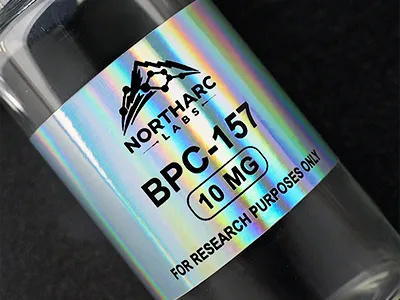
Security labels are a construction rather than a shape: breakaway die-cuts that tear on removal, void films that leave their message behind, and destructible stocks that shatter on any peel attempt. The tamper behavior comes from the material, not the press, so any of the nine types above can carry it. The constructions and their placement rules are detailed in our guide to tamper-evident labels.
Holographic and other authentication finishes, like the film shown above, extend the same idea from tamper evidence to brand protection against counterfeiting. Retail categories with diversion or knockoff exposure — supplements, cosmetics, spirits — buy these constructions deliberately, priced per label above the standard stocks.
Matching the Ten Types to Package Structures
| Type | How It Attaches | Best-Fit Package |
|---|---|---|
| 1. Paper PS | Adhesive on liner, pressure applied | Dry shelves, boxes, jars, straight panels |
| 2. Film PS | Adhesive on liner, pressure applied | Refrigerated, wet, squeezable, oily products |
| 3. Wraparound | Full-circle pressure-sensitive | Straight-walled bottles and jars |
| 4. Cut-and-stack | Glue applied on the line | Very high volume, stable designs |
| 5. Shrink sleeve | Heat-shrunk film tube | Contoured and tapered bottles, full-body graphics |
| 6. Stretch sleeve | Elastic film, no heat | Uniform-diameter PET bottles, multipacks |
| 7. In-mold | Fused during molding | Durable goods, buckets, reusable containers |
| 8. Clear no-label look | Transparent film PS | Premium glass and clear PET packaging |
| 9. Booklet ECL | Base label plus folded pages | Multilingual and regulatory-heavy products |
| 10. Security | Void, destructible, breakaway stock | Ergänzungen, cosmetics, diversion-prone lines |
Read the table as a decision path, not a menu: shape first, environment second, content volume third. The type decision then converts into a quote, and the pricing side of that step is covered in our benchmarks on what custom labels cost.
Match the Label Type to Your Package

Häufig gestellte Fragen
How many types of product labels are there?
Three attachment families cover everything: adhesive-applied, glue-applied, and form-fitting (shrink, stretch, in-mold). Within those families, retail brands choose among ten working types, from paper and film pressure-sensitive labels through booklet and security constructions.
Which label type is cheapest for a retail launch?
Paper pressure-sensitive labels are the entry price, followed by film pressure-sensitive and wraparound. Cut-and-stack and sleeves win on unit cost only at high volumes, and in-mold and booklet labels are premium formats with setup or construction costs attached.
What is the difference between shrink and stretch sleeves?
Shrink sleeves apply loosely and tighten in a heat tunnel, so they follow tapers and contours but need the tunnel. Stretch sleeves are elastic films that grip by their own recovery — no heat, but only on uniform-diameter containers. Shape decides: contoured bottles shrink, straight PET bottles stretch.
When does a product need a booklet label?
When required text outgrows the panel: multilingual panels, detailed dosing instructions, or category-mandated warnings. One booklet label covering five languages usually costs less than printing and managing five separate market labels.
Can I print white on clear labels?
Ja. White ink prints on transparent film as an underprint layer, so the design sits on white while the rest stays clear. It is a standard practice and a real extra ink pass — expect it as its own line in the quote.
What does “clean label” mean?
Clean label is a food marketing term for short ingredient lists with recognizable names — a content claim, not a label type. The package still carries one of the standard formats; the claim lives in the ingredients the brand chooses.
What must be on a product label?
The required block depends on category and market: product identity, contents, net quantity, responsible business, and any mandated panels or warnings. Marketing copy sits on top of that minimum, and the type list above only changes how the block is carried, not what it must contain.
Conclusion
The ten types of product labels are a matching exercise, and the package answers the questions in order: shape picks between the wrap, the sleeve, and the in-mold; environment picks between paper and film; content volume decides whether a booklet enters the spec.
- Attachment families come first — adhesive, glue-applied, or form-fitting — then the working type inside the family.
- Folie, Prägung, and textures are finishes available on the types, not types of their own.
- Straight-walled containers can take the cheapest roll route; contours and full-body graphics pay for sleeves.
For retail brands choosing among the ten, Meikei specifies the type against your package structure and proofs it on the real container before the run.