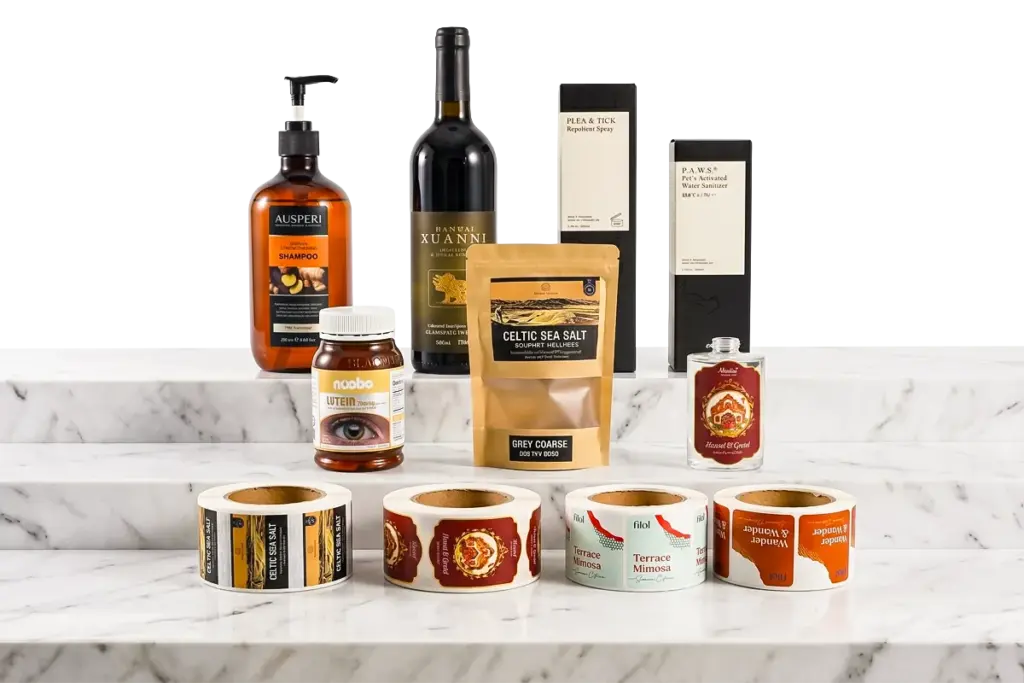
Waterproof labels are made by combining moisture-resistant materials, suitable adhesives, and protective printing finishes. Common options include synthetic films such as BOPP, PET, and vinyl, paired with permanent adhesives and compatible ink systems. The right combination depends on the product, packaging surface, and level of moisture exposure.
This guide explains how waterproof labels are made, compares common materials and printing methods, and shows which solutions work well for cosmetics, food, beverages, and other moisture-exposed packaging.
How to Make Waterproof Labels for Different Products
Matching synthetic film facestocks, permanent acrylic adhesives, and protective laminates to your specific product environment guarantees your labels remain intact and legible under wet conditions.
Skincare, Cosmetics, and Personal Care Products
Cosmetic packaging demands materials that survive constant handling, bathroom humidity, and direct exposure to oils or soapy water. Standard paper fails quickly here, turning soft and losing adhesion within minutes of contact with moisture.
- Material Selection: Choose synthetic film materials like polypropylene (BOPP), polyester (PET), or vinyl to resist oils, lotions, and bathroom humidity.
- Protective Layer: Apply a clear overlay sheet or high-quality laminating film over the printed labels to prevent ink running during handling.
- Surface Preparation: Clean and dry the product container surfaces thoroughly before application to ensure a permanent, bubble-free adhesive bond.
Food and Beverage Containers
Food and beverage packaging faces rapid temperature shifts, refrigeration condensation, and sometimes direct immersion in ice buckets. The labeling system must prevent water absorption while maintaining its structural bond on glass or plastic substrates.
- Material Selection: Choose moisture-resistant film labels such as BOPP or PET for packaging exposed to refrigeration, condensation, or occasional contact with water.
- Adhesive System: Use a suitable permanent adhesive selected for the bottle or container surface and expected temperature and moisture conditions.
- Protective Finish: Add a gloss or matte laminate when additional protection against moisture, abrasion, and routine handling is required.
Home Fragrance Products
Candles, reed diffusers, and other home fragrance products often use glass or coated containers that may be exposed to oils, condensation, and frequent handling. A moisture-resistant label construction helps maintain the appearance and legibility of product information and branding.
- Material Selection: Choose BOPP, PET, or other suitable synthetic films when the packaging requires stronger resistance to moisture and oils.
- Protective Finish: Add a gloss or matte laminate to help protect printed graphics from moisture, rubbing, and routine handling.
- Application Considerations: Match the adhesive to the container surface and application conditions to maintain reliable adhesion throughout normal product use.
Wein & Spirits
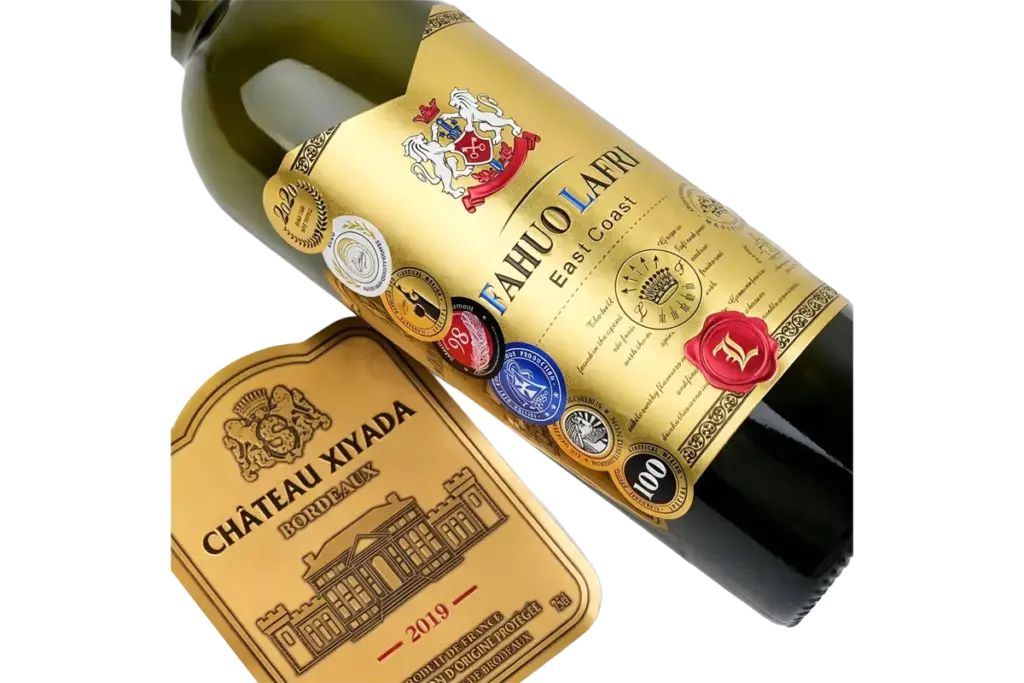
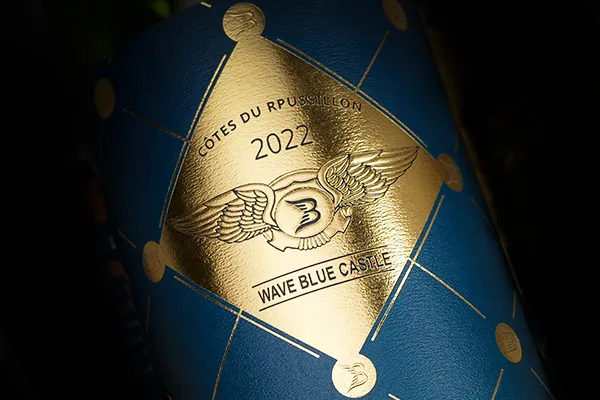
Wine and spirits labels may be exposed to condensation, ice buckets, spills, and repeated handling. A suitable waterproof label construction helps maintain label adhesion and print appearance while supporting the premium presentation expected for beverage packaging.
- Material Selection: BOPP and PET are suitable options when labels need stronger resistance to water, condensation, and routine handling.
- Protective Finish: Gloss or matte laminates can provide an additional barrier against moisture and abrasion while supporting different packaging aesthetics.
- Adhesive Performance: Select a permanent adhesive that is compatible with the bottle surface and expected storage and handling conditions.
Best Materials for Waterproof Labels
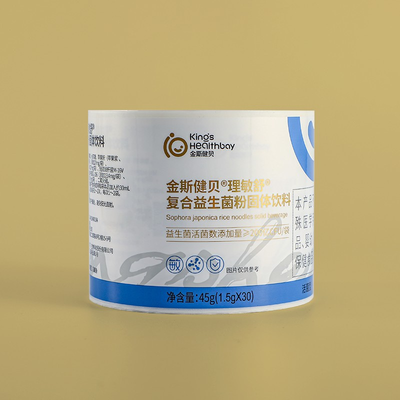
BOPP, polyester, and vinyl represent the core synthetic substrates that prevent label failure under direct water exposure, condensation, and submersion.
| Application Focus | Best Waterproof Facestock | Typical Adhesive | Protective Finish |
|---|---|---|---|
| Essen & Beverage Packaging | BOPP | Permanent acrylic / wet-apply | Gloss or matte laminate |
| Bath & Beauty Products | BOPP or vinyl | Permanent acrylic | Gloss laminate |
| Wein & Spirits Packaging | BOPP or PET | Permanent acrylic | Gloss or matte laminate |
| Raumduft & Candles | BOPP or PET | Permanent acrylic | Gloss or matte laminate |
| Gesundheitspflege & Ergänzungen | BOPP or PET | Permanent acrylic | Matte or gloss laminate |
BOPP (Biaxially Oriented Polypropylene)
White and clear BOPP serve as the primary consumer-facing choices for brands packaging liquids, oils, or cold-stored products. The material behaves as an absolute moisture barrier, preventing water absorption at the structural level.
- Moisture Resistance: BOPP provides strong resistance to water and condensation, making it a practical option for beverage, food, bath, and beauty packaging.
- Cost-to-Performance: BOPP can provide a useful balance between moisture resistance, printability, appearance, and material cost compared with many conventional paper label stocks.
- Common Pairings: BOPP is commonly combined with permanent adhesives and gloss or matte laminates when additional protection is required.
Polyester (PET)
Polyester (PET) offers a durable and stable label material for packaging that requires good moisture resistance and a premium appearance.
- Durability: PET offers strong resistance to moisture, scuffing, and handling, making it suitable for durable packaging labels.
- Print Performance: Provides a stable surface for high-quality printing and helps maintain clear graphics during storage and everyday product use.
- Packaging Applications: Ideal for cosmetic, skincare, candle, wine, and premium product labels.
- Rigidity Constraints: Its rigid structure may be less suitable for highly squeezable or tightly curved packaging.
Vinyl (PVC)
Vinyl combines flexibility with strong water resistance, making it suitable for labels applied to curved or irregular packaging.
- Water Resistance: Resists water and moisture during everyday product use.
- Conformability: Flexible enough for curved bottles, jars, and other irregular packaging.
- Durability: With suitable adhesives, vinyl labels can withstand repeated handling and cleaning.
- Print Compatibility: Supports high-quality graphics for cosmetic, beverage, candle, and other retail packaging.
Other Synthetic Films and Specialty Substrates
Specialty materials provide additional options for different packaging shapes and product requirements.
- Polyethylene (PE): Soft and highly flexible, making it suitable for squeezable cosmetic, personal care, and household product packaging.
- Specialty Films: Offer enhanced flexibility, durability, or appearance for specific packaging applications.
- Coated Papers: Provide some moisture resistance but are not fully waterproof and may be less suitable for products exposed to frequent moisture.
Waterproof Adhesives and Protective Finishes
Waterproof labels require suitable adhesives and protective finishes to maintain adhesion and print quality in humid or wet conditions.
- Permanent Acrylic: Provides reliable adhesion to glass, plastic, and other common packaging surfaces.
- Specialty Adhesives: Suitable for cold, damp, or challenging packaging surfaces.
- Film Laminations: Protect printed graphics from moisture, abrasion, and everyday handling.
- UV-Cured Inks: Help maintain sharp, durable graphics on cosmetic, beverage, candle, and other retail packaging.
Elevate Your Brand with Premium Custom Labels

Waterproof Labels Printing Methods Explained
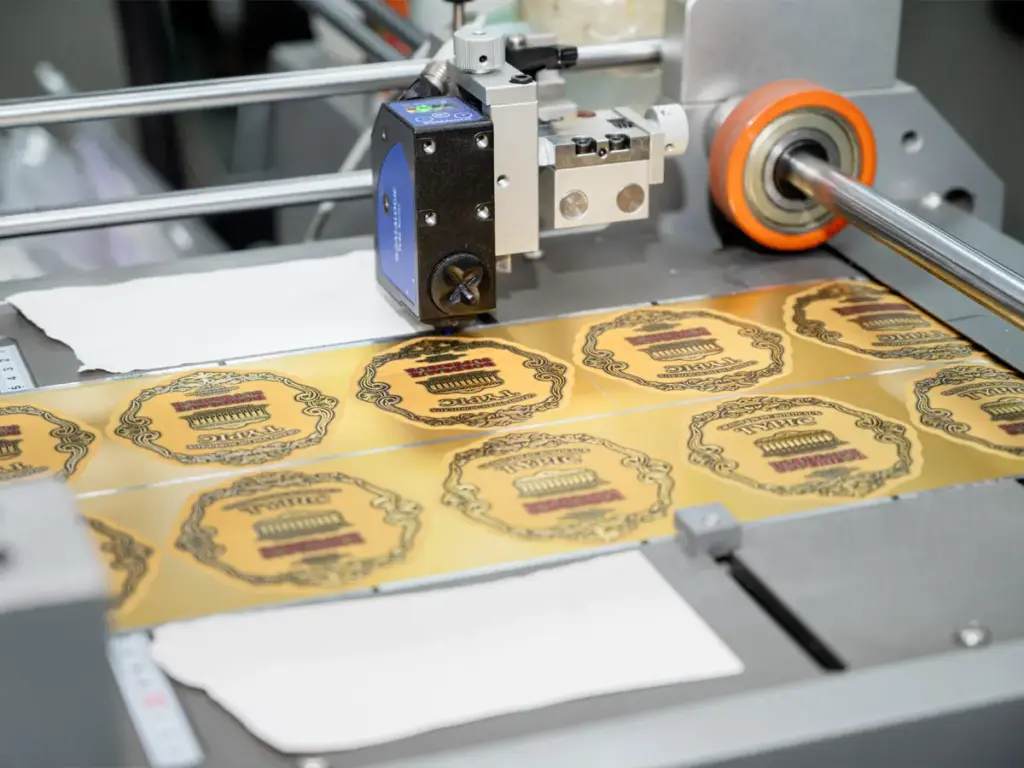
Waterproof label printing combines moisture-resistant label materials with a suitable printing method and protective finish. For packaging applications, the choice depends on the label material, design requirements, production volume, and expected exposure to water, condensation, oils, or handling.
Flexographic Printing
Flexographic printing is widely used for roll-fed labels and is suitable for medium- to high-volume packaging production. It can print efficiently on synthetic materials such as BOPP and PET while supporting a range of colors and finishing options.
- Material Compatibility: Suitable for synthetic label materials such as BOPP and PET, depending on the selected ink and material specifications.
- Production Efficiency: Well suited to larger production runs where consistent print quality and efficient roll-to-roll production are required.
- Packaging Applications: Commonly used for beverage, food, wine, cosmetic, and home fragrance labels that require moisture resistance and consistent appearance.
Digital Label Printing
Digital printing is useful for custom labels, shorter production runs, product launches, and designs that require variable or multiple versions. It can also be combined with synthetic label materials and protective finishes for moisture-exposed packaging.
- Design Flexibility: Supports detailed graphics, multiple designs, and short-run customization without traditional plate preparation.
- Material Selection: Can be used with compatible BOPP, PET, and other synthetic label stocks depending on the printing system.
- Packaging Applications: Suitable for customized wine labels, cosmetic labels, food packaging, candles, and other branded products where design flexibility is important.
UV Printing and Protective Finishes
UV-curable printing systems can provide good print durability when the ink is properly cured and matched with the label material. Additional lamination can provide another layer of protection for packaging exposed to moisture and frequent handling.
- UV-Curable Inks: UV inks are cured during printing and can provide good resistance to moisture, rubbing, and everyday handling.
- Protective Lamination: Gloss or matte film laminates can help protect printed graphics from water, abrasion, and surface contact.
- Packaging Applications: Suitable for premium beverage, cosmetic, food, and home fragrance labels where both moisture resistance and visual appearance are important.
Choosing the Right Printing Method
There is no single printing method that is suitable for every waterproof label. Flexographic printing can be practical for larger production volumes, while digital printing offers greater flexibility for customized or shorter runs. The final result also depends on the combination of substrate, ink, adhesive, and protective finish.
For custom waterproof labels, manufacturers should evaluate the complete label construction based on the packaging material, product environment, design requirements, and expected production volume.
How Manufacturers Test Waterproof Label Quality
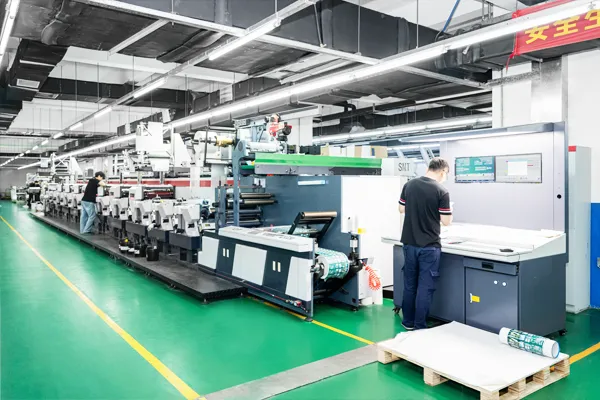
For packaging labels, waterproof performance depends on the complete label construction rather than the face material alone. Manufacturers typically evaluate the facestock, adhesive, ink, and protective finish together to check whether the label maintains its appearance and adhesion under the conditions expected during storage, transport, and product use.
Water and Condensation Resistance
Labels for wine, beverages, cosmetics, and home fragrance products may encounter condensation, splashes, refrigeration, or occasional contact with water. Testing helps identify whether moisture affects the label surface, print quality, or adhesive bond.
- Water Exposure Testing: Sample labels are exposed to water for a defined period and checked for ink smearing, bubbling, edge lifting, and changes in surface appearance.
- Condensation Testing: Labels applied to refrigerated beverage or cosmetic containers can be evaluated after exposure to condensation to check whether the adhesive remains securely bonded.
- Wet Handling Testing: Labels are handled while wet to assess whether the printed graphics remain legible and whether the surface finish shows signs of damage.
Print and Surface Durability
Water resistance is also affected by how well the printed surface withstands normal handling. This is particularly relevant for premium packaging where label appearance is part of the product presentation.
- Wet Rub Testing: The printed surface is rubbed after water exposure to check for smearing, fading, or loss of printed details.
- Dry Rub Testing: Samples are rubbed under dry conditions to evaluate resistance to routine handling, packaging, and transportation.
- Protective Finish Evaluation: Laminated or coated labels are checked for changes in gloss, surface marks, or damage after moisture and handling exposure.
Adhesion and Application Testing
A waterproof material does not automatically guarantee reliable label adhesion. The adhesive must also be compatible with the packaging surface and application conditions.
- Adhesion Testing: Labels are applied to representative glass, plastic, or coated containers and evaluated for peeling, edge lifting, and bond stability.
- Curved Surface Testing: Labels applied to bottles, jars, and other curved containers are checked for lifting or wrinkling around the edges.
- Temperature and Moisture Testing: Where relevant, labels can be evaluated after exposure to cold storage, condensation, or changes in temperature to confirm that the adhesive remains suitable for the intended application.
Product-Specific Performance Checks
Different packaging categories can create different demands on waterproof labels. A beverage label may face refrigeration and condensation, while a cosmetic or home fragrance label may also encounter oils, lotions, or frequent handling.
- Wein & Beverage Labels: Check resistance to condensation, ice buckets, splashes, and repeated handling.
- Schönheit & Cosmetic Labels: Evaluate resistance to bathroom humidity, water, oils, lotions, and routine handling.
- Home Fragrance Labels: Consider moisture, fragrance oils, and surface contact when selecting the label material, adhesive, and protective finish.
- Food Labels: Evaluate moisture resistance and print durability based on refrigeration, condensation, and the expected packaging environment.
Final Quality Verification
Before mass production, manufacturers can test production samples using the actual container, label material, adhesive, printing method, and protective finish. This helps confirm that the complete label construction performs as expected under the product’s intended storage, handling, and use conditions.
For custom waterproof labels, testing the finished label system is more reliable than evaluating the film or adhesive separately. Material selection, printing, finishing, and application conditions should be considered together when determining the most suitable construction.
Frequently Asked Questions
How do you make labels waterproof?
Waterproof labels are typically made with synthetic materials such as BOPP, PET, or vinyl, combined with suitable adhesives and protective finishes. Film lamination can further protect the printed graphics from moisture and everyday handling.
What material is best for waterproof labels?
BOPP is a versatile choice for many waterproof packaging labels, while PET offers greater rigidity and vinyl provides better flexibility. The best material depends on the packaging shape, moisture exposure, and desired appearance.
Are paper labels waterproof?
Standard paper labels are not fully waterproof because paper can absorb moisture. For products exposed to water or humidity, synthetic materials such as BOPP, PET, or vinyl are generally more suitable.
How do you waterproof printed labels?
Use a water-resistant synthetic facestock, compatible inks, and a suitable adhesive. A gloss or matte film laminate can also help protect printed graphics from moisture, abrasion, and routine handling.
Are vinyl labels waterproof?
Yes. Vinyl is naturally resistant to water and moisture, making it suitable for cosmetic bottles, candles, beverages, and other packaging that may experience frequent contact with moisture.
What labels work on bottles?
BOPP, PET, and vinyl labels work well on glass and plastic bottles. BOPP is a popular choice for beverages and cosmetics, while vinyl can offer better flexibility for curved or squeezable containers.
Can waterproof labels go in refrigerators?
Yes, suitable waterproof labels can be used on refrigerated food and beverage packaging. The adhesive and label construction should be selected based on the temperature, condensation, and packaging surface.
How long do waterproof labels last?
The service life depends on the material, adhesive, ink, protective finish, and application conditions. For most indoor product packaging, properly specified synthetic labels can maintain adhesion and print quality throughout the product’s intended shelf life.
What printing method is used for waterproof labels?
Waterproof labels can be produced using flexographic, offset, digital, or other suitable printing processes. The choice depends on the label material, order volume, artwork requirements, and desired finish.
Can waterproof labels resist alcohol?
Some waterproof labels can withstand limited alcohol contact when the facestock, ink, adhesive, and protective coating are properly selected. For alcohol-containing products, testing the complete label construction is recommended.
Final Thoughts
Choosing the right combination of label material, adhesive, printing method, and protective finish is essential for reliable waterproof performance. BOPP and PET are practical options for many moisture-exposed packaging applications, while the final construction should be matched to the product and container.
For waterproof labels, testing samples under actual application conditions can help confirm material compatibility before production. Contact Meikei to discuss your packaging requirements and find a suitable label solution.
📖 Complete Guide
← Back to “What Are Custom Labels?” — The Complete Guide
Learn everything about custom labels: types, materials, printing techniques, cost factors, and how to choose the right solution for your brand.
Related Products You May Like
Want to know more about Meikei? Visit explore our custom label printing services or explore check our FAQ.