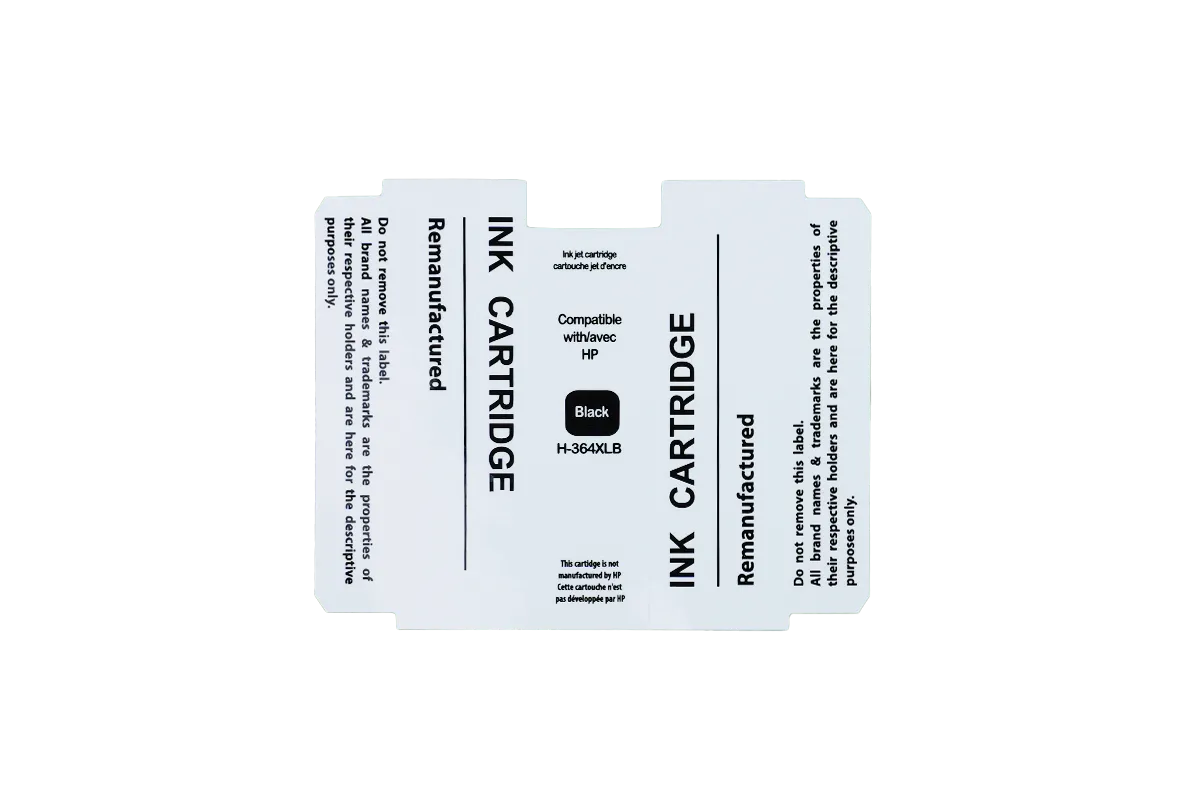
Buyers use the words sticker and label almost interchangeably, and print shops let them, because the two products share presses, 접착제, and cutting tools. The moment a purchase order is written, though, the difference matters: it changes the material, the format, the durability standard, and the unit price.
This guide separates the two cleanly. It covers the material and construction differences, the jobs each one does best, the cut and format options, the cost structure, and a decision framework. The choice can then be made with evidence instead of habit.
Sticker and Label Core Differences
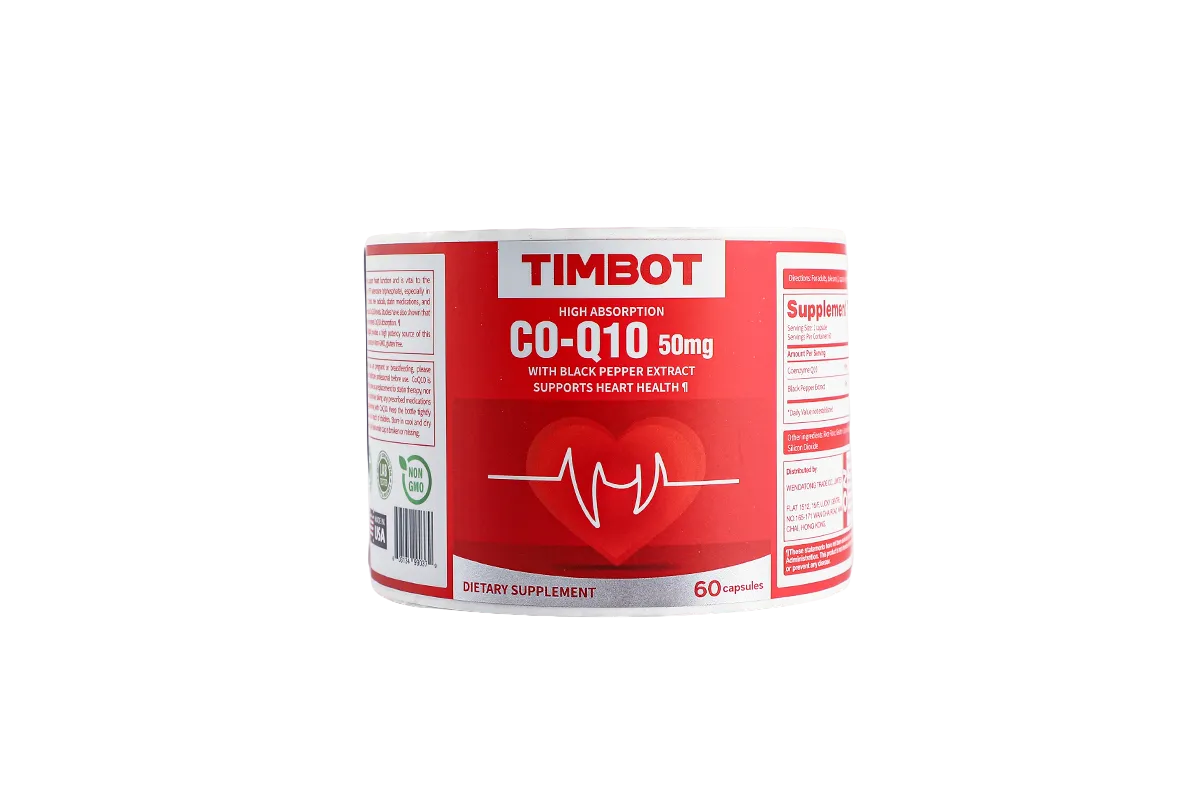
A sticker announces, a label informs, and the difference lives in material, finish, and destination.
비닐, Paper, and BOPP Materials
Stickers lean on vinyl because it flexes, shrugs off water, and holds color outdoors. Labels more often run on paper for its print finish and cost, or on BOPP and PET films when the product lives in a bathroom, a cooler, or anywhere wet. The stock choice follows the destination: a laptop lid punishes print with sunlight and abrasion, while a conditioner bottle punishes it with water and squeeze.
Thickness and hand feel separate the families further. Sticker vinyl carries body and peel resistance, so a decal can be lifted at one corner and repositioned without folding over on itself. Label stocks run thinner, because rolls must wrap tight radii and release from the liner at machine speed without creasing. The difference is invisible in a photo and obvious in the hand, which is why physical samples outguess any catalog page.
Adhesive Systems by Use Case
Both products are pressure-sensitive at heart, but adhesives are tuned to their surfaces. Sticker adhesives tolerate casual application by hand onto curved, textured, or slightly dusty surfaces. Label adhesives are engineered for automated application onto clean glass and plastic at speed, and removable versions peel away without residue when the package is destined for reuse or recycling. For the full anatomy of how custom stickers are made, the build order from facestock to liner is the same stack.
Adhesive chemistry is specified on three axes: initial tack, ultimate bond, and removability. A sticker needs tack that grabs on the first press of a thumb, while a label often needs a controlled bond that builds over hours on a curved or squeezable container. Naming the surface, the temperature at application, and whether the piece must ever come off cleanly turns an adhesive line item from a guess into a specification.
Durability and Weather Protection
Outdoor survival comes from the top layer. A gloss or matte overlaminate over vinyl turns a sticker into a multi-year outdoor piece, and UV-stable inks keep the color from washing out. Labels bound for humid shelves get their protection from lamination or varnish instead, matched to indoor light and occasional splashing rather than full weather. Sustainability programs complicate the stack: certified papers document the fiber source through the FSC chain of custody, and film-free constructions recycle more cleanly.
| Attribute | Custom Sticker | Custom Label |
|---|---|---|
| Typical facestock | 비닐, often laminated | Paper, BOPP, PET film |
| Job | Promotion and handout | Product identification |
| Application | By hand, anywhere | By hand or machine, on product |
| Durability target | Outdoor years | Shelf life and wet shelves |
| Common format | Individual pieces, sheets | Rolls for production |
When to Use Custom Stickers

Promotional stickers live or die by their outer layer, because a handout that fades becomes a throwaway.
Brand Swag and Handouts
Stickers are the cheapest wearable a brand can hand out. A die-cut logo sticker travels on laptops, water bottles, and toolboxes for years, advertising long after the event that distributed it. Swag programs order in the thousands precisely because the cost per impression is low and the placement is voluntary, which is the strongest kind.
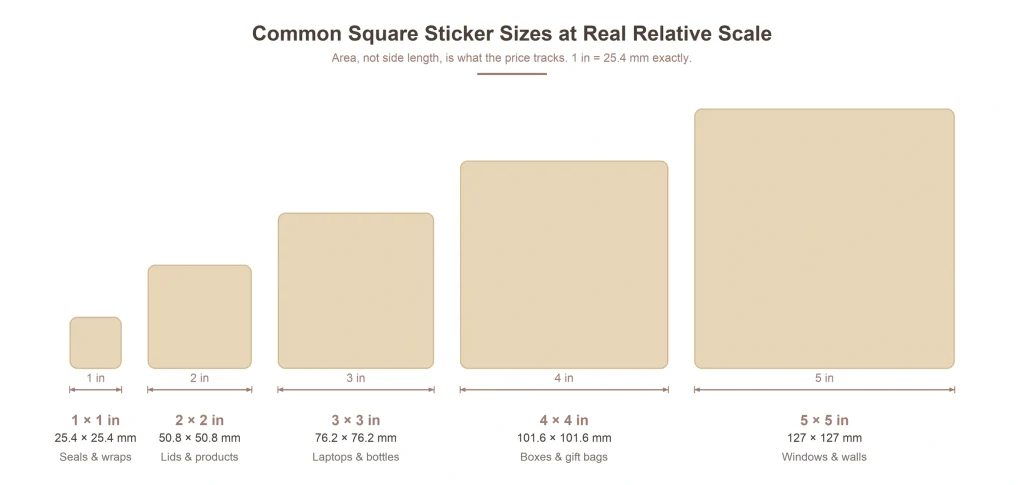
Size strategy shapes the budget more than most buyers expect. A palm-sized logo sticker covers most flat giveaway surfaces, while oversized pieces suit skateboards, car windows, and display walls at a higher cost per piece. Swag programs usually mix one hero size with a smaller version for tight spots, and the pair fits on one press sheet, which keeps the added variety nearly free.
Outdoor and Laptop Applications
Outdoor use defines the sticker specification. Laminated vinyl with UV inks resists sun, rain, and car-wash brushes, so the same sticker that brands a laptop survives on a storefront window or a delivery van door. The laminate takes the abrasion while the print underneath stays intact, and the vinyl base bends around curves without lifting at the edges.
Event and Packaging Inserts
Inside e-commerce boxes, stickers turn a shipment into a small campaign. A thank-you sticker seals the tissue paper, a bonus decal rewards the repeat buyer, and a QR sticker bridges the package to a landing page. Because these pieces ride inside the box, they can run on lighter stock than outdoor work and still perform, which keeps the program inexpensive.
When to Use Custom Labels

A product label is packaging infrastructure: it carries identity, information, and often the law.
Product and Packaging Information
When a printed piece sits on the product itself, it inherits the product’s obligations. Ingredient lists, net contents, batch codes, and safety text must fit the label, stay legible for the shelf life, and survive the product’s environment. That is why custom labels are specified as part of packaging engineering rather than as artwork alone, and why the material decision comes before the design.
When regulated text and brand art compete for space, the label set shares the load. A primary panel carries identity, a secondary panel carries the mandatory detail, and a third piece or an inner leaflet absorbs overflow for small containers. Planning the split at the artwork stage keeps every panel legible, and legibility is what inspectors and shoppers check first.
Retail and Shelf Readiness
Retail shelves judge labels on finish and consistency. A matte laminate reads as premium skincare, a high-gloss varnish reads as energy drink, and the wrong finish drops the product a tier in the buyer’s eye. Consistency across a production run matters just as much, because one misregistered label in a facing of fifty is the one the shopper picks up.
Barcode and Variable Data Printing
Labels carry data that stickers rarely do. Barcodes must scan first time at the checkout, batch and lot codes must trace the product through a recall, and serialized numbers turn each label into a record. Digital presses print this variable layer on the fly, and the label program coordinates it with the brand artwork so neither crowds the other.
Order Stickers and Labels From One Printer
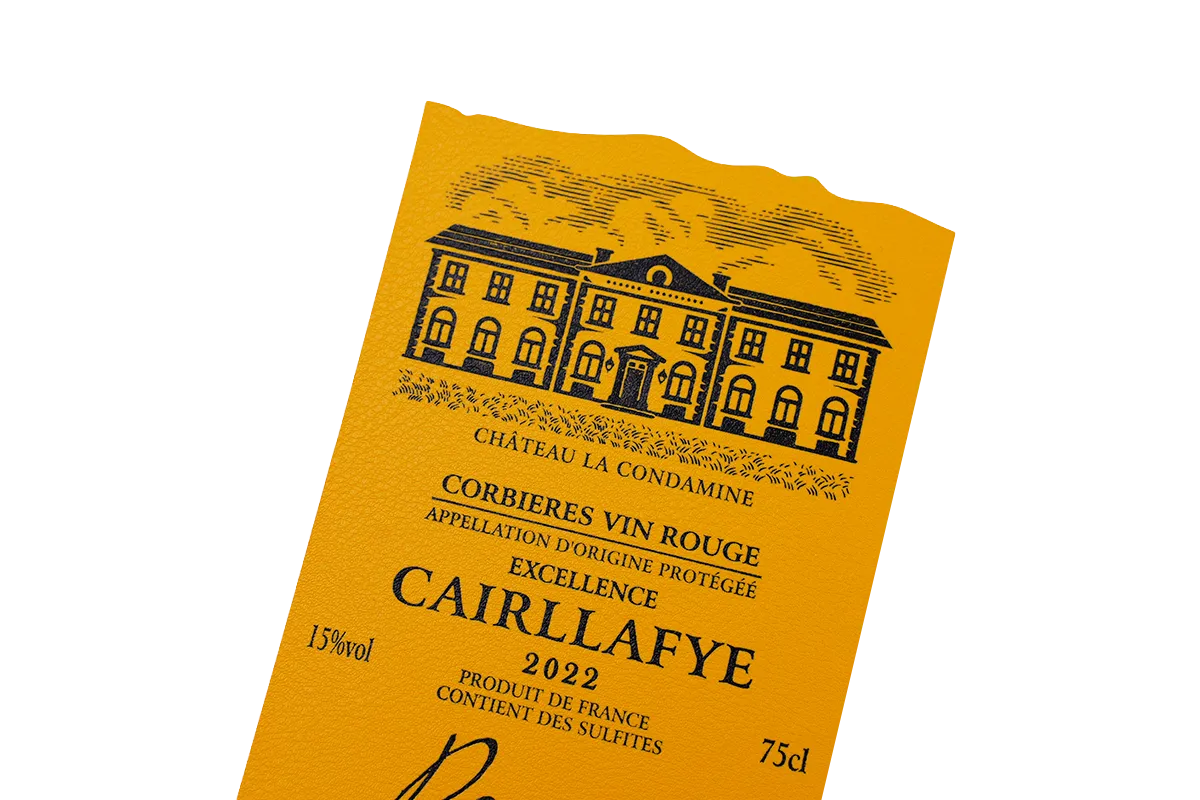
Sticker and Label Cut and Format Options
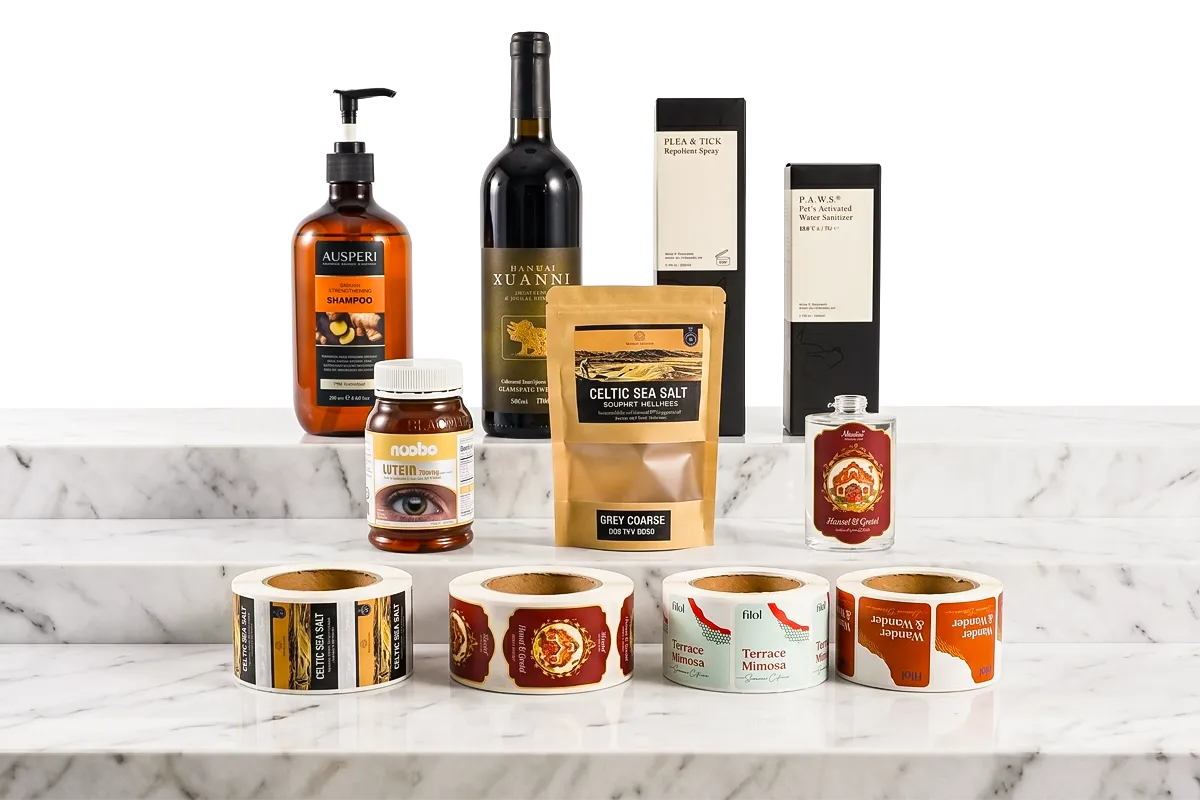
Format follows the workflow, since a sheet feeds a desk and a roll feeds a machine.
Kiss Cut vs Die Cut
The cut defines the product in the hand. Kiss-cut pieces are cut through the facestock only, so the sticker peels from a backing that keeps it flat and protects the adhesive, ideal for sheet sets and detailed shapes. Die-cut pieces are cut through everything into individual shapes, which suits single logo decals that get handed out or applied on the spot. The trade-offs between the two run deeper than preference, and kiss cut vs die cut covers them in detail.
Sheet, Roll, and Single-Piece Ordering
Sheets suit retail sticker packs and office use, single pieces suit handouts, and rolls are the production format for labels. Roll labels feed applicators and automated lines, which is why volume product programs specify roll direction, core size, and label gap alongside the artwork. Choosing roll labels for automated labeling is a machine-compatibility decision as much as a print one.
Custom Shapes and Corner Radius
Both products cut to shape freely. Contour cutting follows printed artwork for silhouette stickers, and labels lean on squares, rectangles, ovals, and circles with set corner radii because containers and applicators reward predictable geometry. Intricacy costs tool life and weeding time, so the most economical custom shape is a recognizable silhouette with no hairline features.
Corner radii do quiet structural work on labels. A rounded corner resists lifting on a curved bottle where a sharp corner would flag and peel, and it also survives the scrape of a label applicator pad. Sharp geometry reads graphic and assertive on stickers applied by hand, so the same shape decision lands differently on each product.
Custom Sticker vs. Label Cost Factors
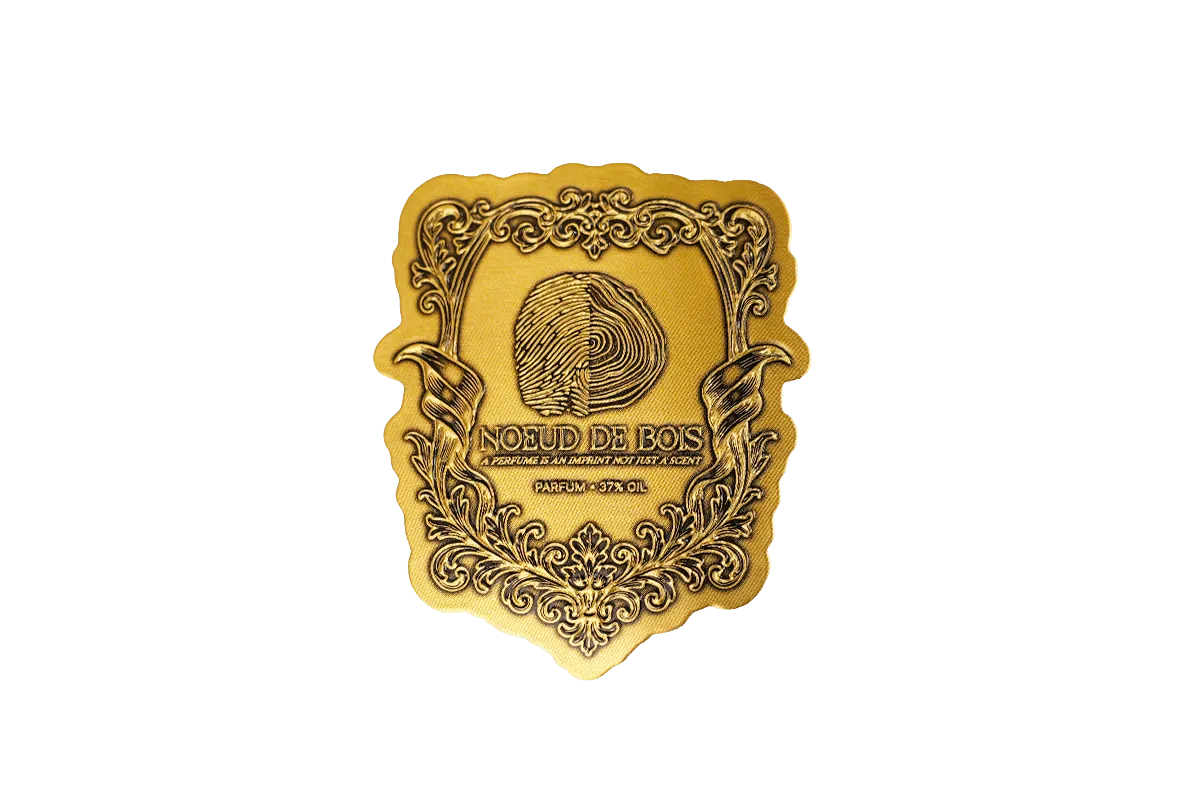
Neither format is cheaper in the abstract, because quantity, material, and format each move the number.
Unit Price by Quantity
Both products amortize setup the same way, so unit price falls steeply with quantity and then flattens. A short run pays full make-ready on every piece, while a production run spreads it thin. Requesting quotes at two or three quantity tiers shows where each product’s curve bends. The bend points differ: sticker runs flatten on material cost, label runs on press speed and finishing passes.
Tooling and Setup Costs
Digital cutting kills most sticker tooling, since contours follow the printed artwork without a steel die. Labels on rotary or flatbed die-cutting still carry die costs, though digital die-cutting narrows that gap every year. Complex shapes raise sticker costs through weeding time and material waste, while labels stay cheap by holding standard shapes and letting the print carry the design.
Material and Finishing Costs
Material drives the base price of both formats, but in different directions. A sticker’s cost climbs with vinyl weight and laminate layers, because outdoor durability is bought in material. A label’s cost climbs with facestock upgrades and finishing passes: metallic or textured papers, foil accents, and matte laminations each add a line to the quote. Proofing sits differently too, with sticker approvals often running digital while label programs budget physical proofs on the real facestock early, because material behavior drives compliance.
Shipping and Application Requirements
Roll labels ship densely, and thousands of them fit in a carton that a few hundred boxed stickers would need to themselves. Single die-cut stickers in individual sleeves cost the most to move per unit, and sheets sit in between. Application requirements complete the budget. Rolls demand machine-compatible specs, while hand-applied stickers only need a backing that peels easily. Programs that need both formats can combine the order at one printer to consolidate setup and freight.
| Cost Factor | 스티커 | 라벨 |
|---|---|---|
| Tooling | Often none with digital cut | Dies for rotary production |
| Material driver | Vinyl and laminate layers | Facestock matched to product |
| Quantity behavior | Flattens on material cost | Flattens on press speed |
| Freight density | Bulky as single pieces | Dense on rolls |
Which Should You Choose for Your Product?
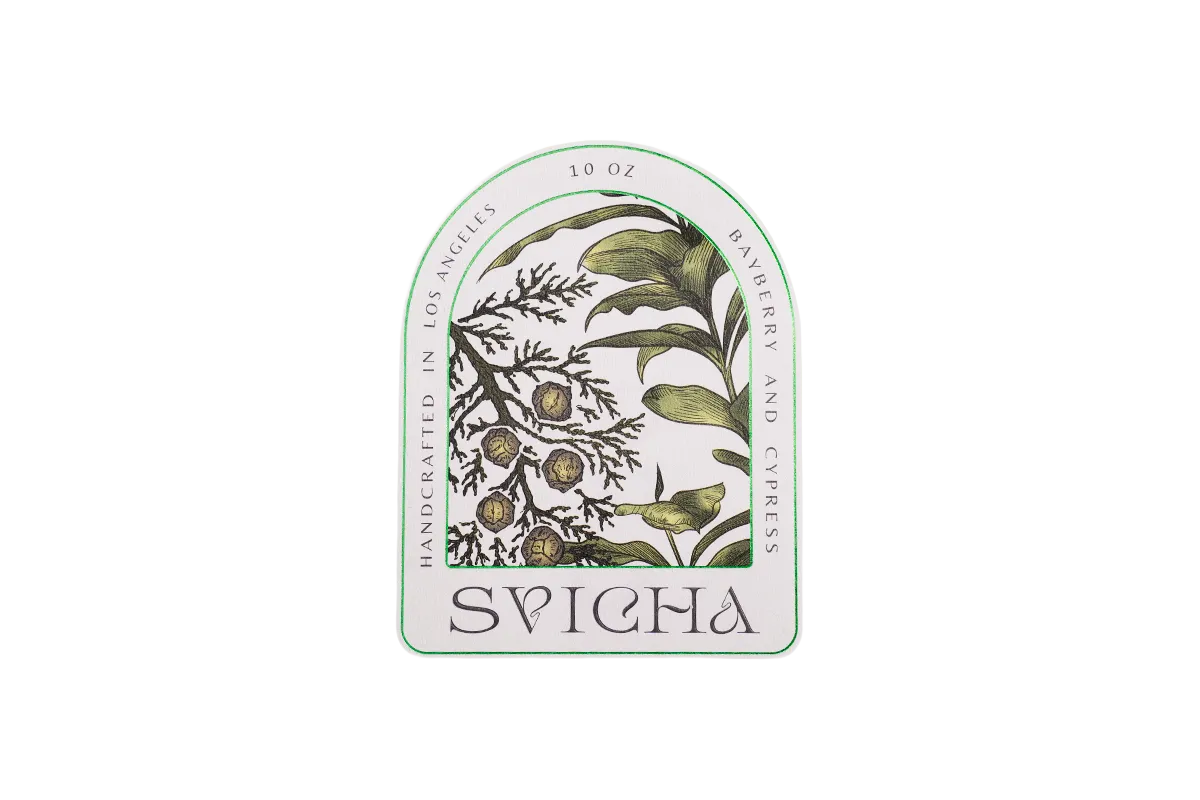
Four questions settle the choice faster than any catalog: destination, duty, data, and volume.
Start with where the piece will live. If it rides into weather, sunlight, or a backpack, it is a sticker job on laminated vinyl. If it sits on a container that will be sold, shipped, and possibly regulated, it is a label job on a facestock matched to that product’s life.
Then ask what it must carry. Promotional art and a logo travel well on a sticker, while ingredients, barcodes, batch codes, and safety text belong on a label specified as packaging. A product that needs both gets both: a printed label set for the container and a sticker program for the campaign around it, ideally produced by one printer on shared materials.
FAQ
Can a sticker work as a product label?
It can when the product stays dry and the label carries no regulated information, such as a logo seal on a gift box. Once ingredients, barcodes, or wet-shelf exposure enter the picture, a proper label on the right facestock does the job better and stays compliant.
Are die-cut stickers waterproof?
Die-cut stickers on vinyl with a laminate overlaminate are waterproof and outdoor-durable, because the film face ignores water and the laminate seals the print. Paper die-cut stickers are not, and they belong indoors away from splashing.
Vinyl vs BOPP, which lasts longer?
Both are durable films, but they serve different lives. Laminated vinyl is the outdoor standard for stickers, holding color through sun and weather for years, while BOPP is engineered for product labels on shelves, resisting water, oil, and squeezing indoors.
Can I order both in one shipment?
Yes, and combining the order usually saves money. One printer runs both products on shared presses and materials, consolidates setup, and ships everything in one freight, which is simpler than coordinating two suppliers and two deliveries.
Conclusion
The difference between a sticker and a label is not the adhesive or the press; it is the job. A sticker promotes, travels, and endures the outdoors on vinyl and laminate. A label identifies, informs, and survives the product’s own environment, from wet shelves to automated filling lines.
Choosing between them is a packaging decision, not a wording preference. Start from where the piece will live and what it must carry, let the destination pick the material, and let the material set the format. Buyers who make that chain explicit get cleaner quotes and fewer surprises at application.
If your program needs both, talk to the Meikei team about the products they will ride on. A combined quotation with samples of each format costs nothing and settles the choice on evidence.