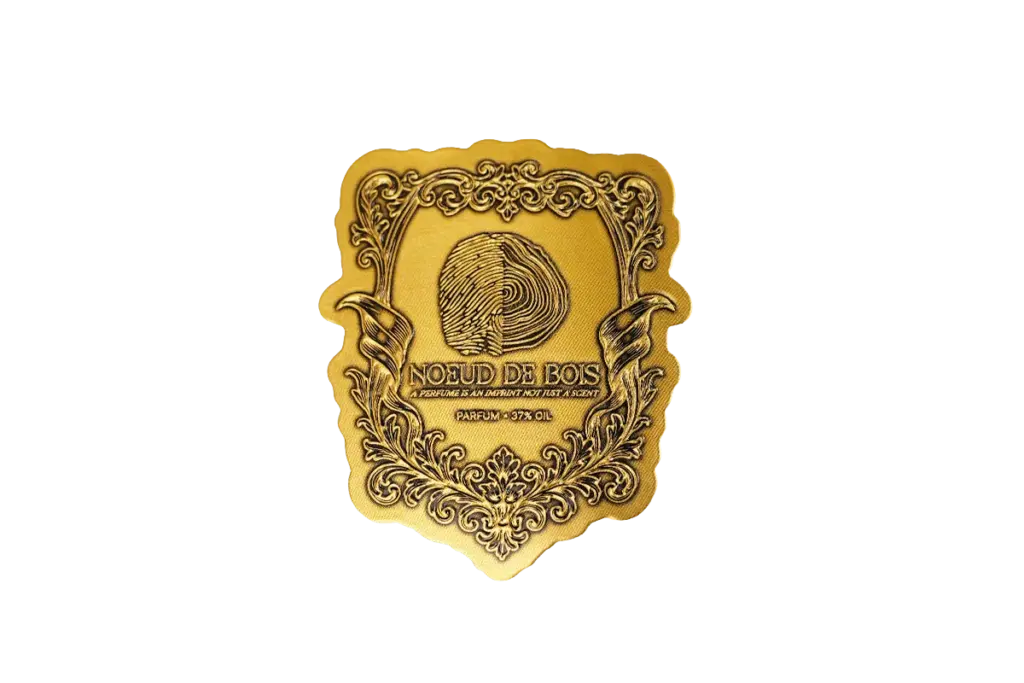
Kraft paper is the most widely used eco-friendly label material in the world, but not all kraft paper labels are created equal. The grade of kraft, the printing method, and the adhesive system all vary dramatically between suppliers.
This guide covers the four main types of kraft paper labels, their performance characteristics, the best applications for each, and the critical decision points that determine whether kraft paper is the right choice for your product — or whether you should be looking at recycled paper, compostable film, or synthetic alternatives instead.
If you are evaluating multiple eco-friendly materials side by side, start with our complete guide to eco-friendly labels for a broader comparison before diving into the kraft-specific details below.
What Are Kraft Paper Labels?
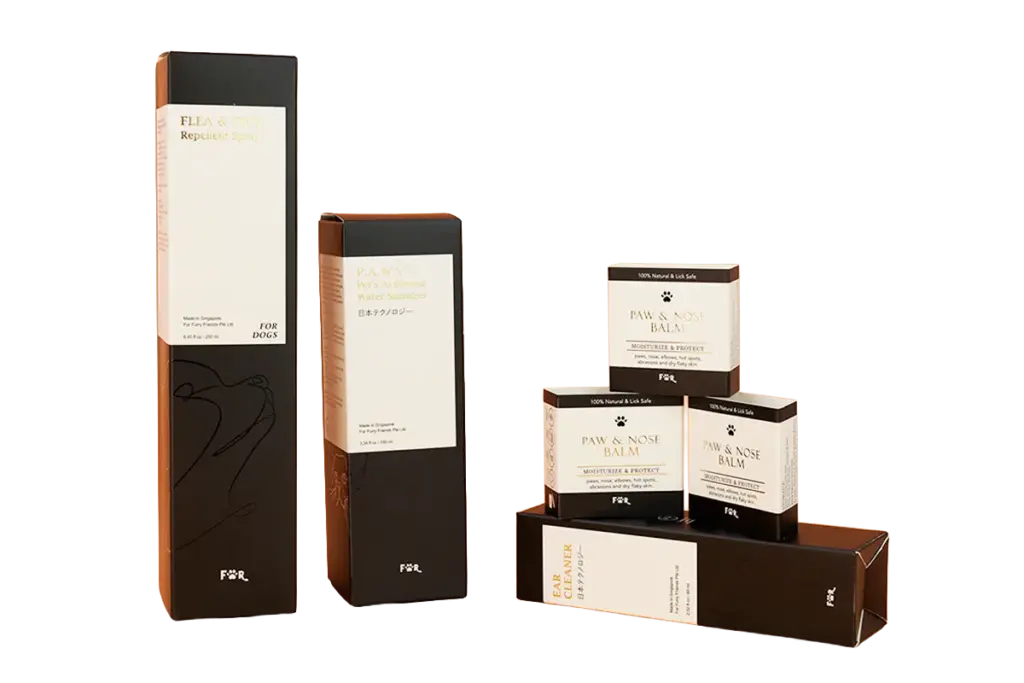
A kraft paper label is a pressure-sensitive label made with kraft paper as the face stock. Kraft paper itself is produced through the kraft process (also called the sulfate process), which converts wood chips into wood pulp using a chemical solution of sodium hydroxide and sodium sulfide. The result is a paper with longer, stronger fibers than standard wood-free paper, and a natural brown color that has become synonymous with organic and sustainable branding.
The key difference between kraft paper and standard white paper is that kraft paper is unbleached. It retains its natural brown tone and requires fewer chemical treatments in the manufacturing process. The longer fibers also give kraft paper higher tensile strength and better tear resistance than coated or uncoated white papers of similar weight.
From an environmental perspective, kraft paper labels are fully recyclable in standard paper recycling streams, biodegradable under natural conditions, and available with FSC (Forest Stewardship Council) certification when sourced from responsible suppliers.
| Property | Kraft Paper | White Paper | BOPP Film | Compostable Film |
|---|---|---|---|---|
| Color | Natural brown | White | White/clear/metallic | Off-white |
| Fiber Length | Long (strong) | Short | N/A (synthetic) | N/A (bio-polymer) |
| Recyclable | SÌ | SÌ | No | SÌ (industrial) |
| Biodegradable | SÌ | SÌ | No | SÌ |
| FSC Available | SÌ | SÌ | No | Rarely |
| Cost | Low | Low | Medium | High |
Types of Kraft Paper Labels
Not all kraft paper is the same. The grade of kraft, the degree of bleaching, and the surface treatment all affect the final appearance, printability, and cost of your label.
Unbleached Kraft
Unbleached kraft paper is the most common and most affordable option. It retains its full natural brown color and rough, fibrous texture. This is the material consumers immediately associate with “organic” and “handmade” products.
Best for: Organic food packaging, etichette per candele, handmade soap, craft beer, artisan goods.
Cost: Lowest. Typically $0.03–$0.08 per label for standard sizes at quantities above 1,000.
Limitation: The rough texture can reduce print sharpness for very fine text or small barcodes. For high-detail printing, consider bleached kraft instead.
Bleached Kraft
Bleached kraft paper goes through an additional bleaching step that lightens the color to a warm cream or light tan. The surface is smoother than unbleached kraft, which improves print quality for detailed graphics and small text.
Best for: Cosmetics, premium retail packaging, health and beauty products where a cleaner aesthetic is desired while still signaling “natural.”
Cost: Medium. Typically 15–25% more than unbleached kraft.
Limitation: The bleaching process adds a chemical step, which slightly reduces the environmental credentials compared to fully unbleached options.
Recycled Content Kraft
Recycled content kraft paper blends kraft fibers with post-consumer waste (PCW) fibers. The result is a label stock that combines the strength of kraft with the waste-diversion benefits of recycled content. PCW content typically ranges from 30% to 80%.
Best for: E-commerce packaging, mass-market consumer goods, brands that want to communicate both “recycled” and “natural” positioning.
Cost: Low to medium. Comparable to unbleached kraft at lower PCW percentages; higher at 80%+ PCW.
Limitation: Higher PCW content means shorter average fiber length, which reduces tensile strength. Labels with 80%+ PCW may be more prone to tearing during high-speed application.
Textured Kraft
Textured kraft paper features embossed or debossed surface patterns — linen, felt, eggshell, or custom textures. The texture adds tactile depth that signals premium quality and artisanal craftsmanship.
Best for: Luxury candles, boutique cosmetics, high-end spirits, confezione regalo.
Cost: Highest. Typically 30–50% more than standard unbleached kraft, depending on the complexity of the texture.
Limitation: The deep texture can make printing challenging. Very fine details may not reproduce well. Textured kraft is best paired with simple designs, foil stamping, or blind embossing (which requires zero ink).
Key Properties & Performance Characteristics
Before choosing kraft paper for your product, you need to understand how it performs in real-world conditions. Kraft paper is not a universal solution — it excels in some environments and fails in others.
| Performance Metric | Unbleached Kraft | Bleached Kraft | Recycled Kraft | BOPP Film | Compostable Film |
|---|---|---|---|---|---|
| Printability | Excellent (porous, absorbs ink) | Very Good | Good | Good (needs corona) | Fair |
| Moisture Resistance | Poor | Poor | Poor | Excellent | Poor |
| Heat Resistance | Moderate | Moderate | Moderate | Excellent (150–200°F) | Poor |
| Tear Resistance | Good | Good | Fair | Excellent | Poor |
| Oil Resistance | Poor | Poor | Poor | Excellent | Poor |
| UV Resistance | Fair | Fair | Fair | Good | Poor |
| Shelf Life | 12–18 months | 12–18 months | 12 months | 24+ months | 6–9 months |
| Adhesive Options | Water-based, hot melt | Water-based, hot melt | Water-based | Acrylic, hot melt | Water-based (limited) |
Critical fact: Container surface temperatures on burning candles can reach 150°F to 200°F. Kraft paper performs moderately at these temperatures — it will not melt or deform like some films, but the adhesive bond can weaken if the wrong adhesive is specified. For active burn containers, you need a heat-resistant acrylic adhesive paired with the kraft face stock, or you should switch to BOPP or vinyl film entirely. For more detail on candle-specific requirements, see our guide to candle label materials.
The porous surface of kraft paper is both its strength and its weakness. On the positive side, it absorbs soy-based and vegetable-based inks beautifully, producing rich, even color with excellent opacity. On the negative side, that same porosity means kraft paper absorbs moisture, oli, and wax — which leads to staining, bubbling, and edge lifting in wet or oily environments.
Best Applications for Kraft Paper Labels
Kraft paper’s natural brown tone and fibrous texture send a clear signal to consumers: this product is organic, handmade, or environmentally conscious. That brand association is powerful — but it only works when kraft paper is used in the right application.
Candle & Fragranza per la casa
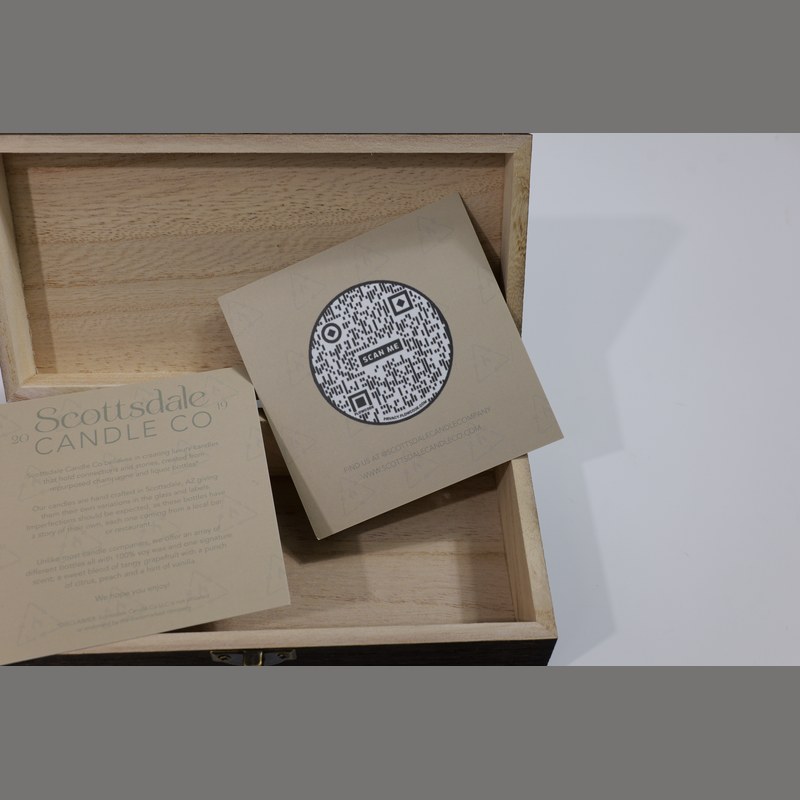
Kraft paper labels are widely used in the candle industry, but there is an important distinction that many buyers miss.
Where kraft works: Outer packaging, gift boxes, decorative display candles, and candles that will be burned infrequently in low-heat environments. The natural aesthetic pairs perfectly with soy wax, glass jars, and minimalist branding.
Where kraft does not work: Direct application on containers that will be regularly burned. The heat, wax spills, and fragrance oil exposure will degrade uncoated kraft paper over time — causing staining, edge lifting, and adhesive failure. For active burn containers, switch to heat-resistant BOPP or vinyl film.
Organic Food & Bevanda
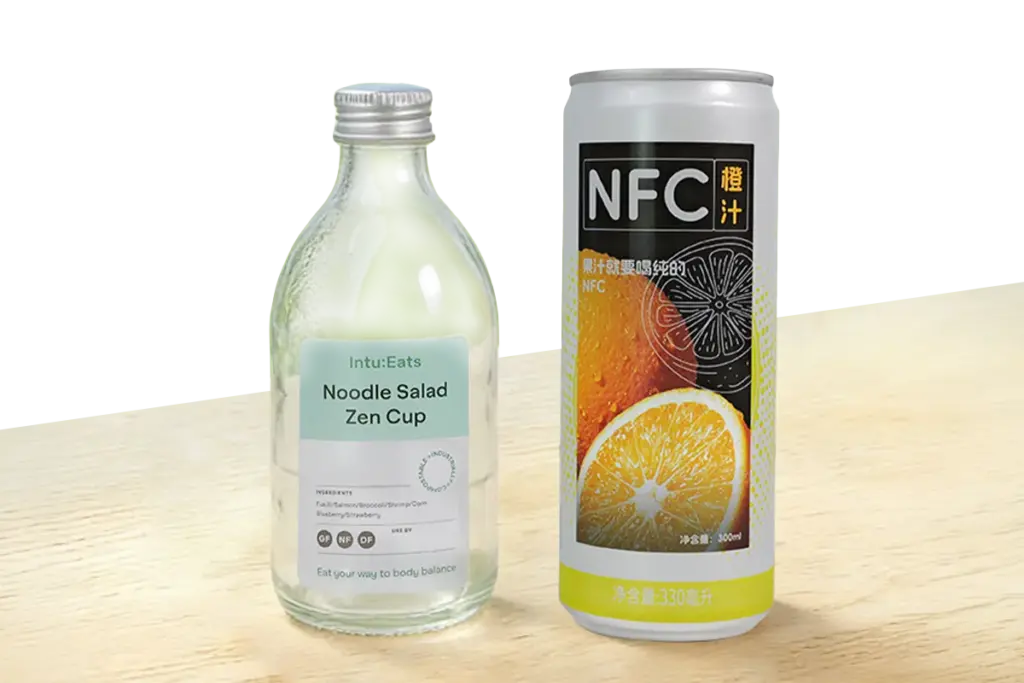
This is arguably the strongest application for kraft paper labels. The material’s natural brown color subconsciously communicates “organic,” “natural,” and “handcrafted” to consumers — which is exactly the brand positioning that organic food and beverage brands need.
Best applications: Honey jars, jam and preserve jars, organic tea packaging, craft beer bottles, artisan coffee bags, cold-pressed juice bottles.
Important consideration: If your product will be refrigerated or stored in a cold, humid environment, you need to add a protective overlaminate to prevent moisture absorption. Alternatively, consider bleached kraft (which has a slightly tighter surface) or switch to a moisture-resistant film.
Cosmetics & Personal Care
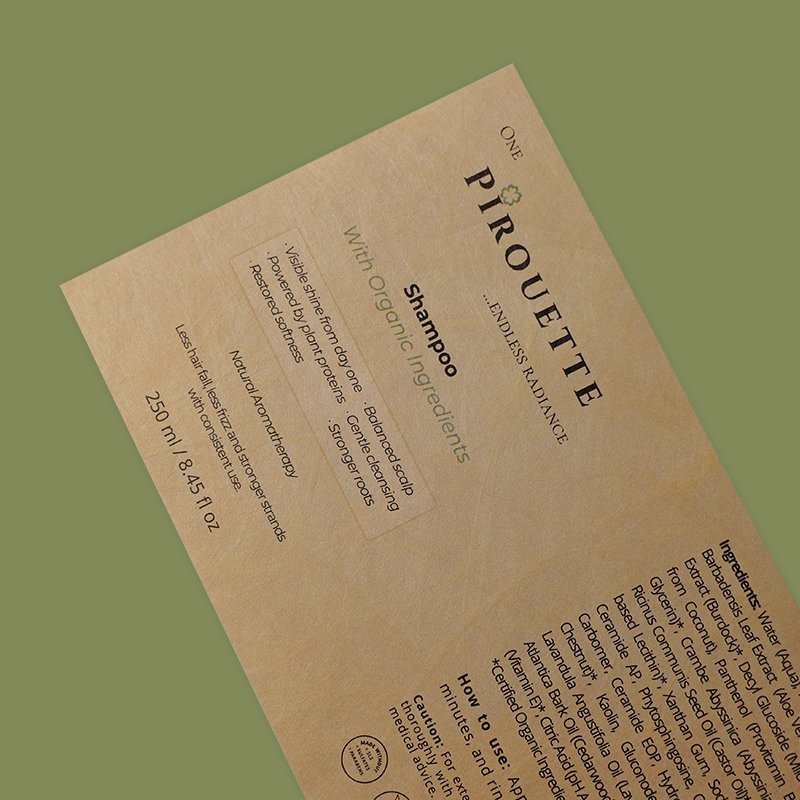
Kraft paper works well for solid and dry cosmetics — bar soap, solid shampoo bars, deodorant sticks in paper tubes, and solid perfume compacts. For these products, the label will not be exposed to moisture during normal use.
Where to avoid: Liquid products that will be used in wet environments — shampoo bottles, shower gel, liquid soap. The moisture exposure will cause kraft paper to absorb water, swell, and eventually delaminate from the container.
Mestiere & Artisan Goods
Kraft paper is the default choice for artisan and craft products — handmade leather goods,文创 products, confezione regalo, and small-batch specialty items. The material’s rough texture and natural color reinforce the “handmade” brand positioning.
Premium differentiation: Pair textured kraft with blind embossing to create 3D tactile effects using zero ink and zero chemicals. This is the ultimate eco-luxury finish — it signals premium quality while maintaining full environmental credibility.
Kraft Paper Labels vs Other Eco-Friendly Materials
Kraft paper is not the only eco-friendly label material available. To make an informed decision, you need to understand how it compares to recycled paper, compostable film, and biodegradable alternatives across the dimensions that matter most to your business.
| Dimension | Kraft Paper | Recycled Paper | Compostable Film | Biodegradable Film |
|---|---|---|---|---|
| Material Cost | Low (baseline) | Low to Medium | High (+30–40%) | Medium (+15–25%) |
| Recyclable | SÌ (standard streams) | SÌ (standard streams) | SÌ (industrial only) | No (breaks down naturally) |
| Biodegradable | SÌ (6–12 months) | SÌ (6–12 months) | SÌ (90–180 days, industrial) | SÌ (2–5 years, uncontrolled) |
| FSC Certifiable | SÌ | Rarely (PCW content) | No | No |
| Print Quality | Excellent | Good | Fair to Good | Fair |
| Moisture Resistance | Poor | Poor | Poor | Poor to Fair |
| Brand Signal | Organic, handmade, natural | Recycled, eco-conscious | Premium sustainable | Vague (no standard) |
| Shelf Life | 12–18 months | 12 months | 6–9 months | 12–24 months |
Key insight: Kraft paper is the best value in eco-friendly labels. It delivers the strongest brand signal at the lowest cost. Recycled paper is comparable in price but lacks the distinctive brown tone that consumers associate with natural products. Compostable film offers the highest environmental credentials but costs 30–40% more and has a shorter shelf life.
For a complete comparison of all eco-friendly label materials (including bamboo, bagasse, and cotton), see our eco-friendly labels complete guide.
Printing & Finishing Options for Kraft Paper
The label material is only half the equation. The printing method and finishing options determine the final visual quality, durabilità, and environmental impact of your label.
Soy-Based Ink Printing
Kraft paper’s porous surface is naturally compatible with soy-based and vegetable-based inks. The ink penetrates the fibers evenly, producing rich, saturated color with excellent opacity — often better than petroleum-based inks on the same substrate.
Advantages of soy ink on kraft paper:
- Lower VOC emissions during printing and drying
- Easier to remove during paper recycling (de-inking)
- Brighter color on porous substrates compared to petroleum ink
- No petroleum-derived compounds in the final product
Most eco-focused label manufacturers now use soy-based ink as the standard for kraft paper and other uncoated papers. Confirm with your supplier that soy ink is the default (not a premium upsell).
Blind Embossing & Stampa a caldo
Blind embossing uses mechanical pressure to create raised or recessed patterns on the label surface — without any ink, foil, or chemical treatment. The result is a subtle 3D texture that adds premium tactile appeal while maintaining full recyclability and biodegradability. This is the ultimate eco-luxury finish.
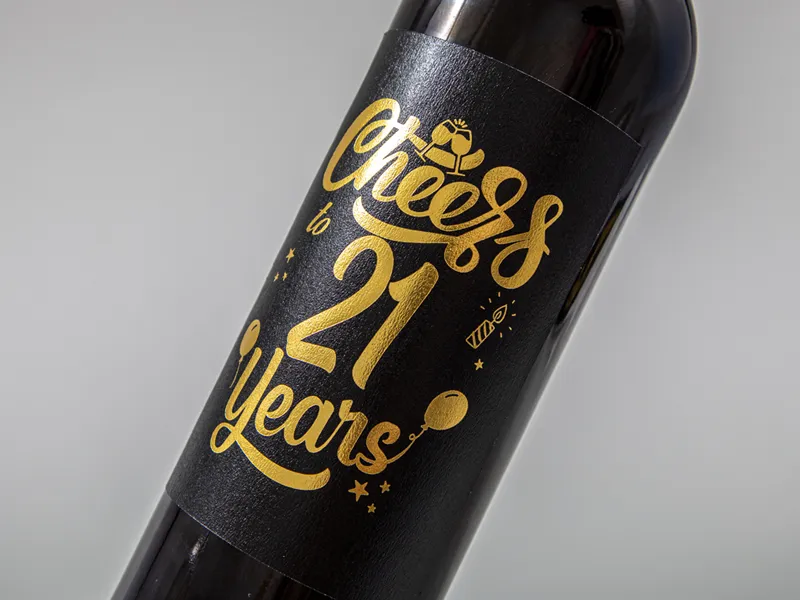
Foil stamping applies a thin layer of metallic foil (gold, silver, copper, or custom colors) using heat and pressure. Foil stamping on kraft paper creates a striking contrast between the natural brown surface and the metallic accent. However, foil stamping adds a non-paper element that may affect recyclability depending on the foil type and coverage area.
Die-Cutting & Custom Shapes
Kraft paper is easy to die-cut and supports virtually any shape — circles, rectangles, ovals, custom silhouettes, and intricate cut-out patterns. The material’s tensile strength holds up well during high-speed die-cutting, and the fibrous texture hides minor cutting imperfections better than smooth paper stocks.
Common shapes for kraft labels:
- Round: 2″, 2.5″, 3″ diameters (jars, bottles)
- Rectangle: 2″×3″, 2.5″×4″, 3″×5″ (boxes, bags)
- Custom die-cut: Leaf shapes, badge/seal shapes, brand-specific silhouettes
When NOT to Use Kraft Paper
Kraft paper is versatile, but it is not universal. Here are the specific scenarios where kraft paper will underperform and you should consider alternatives:
- High-moisture environments (refrigerated products, frozen food, bathroom products, outdoor use in rain) → Switch to BOPP or vinyl film. Kraft paper absorbs moisture, which causes swelling, staining, and adhesive failure.
- High-temperature containers (active-burn candles, hot-fill food products, automotive/engine components) → Switch to heat-resistant BOPP, polyester (PET), or vinyl. Kraft paper can withstand moderate heat but will discolor and the adhesive will weaken above 200°F.
- “No-label look” transparent applications (clear glass bottles, minimalist see-through designs) → Switch to clear BOPP film. Kraft paper is opaque by definition — it cannot deliver a transparent or see-through effect.
- Extended outdoor exposure (products stored outdoors for months, UV-exposed signage) → Switch to synthetic film with UV-resistant overlaminate. Kraft paper degrades under prolonged UV exposure.
- Products requiring 2+ year shelf life without degradation → Switch to synthetic film. Kraft paper’s shelf life is typically 12–18 months under normal storage conditions.
Fact check: Uncoated kraft paper absorbs wax residue, condensation, and fragrance oils. On active candle containers, this leads to visible staining, bubbling, and edge lifting within weeks. This is not a defect in the material — it is a mismatch between material properties and application environment.
How to Source Kraft Paper Labels from a Manufacturer
When evaluating a label supplier for kraft paper labels, check these five points before placing an order:
- FSC certification. Ask for the supplier’s FSC certificate number and verify it on the FSC public database (info.fsc.org). A supplier that claims FSC but cannot provide the certificate number is not FSC. FSC certification ensures the kraft fibers come from responsibly managed forests.
- Adhesive transparency. The face stock gets attention, but the adhesive matters just as much. Ask whether the adhesive is water-based, vegan, and biodegradable. Some suppliers use compostable or recyclable face stocks with conventional petroleum-based adhesives — which defeats the purpose of choosing an eco-friendly material.
- Ink system. Confirm that the supplier uses soy-based or vegetable-based ink as standard, not as a premium upsell. At volume, soy ink is priced comparably to petroleum ink — there is no reason to accept petroleum ink on a kraft paper label.
- Physical samples. Request samples on the specific kraft grade you are considering (unbleached, bleached, recycled, or textured). Run your own tests: moisture exposure, refrigeration, abrasion, adhesion on your actual container surface. No supplier’s data sheet replaces real-world testing on your specific packaging.
- MOQ and lead times. Eco-friendly materials sometimes carry higher minimum order quantities because suppliers run them in dedicated batches. Confirm MOQs and lead times before finalizing your material selection. UN 40% cost premium on a small run may be manageable, but a 6-week lead time may not fit your launch timeline.
MeiKei offers free material consultations and physical sample kits across the eco-friendly & natural label range. Our FSC-certified supply chain, soy-based ink standard, and 100% biodegradable adhesive commitment mean you can verify every claim before committing to production.
Domande frequenti
Are kraft paper labels waterproof?
No. Kraft paper is porous and absorbs moisture. When exposed to water, condensation, or high humidity, kraft paper will swell, stain, and eventually delaminate from the container. For products that will be stored in wet environments (refrigerators, bathrooms, outdoor use), add a protective overlaminate or switch to BOPP or vinyl film, which are fully waterproof.
Can kraft paper labels be used on candles?
SÌ, but with an important caveat. Kraft paper labels work well for candle outer packaging, gift boxes, and decorative display candles. For labels applied directly to the candle container that will be regularly burned, kraft paper is not the best choice. The heat (150°F–200°F), wax spills, and fragrance oil exposure will degrade uncoated kraft over time. For active burn containers, use heat-resistant BOPP or vinyl film with a permanent acrylic adhesive.
What is the difference between kraft paper and recycled paper labels?
Kraft paper is made from unbleached virgin wood fibers processed through the kraft method. It has long fibers, high tensile strength, and a natural brown color. Recycled paper is made from post-consumer waste (PCW) fibers. It has shorter fibers (lower tensile strength), a greyer tone, and communicates a “recycled” brand signal rather than a “natural/organic” signal. Both are recyclable and biodegradable.
Are kraft paper labels recyclable?
SÌ. Kraft paper labels are fully recyclable in standard paper recycling streams. The unbleached fibers can be reprocessed alongside other paper waste. Kraft paper is also biodegradable under natural conditions, typically breaking down within 6–12 months.
How much do kraft paper labels cost?
Kraft paper is typically the lowest-cost eco-friendly label option. For standard sizes (2″×3″ to 3″×5″) at quantities above 1,000, expect to pay $0.03–$0.08 per label for unbleached kraft, $0.05–$0.12 for bleached kraft, and $0.08–$0.15 for textured kraft. Pricing varies based on size, quantità, printing complexity, and finishing options.
Can you print full-color designs on kraft paper?
SÌ. Kraft paper works well with soy-based inks for full-color CMYK printing. The brown background may slightly mute very light colors (pastels, light greys), but dark colors, rich tones, and photographic images reproduce well. For the sharpest detail, consider bleached kraft (smoother surface) or add a thin white ink underbase before the CMYK layers.
What is the minimum order quantity for custom kraft paper labels?
MOQs vary by supplier and printing method. For digital printing, typical MOQs range from 100–500 sheets. For flexographic printing (which offers better color consistency at volume), MOQs are typically 1,000–5,000 labels. Confirm with your supplier before finalizing your material selection, as eco-friendly materials sometimes carry higher MOQs due to dedicated batch runs.
Kraft often gets marketed as the eco option — compostable vs. biodegradable labels clarifies which end-of-life claims actually hold up.
If you want kraft with certified recycled content, the recycled paper labels buyer’s guide explains how the percentages are checked.
Conclusion
Kraft paper labels deliver the strongest eco-brand signal at the lowest cost of any sustainable label material. The natural brown tone, fibrous texture, and compatibility with soy-based inks make kraft paper the default choice for organic food, handmade cosmetics, craft beverages, and artisan goods.
The decision framework is straightforward:
- Evaluate your product environment. Will the label be exposed to moisture, heat, oil, or extended UV? If yes, kraft paper may not be the right choice — consider BOPP, vinile, or compostable film instead.
- Select the right kraft grade. Unbleached kraft for maximum eco-credentials and lowest cost. Bleached kraft for cleaner aesthetics. Recycled content kraft for waste-diversion positioning. Textured kraft for premium differentiation.
- Test before you commit. Request physical samples from your supplier and test them in real conditions — refrigeration, moisture exposure, abrasion, adhesion on your actual container surface.
MeiKei offers free material consultations and physical sample kits across the eco-friendly & natural label range. Our FSC-certified supply chain, soy-based ink standard, and 100% biodegradable adhesive commitment mean you can verify every claim before committing to production.