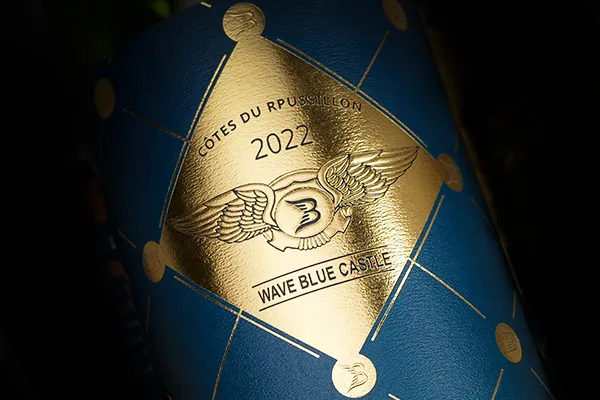
Foil labels are widely used to add metallic finishes and a premium look to wine, cosmetics, food, candles, beverages, and other product packaging. Hot foil and cold foil offer different advantages in terms of appearance, compatible materials, production efficiency, and finishing options.
The differences become more noticeable when label materials, artwork, production volume, and finishing requirements come into play. This article compares hot foil and cold foil across these factors, so you can better understand which method fits your label printing and packaging project.
What Is the Difference Between Hot Foil and Cold Foil?
Hot foil uses heat, pressure, and engraved dies for tactile luxury on textured papers, while cold foil applies inline UV-curable adhesive for high-speed, flat metallic designs.
| Feature | Hot Foiling | Cold Foiling |
|---|---|---|
| Mechanism | Heated engraved metal die with mechanical pressure | UV-curable adhesive and instant UV lamp curing |
| Tooling Required | Custom metal dies (brass, copper, or magnesium) | Standard photopolymer flexographic or offset plates |
| Substrates | Rough, heavily textured, or uncoated papers | Smooth, flat coated papers or synthetic films (BOPP, PET) |
| Tactile Finish | Dimensional relief, debossed or embossed depth | Completely flat metallic surface |
| Overprinting | Highly limited; foil acts as the final decorative layer | Excellent inline CMYK overprinting for custom metallic hues |
| Press Speed | Moderate | High |
How Hot Foiling Uses Heat, Pressure, and a Die
When deciding on the right embellishment for luxury packaging, understanding the fundamental difference between hot foil and cold foil ensures proper material performance. Hot foiling relies on thermal energy and mechanical force to fuse metallic layers. This mechanical approach allows converters to stamp heavy metallic designs onto irregular surfaces, ensuring deep color opacity.
- Foil Structure: Utilizes a multi-layer foil built on a polyester carrier featuring a release layer, a vapor-deposited aluminum layer, and a heat-activated adhesive.
- Tooling Setup: Requires a custom heated metal die, with the die temperature adjusted according to the foil, substrate, and press requirements.
- Physical Bond: Applies controlled dwell time and mechanical pressure to bond the metallic film to the substrate while stripping away the spent carrier web.
- Tactile Relief: Creates a distinct tactile relief or deep debossed effect that adds premium sensory value to high-end packaging.
- Paper Compatibility: Can work well with textured, specialty, and uncoated papers, making it a practical option for premium wine, spirits, cosmetics, and other packaging labels.
How Cold Foiling Uses Adhesive and UV Curing
In high-volume packaging lines, throughput speed and setup cost dictate the manufacturing flow. Cold foiling avoids heated dies and uses a printed UV-curable adhesive to transfer the metallic foil inline. Because this technique uses standard printing plates instead of custom metal dies, setup times and upfront costs drop significantly.
- Plate-Driven Setup: Applies a specialized UV-curable adhesive directly to the substrate using standard photopolymer flexographic or offset printing plates instead of metal dies.
- Transfer Mechanism: Brings the foil into contact with the wet adhesive at a pressure nip station before passing immediately under UV curing lamps.
- Chemical Cure: Locks the metallic layer to the substrate via rapid chemical polymerization of the adhesive, stripping clean the unbonded foil areas.
- Inline Velocity: Enables rapid inline processing at speeds reaching up to 300 meters per minute on high-capacity flexo and offset presses.
- CMYK Overprinting: Produces a completely flat metallic finish that easily accepts CMYK overprinting for custom gradient metallics and fine halftone graphics.
- Substrate Demands: Demands highly smooth, flat substrates like coated papers or synthetic films to ensure consistent adhesive laydown and crisp image transfer.
How Do Hot Foil and Cold Foil Affect Label Appearance?
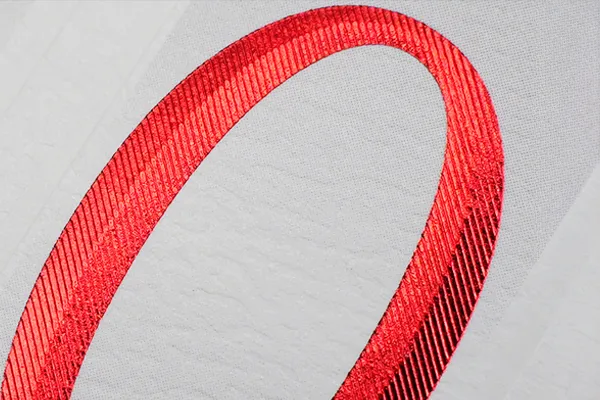
Hot foil delivers mirror-like haptic luxury on textured stocks, while cold foil provides high-speed, flat metallic versatility with CMYK overprinting on smooth materials.
Deciding between hot foil and cold foil directly dictates your finished label appearance, transforming basic packaging into a premium brand touchpoint. The physical and chemical differences between these two methods create distinct tactile and visual profiles on the retail shelf.
Metallic Brightness, Edge Definition, and Surface Effects
- Foil Transfer Mechanism: Hot foil utilizes a heated brass die operating at 110–130 °C alongside physical pressure to stamp a highly reflective, mirror-like metallic layer with dense, opaque coverage.
- Specular Gloss Target: Cold foil uses a UV-curable adhesive applied at ambient temperature to produce a flat metallic layer, targeting gloss readings of 80 GU or higher at 60° on coated substrates so it does not read as standard metallic ink.
- Fine Line Edge Sharpness: Engraved dies in hot stamping deliver exceptionally sharp edges for fine text and intricate logos. Cold foil edges remain slightly softer, typically reaching their physical limit at details down to 0.2 mm.
- Haptic and Dimensional Relief: Hot foil can be combined with embossing or debossing to create a more dimensional tactile effect, while cold foil is primarily used for a flat metallic finish.
Flat Metallic Effects and Overprinting Possibilities
Cold foil excels at laying down large, continuous flat metallic panels and background fields that sit perfectly flush with the label material. This makes it a preferred option for full-coverage designs on smooth synthetics.
Inline overprinting allows manufacturers to print CMYK and spot inks directly over cold foil, producing endless metallic color variations using a single silver foil roll. Prepress teams can leverage this to create custom colored metallics and complex gradients in a single press pass.
Hot foil works best for selective, high-end branding accents like premium crests and seals where a distinct, slightly indented outline is desired. It creates localized highlights that draw the eye without overwhelming the rest of the label.
Standard inks may not adhere consistently to hot-stamped foil surfaces, so overprinting requires careful testing of the foil and ink combination. If your design includes printing over hot foil, use materials that have been tested for the intended application.
Command Premium Attention With Metallic Finishes

Which Label Materials Work With Hot and Cold Foil?
Understanding how different label materials work with hot and cold foil is essential for preventing adhesion failures and securing crisp metallic edge definition on your packaging.
Substrate texture dictates your foil choice: rough, fibrous papers require the mechanical heat and pressure of hot foiling, while smooth films and coated stocks are built for inline cold foil adhesive.
Textured and Specialty Papers for Hot Foiling
Rough or highly absorbent substrates can make cold foil transfer more difficult because the adhesive may penetrate the surface before curing. For these materials, hot foiling can offer a more consistent option, while cold foil may still be possible with the right adhesive and press settings.
- Substrate Compatibility: Ideal for textured specialty stocks, felt-marked papers, cotton-style substrates, and uncoated premium wine label materials.
- Application Mechanism: Uses physical heat and metal die pressure to mechanically stamp the foil deep into uneven fibers, bypassing the need for a perfectly flat adhesive layer.
- Visual and Haptic Finish: Achieves crisp metallic graphics and tactile, debossed finishes that strengthen high-end boutique branding.
- Operational Tolerances: Requires precise calibration of temperature, dwell time, and tonnage to avoid crushing, warping, or tearing delicate paper fibers.
Working with rough stocks means relying on physical deformation. The heated metal die acts as a branding iron, forcing the foil to bridge surface valleys that would otherwise ruin a liquid adhesive layer.
Smooth Paper and Film Materials for Cold Foiling
Modern high-speed printing lines require rapid, inline decoration to keep per-unit costs low. For non-porous synthetics, cold foiling integrates directly into existing print stations as a standard ink unit.
- Substrate Compatibility: Performs exceptionally on high-gloss coated papers, smooth art papers, and synthetic film facestocks like BOPP or PET.
- Adhesion Mechanism: Relies on a UV-curable adhesive printed directly onto the substrate, so surface smoothness and absorbency need to be considered to achieve consistent adhesive coverage and foil transfer.
- Production Efficiency: Delivers high-speed, inline production efficiency and brilliant metallic reflection on heat-sensitive film labels that would melt under traditional hot stamping dies.
- Failure Risks: Results in poor adhesion, flaking, and rough edge definition if applied to highly absorbent or textured stocks where the adhesive cannot lay flat.
Because cold foiling does not require a heated stamping die, it can be integrated into an inline printing process. This makes it particularly useful for packaging projects where production efficiency, repeat designs, and metallic overprinting are important considerations.
When Is Hot Foiling a Better Choice for Labels?
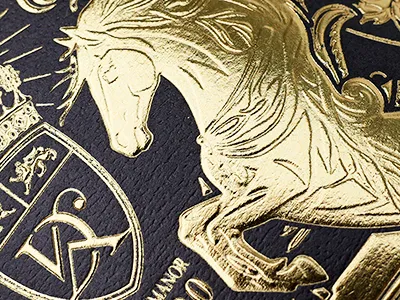
Hot foiling can deliver a highly reflective metallic appearance and, when combined with embossing or debossing, a distinctive tactile effect that works especially well on textured premium label stocks.
When designing packaging for premium spirits or high-end cosmetics, choosing between hot foiling for labels and alternative metallic methods directly impacts shelf appeal and brand perception. Applying metallic elements to textured, uncoated, or rough papers presents a unique challenge. Standard adhesive-based foils often fail on these irregular surfaces because the glue sinks into the paper fibers, leaving patchy coverage and dull reflection. Hot foiling bypasses this limitation entirely.
Premium Details, Fine Elements, and Tactile Effects
The heat and pressure used in the hot stamping process force the metallic carrier into the deepest valleys of textured substrates. This mechanical transfer ensures consistent coverage where chemical adhesion falls short.
- Visual brilliance: Maximum opacity and mirror-like metallic clarity on rough, textured, or uncoated papers.
- Edge definition: Sharp contours for logos, crests, and small text without the bleeding or feathering common with wet adhesives.
- Physical haptics: Can be combined with embossing or debossing to add a noticeable dimensional effect and strengthen the premium look and feel of the label.
Because the metal die physically presses the foil into the paper under high heat, the transfer remains complete and stable over time. This makes the process the standard for luxury sectors where visual flaws immediately damage brand trust.
Combining Hot Foil With Embossing and Other Finishes
Converters may combine multiple finishing techniques to create more distinctive packaging designs. Hot foil can be integrated with embossing, debossing, matte coatings, and other stamping effects to build visual and tactile contrast.
- Embossing: Creates raised metallic graphics with simultaneous dimensional shine and three-dimensional tactile ridges.
- Multi-layered contrasts: Integrates cleanly with blind embossing, matte varnishes, and soft-touch coatings to build deep visual texture.
- Substrate resilience: Maintains reliable adhesion and crisp detail when stamped over thick, textured, or cotton-based packaging boards.
Wineries, distillers, and cosmetic brands rely on this technical compatibility to achieve the heavy tactile contrast needed on retail shelves. The physical bond withstands the rigorous bottling, shipping, and handling processes without peeling or losing its luster.
When Can Cold Foiling Be a Better Choice?
Cold foiling outpaces traditional hot stamping when your design requires rapid SKU changes, high-speed inline production on film, or complex multi-color metallic gradients.
Detailed Printed Graphics and Metallic Color Effects
How do you achieve sharp micro-text or complex halftone gradients without the high cost of custom dies? Choosing cold foiling allows you to bypass the mechanical limitations of hot stamping. By using a printed UV adhesive plate instead of a metal stamp, you gain precise control over tight graphic details.
- Micro-Typography: Standard photopolymer plates transfer fine lines, tiny fonts, and halftones with ink-like precision.
- Inline Overprinting: Standard CMYK inks print directly over a base silver foil, producing an infinite spectrum of custom metallic hues and gradients.
- High Visual Complexity: The press builds multi-toned metallic illustrations, photographic elements, and holographic patterns in a single pass.
- Zero Tooling Delays: Operators update artwork by swapping inexpensive plates, which speeds up seasonal SKU launches.
This process gives designers the freedom to treat metallic elements like standard ink colors, shifting the focus from physical production constraints to pure visual branding.
Considering Production Volume, Design, and Material Requirements
High-volume label runs demand strict cycle-time management. Running decorative elements off-line slows down your entire production line, raising costs and increasing registration risks. Cold foiling integrates directly into your existing press setup, turning embellishment into a standard inline printing unit.
- Volume Economics: Cold foiling can reduce costs on medium- to high-volume runs by avoiding custom metal dies. Actual savings depend on volume, artwork, substrate, and press setup.
- High-Speed Labeling: The flat, smooth metallic finish lays down without embossing, preventing labeling jams on high-speed bottling lines.
- Substrate Compatibility: The adhesive bonds perfectly to smooth coated papers and filmic stocks like PE, BOPP, and shrink film.
This combination of high press speeds and flat application makes the technology highly effective for fast-moving consumer goods, where margins and application efficiency dictate product profitability.
Final Thoughts
Hot foil and cold foil each have their strengths. Hot foil works particularly well for tactile effects and textured premium papers, while cold foil offers efficient inline production and greater flexibility for flat metallic designs and overprinting.
The best result comes from matching the foil process with the label material, artwork, production volume, and desired finish. Meikei provides custom labels and paper boxes with a range of foil and finishing options, supporting projects from material selection and sampling to large-scale production. For brands looking for a reliable custom labels supplier, this approach helps balance visual impact, production efficiency, and consistent quality.
FAQs
What is the difference between hot foil and cold foil?
Hot foil uses heat, pressure, and a metal die to transfer foil onto the label surface. Cold foil uses a UV-curable adhesive and does not require a heated metal die. Hot foil is well suited to tactile and textured effects, while cold foil works well for flat metallic finishes and inline overprinting.
Is hot foil better than cold foil?
Neither method is universally better. Hot foil is a strong option for textured papers, tactile effects, and metallic accents. Cold foil is more suitable for smooth substrates, high-speed production, and designs that require CMYK overprinting.
Which is more expensive, hot foil or cold foil?
The cost depends on the substrate, order volume, artwork, tooling, and finishing requirements. Hot foil usually requires a custom metal die, while cold foil uses printing plates. For larger production runs, cold foil can offer lower tooling costs and efficient inline production.
Which foil printing method is faster?
Cold foil generally supports faster inline production because the foil application can be integrated into the printing process. Actual production speed depends on the press, substrate, adhesive, foil, artwork, and curing requirements.
Can hot foil be used on textured paper?
Yes. Hot foil is suitable for many textured and specialty papers because the heated die and pressure can help transfer foil onto uneven surfaces. The specific paper, foil grade, pressure, temperature, and die design should be tested before mass production.
Can cold foil be used on film labels?
Yes. Cold foil can be used on smooth film materials such as BOPP and PET when the adhesive, foil, ink, and substrate are properly matched. It is particularly useful for metallic effects on film labels where inline printing is required.
Can cold foil be overprinted with CMYK?
Yes. CMYK inks can be printed over cold foil to create metallic colors, gradients, and more complex visual effects. This makes cold foil useful for labels that require both metallic elements and multicolor graphics in the same production process.
Can hot foil be combined with embossing?
Yes. Hot foil can be combined with embossing or debossing to create both metallic color and physical relief. This combination is commonly used for premium labels that need a more tactile and dimensional appearance.
Which foil method is better for wine labels?
Both methods can work well for wine labels, depending on the material and design. Hot foil is a good choice for textured or uncoated wine label papers and tactile effects. Cold foil works well for smooth materials, detailed graphics, metallic backgrounds, and designs that require CMYK overprinting.
Which foil method is better for cosmetic labels?
Both hot foil and cold foil can be suitable for cosmetic labels. Hot foil works well for metallic accents and tactile effects, while cold foil offers greater flexibility for smooth film materials, detailed graphics, and inline color printing.
Does cold foil require a metal die?
No. Cold foil does not require a custom metal die. The metallic foil is transferred using a printed UV-curable adhesive, typically applied through a flexographic or offset printing plate, followed by pressure and UV curing.
Does hot foil require special tooling?
Yes. Hot foil normally requires a custom metal die based on the artwork. Tooling requirements can vary depending on the design, substrate, foil type, and finishing effect.
Which foil method is better for detailed label designs?
Cold foil can be advantageous for detailed designs, gradients, and multicolor metallic effects because it can be integrated with conventional printing. Hot foil is also capable of producing sharp metallic accents and fine details, particularly when combined with a well-designed metal die.
Can hot and cold foil create the same metallic effects?
They can create similar metallic appearances, but the final effects are not identical. Hot foil typically produces a highly reflective metallic finish with a more defined, tactile character. Cold foil creates a flat metallic surface that can be further customized through overprinting.
How should brands choose between hot foil and cold foil?
The choice should consider the label material, desired appearance, artwork complexity, production volume, tooling requirements, and budget. Hot foil is often preferable for textured materials and tactile premium effects, while cold foil is useful for smooth substrates, efficient inline production, and designs that require CMYK overprinting.