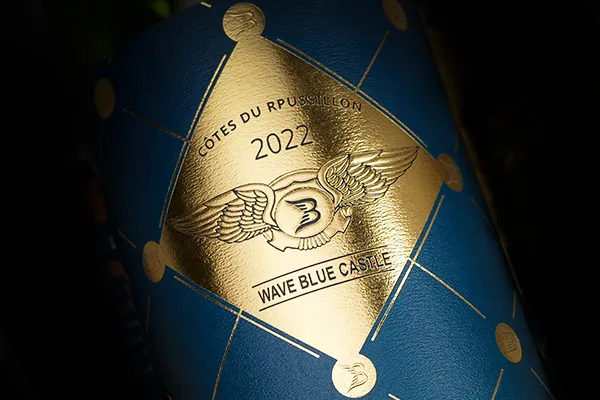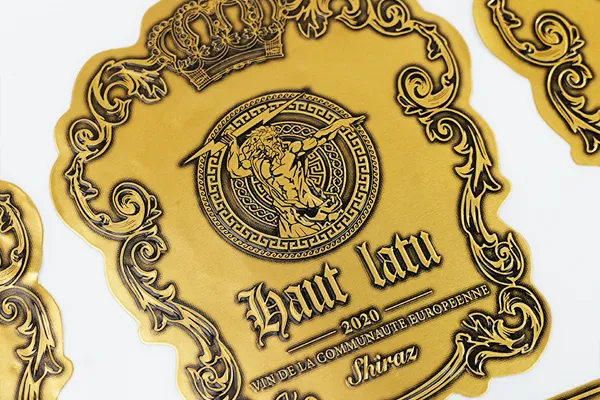
Creating embossed labels for premium packaging requires careful coordination between artwork, सामग्री, embossing, and finishing processes. When these elements are not properly matched, labels may experience issues such as cracked fibers, unclear details, or poor adhesion.
This guide explains how material selection, embossing techniques, and finishing options affect the final look and performance of embossed labels, including important design factors such as relief depth and registration.
Why Brands Choose Embossed Labels
Embossed labels upgrade premium packaging by combining tactile textures with distinct visual depth, justifying higher price points and driving immediate shelf interaction.
On crowded retail shelves, embossed labels can help packaging stand out through raised details, light-catching surfaces, and a more noticeable tactile finish.
Premium Perception and Pricing Power
Standard packaging often struggles to communicate high-end value. By upgrading to embossed labels, brands upgrade their product presentation, creating a luxury aesthetic that justifies premium retail price points and stronger profit margins.
Embossing can enhance the perceived quality of packaging by adding depth, texture, and a premium tactile experience. This finish is commonly used for wine, आत्माओं, cosmetics, specialty foods, मोमबत्तियाँ, and other products positioned in the premium segment.
Visual Impact and Shelf Presence
Flat labels blend together under harsh retail lights. Embossed features introduce three-dimensional depth, forming subtle highlights and shadows that capture ambient store lighting as consumers walk past.
Embossing adds depth and texture to packaging, helping products stand out visually on the shelf. The raised details can also create a more engaging tactile experience, encouraging customers to take a closer look and interact with the package.
Tactile Engagement and Multisensory Connection
The purchase journey is haptic. When a consumer holds a bottle or jar, raised elements create an instant, memorable touchpoint that extends beyond mere sight.
Engaging both the visual and haptic senses simultaneously builds stronger neural paths, enhancing long-term brand recall. The physical texture signals craftsmanship and meticulous attention to detail, subtly reassuring the buyer of the high quality inside the package.
Strategic Focal Points and Brand Differentiation
Rather than cluttering a design with massive relief, smart brands use embossing to isolate critical elements. Raising only a logo, family crest, or quality seal guides the eye to the key markers of brand heritage.
This selective detailing separates your product from competitors who rely on flat, ink-only solutions. It also serves as a vital tool for tiered product lines, allowing you to clearly distinguish reserve or limited-edition SKUs from your core offerings through texture.
Authenticity Cues and Quality Assurance
In sectors like spirits and nutraceuticals, provenance and integrity are everything. A precisely registered, raised seal acts as a physical hallmark of authentic production and careful quality control.
Because mechanical die-tooling requires significant investment and specialized press calibration, this finish adds a protective barrier against low-cost counterfeiters. It builds a sense of consumer trust that flat ink simply cannot replicate, certifying the origin and care behind the product.
Embossed Labels Design Elements and Best Practices
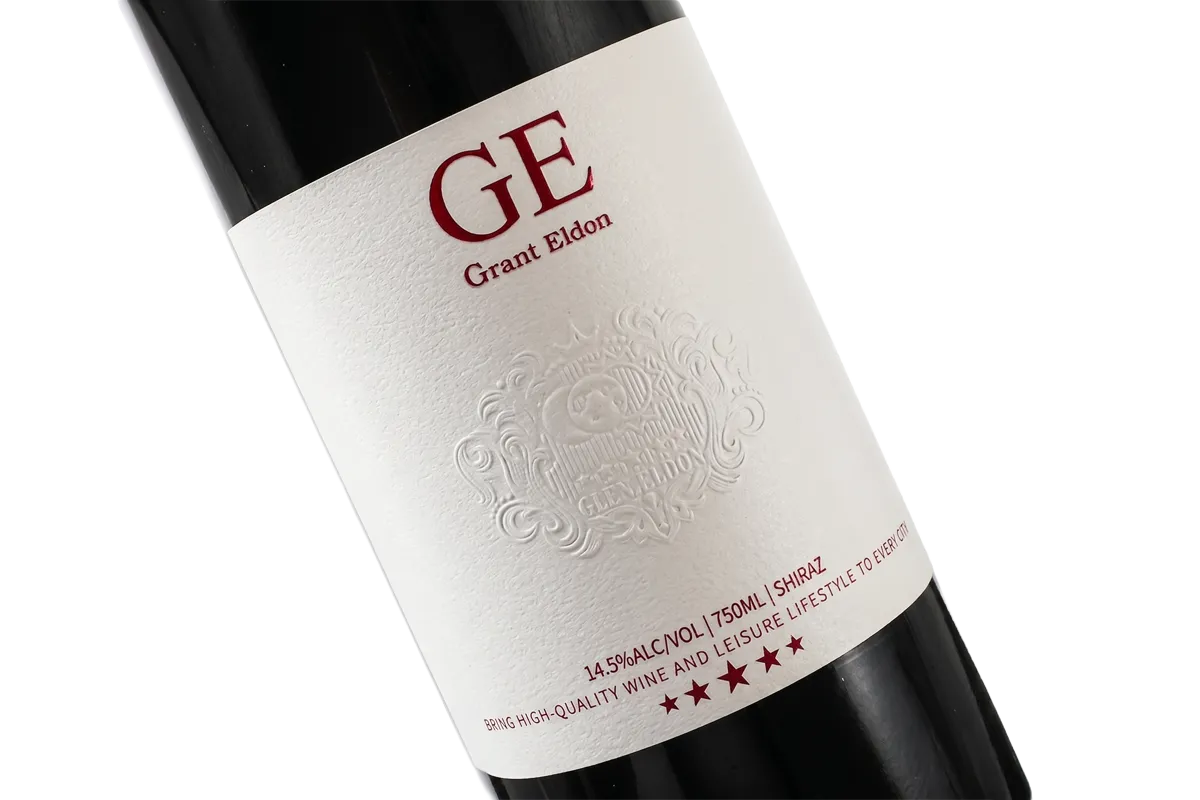
Successful embossed labels require selective focal elements, precise vector files, and durable substrate matches to survive real-world application without lifting or tearing.
| Substrate Type | Embossing Result | Key Notes |
|---|---|---|
| Premium Paper / Foil Laminate | Deeper relief with sharper details | Suitable for detailed designs with proper tooling and adhesive testing |
| Synthetic Film (बीओपीपी, PET) | Shallower and softer relief | Requires suitable adhesives and testing for different applications |
Core Visual and Tactile Design Elements
Designing high-impact label relief requires visual restraint. Flooding the canvas with raised patterns ruins the visual hierarchy and distorts the substrate when applied to curved glass or plastic surfaces.
- Focal Points: Limit embossing to one or two high-value elements, such as the brand logo or product name, to avoid a cluttered layout.
- Typography: Select bold, clean fonts with distinct stroke weights. Avoid ultra-thin lines and fine serifs that will fill in or lose definition during the manufacturing run.
- Embossing Styles: Choose from single-level, multi-level, blind, or registered embossing based on the complexity of your artwork and packaging tier.
Material Selection and Adhesive Integrity
Your substrate dictates your maximum relief depth. If the material cannot stretch plastically under die pressure, the fibers will shear and crack the protective outer coatings.
- Substrate Choice: Use thick, high-fiber papers or heavy cardstock to allow deep, crisp relief. For extreme heights, specify a plastic liner to support the structural backing.
- Flat Edge Perimeter: Maintain a small unembossed border around the label edge to support consistent adhesive contact and reduce potential application issues.
- Adhesive System: Test chemical compatibility with the container surface under harsh service conditions like ice buckets, high humidity, and refrigeration.
Digital File Setup and Layer Specifications
Proper prepress preparation helps ensure accurate embossing and consistent label quality. Clear artwork files and production specifications allow the printing team to coordinate embossing, मुद्रण, and finishing processes effectively.
- Vector Artwork: Create raised elements as closed vector paths whenever possible. Vector files help maintain accurate details during embossing and production preparation.
- Layer Structure: Use separate and clearly named layers for elements such as dielines, embossing areas, and special finishes like foil stamping or spot UV.
- Bleed and Margins: Follow the printer’s dieline for bleed, trim, and safe-area requirements. Keep important text and logos away from the cut line by the distance specified for the label size, shape, and finishing process.
- File Export: Convert text to outlines or embed fonts to avoid font-related issues, and export files in a suitable high-resolution सीएमवाईके PDF format.
Technical Constraints and Prototyping Workflows
Press operators must balance mechanical pressures and thermal tolerances to lock in a permanent shape. Ignoring physical limits leads to flattened relief or peeling corners.
- Coating Exclusions: Do not place plastic laminates or protective varnishes directly over raised zones. Uneven surfaces cause air trapping and lead to coating delamination.
- Shape Complexity: Prioritize bold, clean geometric shapes over intricate details for deep relief areas. Fine patterns should remain shallow to avoid fiber breakage.
- Container Prototyping: Apply physical printed proofs to the actual containers. This step identifies warping on tight glass curves before committing to long production runs.
- Bottling Line Alignment: Review maximum relief height with your converter and bottling technicians to guarantee labels pass cleanly through high-speed applicator rollers without jamming.
Transform Your Labels Into Multi-Sensory Assets
Materials Suitable for Embossed Labels
Matching the right substrate to your production environment ensures embossed labels retain crisp, high-tactile relief without tearing, wrinkling, or lifting over time.
Paper and Foil-Laminated Substrates
Which paper stocks deliver the sharpest definition when stamped? Choosing the correct paper-based substrate for your embossed labels directly dictates the height and longevity of the tactile relief.
- Standard Paper Stocks: Semigloss and coated papers provide cost-effective options with adequate stiffness, ideal for indoor retail products.
- Premium Specialty Papers: Textured estate, linen, cotton, and kraft papers support deep embossing and offer rich haptic feedback.
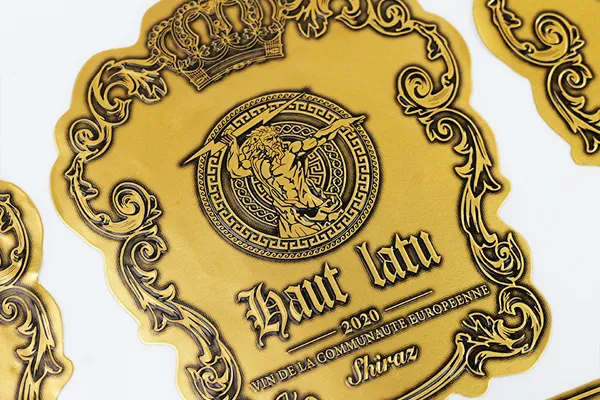
- Foil Papers and Laminates: Foil papers and paper-foil laminates hold highly detailed, sharp relief and enhance the visual impact of raised metallic designs.
- Multi-Ply Laminated Papers: Two or more bonded layers provide the added thickness and rigidity required for extreme, high-profile patterns.
Keep in mind that paper substrates naturally lack moisture and tear resistance. You should apply protective over-varnishes or film laminates if these labels face humid storage or heavy retail handling.
Synthetic Polymer Films
When packaging must survive moisture, रसायन, or outdoor exposure, standard paper fails. Synthetic polymer films offer a highly durable alternative for embossed labels, though they require a compromise on tactile depth.
- Durable Vinyl (पीवीसी): Works best for rugged outdoor equipment, automotive decals, and industrial rating plates due to its high tear resistance.
- Polyester (PET): Offers high mechanical strength, chemical resistance, and moderate emboss clarity for industrial branding.
- Polypropylene (बीओपीपी): Balances moisture protection with clean printing, making it the standard for beauty, household, and beverage packaging.
Synthetic films possess inherent polymer shape memory. This physical property causes the embossed patterns to relax over time, resulting in shallower, softer edges compared to paper substrates.
Material Selection by Environment and Application
Choosing the right label material requires balancing the product environment, packaging design, and desired brand experience. The right substrate helps maintain label appearance, embossing quality, and overall packaging performance across different applications.
- Premium Wine, Spirits, and Cosmetics: Textured papers, foil laminates, and specialty stocks are often used to create refined embossing effects and enhance the tactile experience of premium packaging.
- खाना, पेय, and Moisture-Prone Products: Coated papers and synthetic materials such as BOPP can help improve moisture resistance while maintaining attractive label graphics and finishes.
- घर की खुशबू, Gift, and Retail Products: Specialty papers and decorative materials can be combined with embossing and other finishes to create distinctive packaging with a premium feel.
Adhesive, Container Substrate, and Finishing Integration
A premium facestock only performs as well as the components supporting it. Designing high-impact embossed labels means engineering a unified system where adhesive, container material, and post-press finishes work in sync.
- Adhesive Formulation: Match coat weight and flexibility to the embossed facestock to ensure secure bonding and prevent edge lifting around the relief zones.
- Container Substrate: Rigid, flat surfaces like glass wine bottles pair well with thick, stiff papers. Squeezable plastic containers require conformable polymer films to prevent wrinkling.
- Post-Emboss Finishes: Spot varnishing and targeted laminations guard raised areas against transit scuffing while accentuating visual and haptic contrast.
Testing these material combinations on your physical containers under actual storage conditions—including refrigeration and friction trials—removes the guesswork from your production run and secures consistent shelf performance.
Combining Embossing with Foil Labels
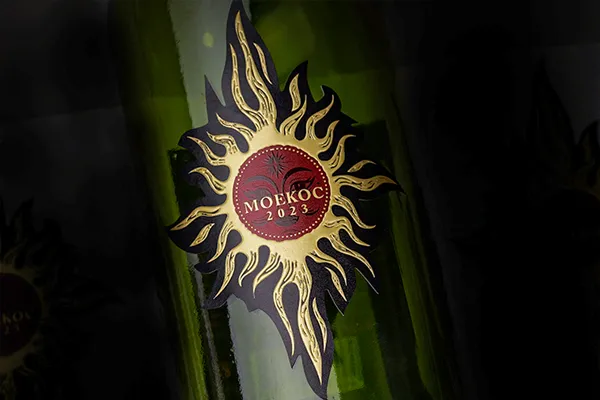
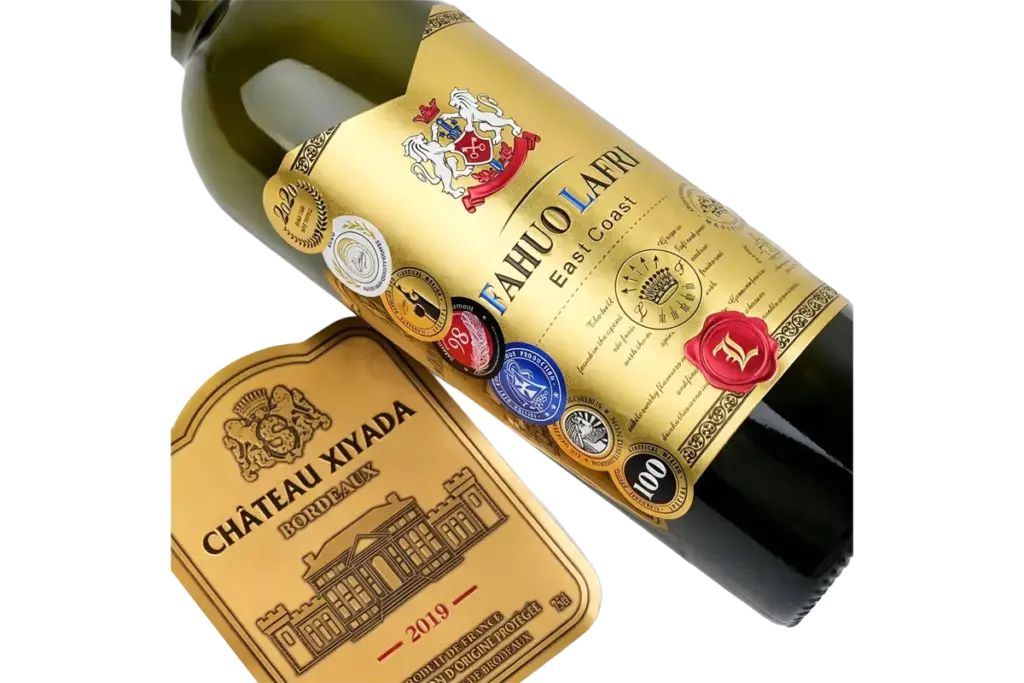
Foil embossing can combine metallic foil and raised relief in one operation, which may help reduce registration differences between the two effects.
Combining foil stamping and embossing in the same process can help improve alignment between metallic details and raised designs. When these finishes are applied in separate steps, factors such as substrate movement and production setup may require additional registration control.
The Single-Pass Combination Embossing Process
To prevent alignment errors, high-precision operations use single-pass combination embossing. This method employs a matched male-female die set to apply metallic foil and form the raised surface in one press hit.
Applying foil at the exact moment of substrate deformation ensures perfect registration between the metallic finish and the relief contour. Running these finishes separately increases misalignment risks and compromises close-tolerance label designs.
Visual and Tactile Effects in Premium Packaging
Foil embossing transforms flat graphics into a dynamic sensory experience. The combination of metallic reflectivity and physical relief creates distinct haptic and optical signals that command shelf attention.
- Reflective Dimension: Three-dimensional metallic elements produce sharp highlights and deep shadows across logos and seals.
- Haptic Contrast: Raised metallic surfaces offset cleanly against flat, मैट, or uncoated stocks.
- Primary Applications: Premium brands deploy this finish on wine bottles, spirits labels, cosmetics cartons, and gourmet food seals.
Technical Design Guidelines and Registration Tolerances
Precision tooling requires absolute adherence to geometric limits. Deviating from standard dimensions causes foil bridging, fiber blowout, or edge lifting during application.
- Minimum Line Weight: Use line widths and reverse openings that meet the printer’s tooling and substrate requirements. Fine details may lose definition during embossing or foil application.
- Text Constraints: Choose clear typefaces and test the smallest text size with the actual substrate, tooling, and finish before production.
- Registration Tolerances: Confirm the achievable tolerance with the printer based on the label size, artwork, substrate, and finishing sequence.
- Target Emboss Depth: Set the relief depth according to the substrate caliper, artwork, label shape, tooling, and application method. Approve a physical sample before mass production.
Prepress Setup and Material Compatibility Constraints
To prevent production delays, prepress files must clearly isolate finishing variables. Designers should place foil elements on a vector layer named “FOIL” and embossed paths on a separate “EMBOSS” layer.
The final artwork should follow the printer’s file specifications, including the required color layers, outlined fonts where requested, bleed, dieline, and finishing marks.
We also must evaluate chemical compatibility before printing. Foil fails to release properly over UV matte varnish, meaning foil and emboss paths require uncoated areas or specialized foil-receptive coatings.
Quality Control Metrics and Cost Analysis
Quantifiable inspection standards ensure shelf consistency and validate the financial return of multi-finish investments.
- Height Measurement: Check embossing depth with suitable tools to ensure consistent results across production.
- Visual Alignment: Review the position of embossed and printed elements to maintain accurate registration.
- Cost Considerations: Premium finishes may increase production costs but can enhance packaging appearance and perceived value.
अक्सर पूछे जाने वाले प्रश्नों
What are embossed labels?
Embossed labels are pressure-sensitive or paper labels featuring a selectively raised, three-dimensional tactile design. Manufacturers produce this effect by pressing the label stock between custom male and female metal dies under high pressure and controlled heat, permanently reshaping the material into a distinctive raised relief.
How do you design embossed labels?
Designing embossed labels requires building artwork in vector software and isolating the embossed elements on dedicated, clearly marked layers. Keep the graphics simple and bold, avoiding ultra-fine details that can distort or break under pressure. To support die-cutting, हैंडलिंग, and adhesive contact, leave an appropriate flat area near the label edge.
Can logos be embossed on labels?
हाँ, logos are frequently embossed on labels to highlight brand marks and establish tactile focal points. This works best with bold shapes, simple outlines, and robust monograms rather than intricate, fine-line designs. Embossed logos can be registered directly over printed graphics or applied as a blind emboss on textured paper or foil stocks for an elegant, understated look.
What materials work for embossed labels?
High-quality uncoated papers, textured stocks, and paper-foil laminates perform best because they deform easily under pressure and hold the raised shape without springing back. Heavy-weight boards allow for deeper embossing depth. While rigid synthetic films like PVC, विनाइल, and polyester can be embossed for outdoor durability, thin films like BOPP generally do not hold deep relief well due to their shape memory.
Are embossed labels expensive?
Embossed labels require additional setup for custom tooling, which may increase upfront costs. However, as production volume increases, tooling expenses are distributed across more units, improving cost efficiency for larger orders.
Can embossing be combined with foil?
हाँ, this technique is commonly known as foil embossing or combination stamping. It combines foil application and embossing in a coordinated process to create both metallic effects and raised details. Since the process involves heat and pressure, material selection and testing are important to achieve reliable results.
What is the difference between embossing and debossing?
Embossing raises selected design elements upward from the label surface by applying pressure from the back of the material, creating a bold, three-dimensional texture. Debossing applies pressure from the front face downward into the substrate, producing a recessed or sunken indentation. While embossing catches light on shelf displays, debossing offers an understated, modern aesthetic and keeps the back of the label smoother.
How deep can embossing be?
Embossing depth varies based on the label material, thickness, design complexity, and production method. The optimal depth should balance visual impact with material strength to maintain clean details and prevent issues such as cracking or deformation.
What products use embossed labels?
Embossed labels are widely utilized on premium and high-margin consumer products, including wine and spirit bottles, gourmet foods, luxury cosmetics, perfume bottles, artisanal honey jars, and high-end candles. They are also used as official gold or silver seals on academic diplomas, training certificates, and corporate presentation packages to convey authenticity and prestige.
Are embossed labels durable?
हाँ, embossed labels can be durable when the material, गोंद, finish, container, and application conditions are properly matched. For retail products such as wine, cosmetics, मोमबत्तियाँ, food, and gift packaging, durability should be assessed through handling, moisture, temperature, and application tests. Protective varnishes or films may be suitable for some constructions, but compatibility should be confirmed before production.
अंतिम विचार
Choosing the right substrate, tooling, artwork, गोंद, and finishing process can help brands achieve consistent embossed labels for premium packaging. Testing materials and finishes on the actual product container before a large production run can also reduce application and durability risks.
Meikei Printing provides customized label and paper box solutions, including embossed labels, hot foiling, cold foiling, spot UV, debossing, textured papers, and specialty materials. Our integrated service covers design support, साँचे का निर्माण, sampling, mass production, inspection, and delivery. Contact our team to review your artwork and develop a suitable packaging sample.
📖 Complete Guide
← Back to “कस्टम लेबल क्या हैं??” — The Complete Guide
Learn everything about custom labels: types, सामग्री, printing techniques, cost factors, and how to choose the right solution for your brand.
Related Products You May Like
Want to know more about Meikei? Visit end-to-end-customization or explore learn more about Meikei.