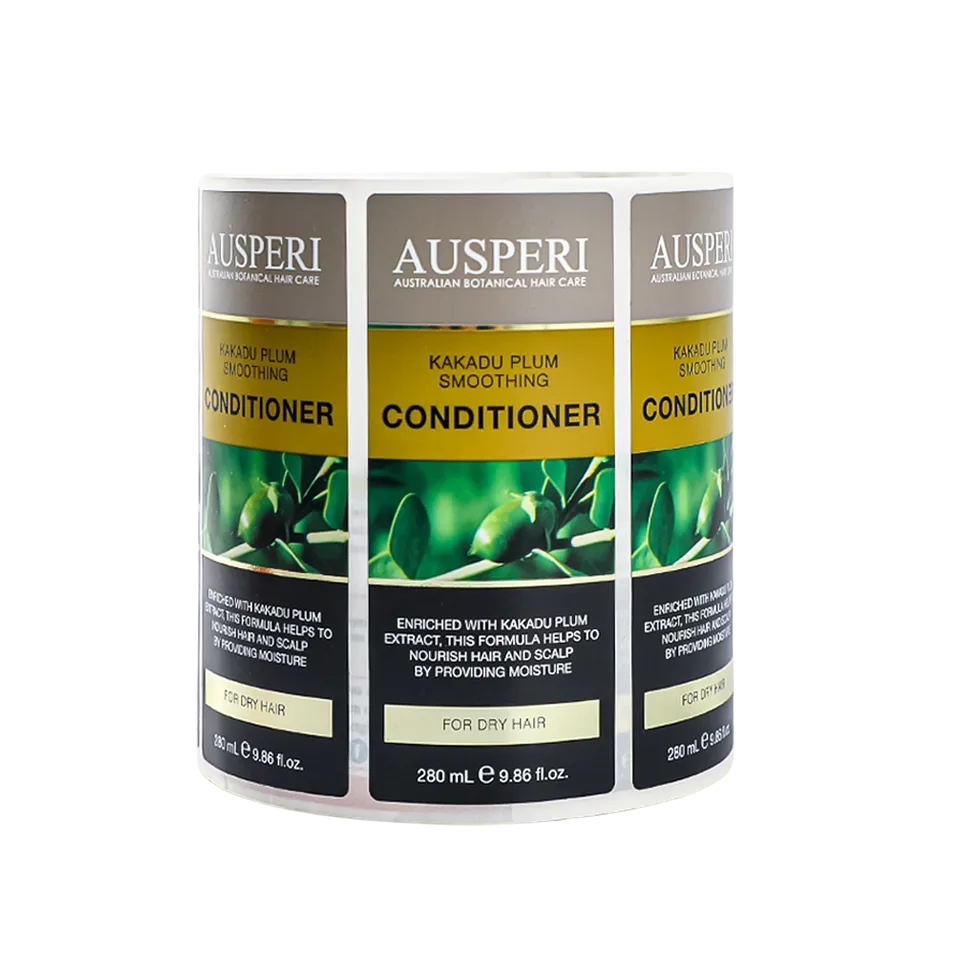
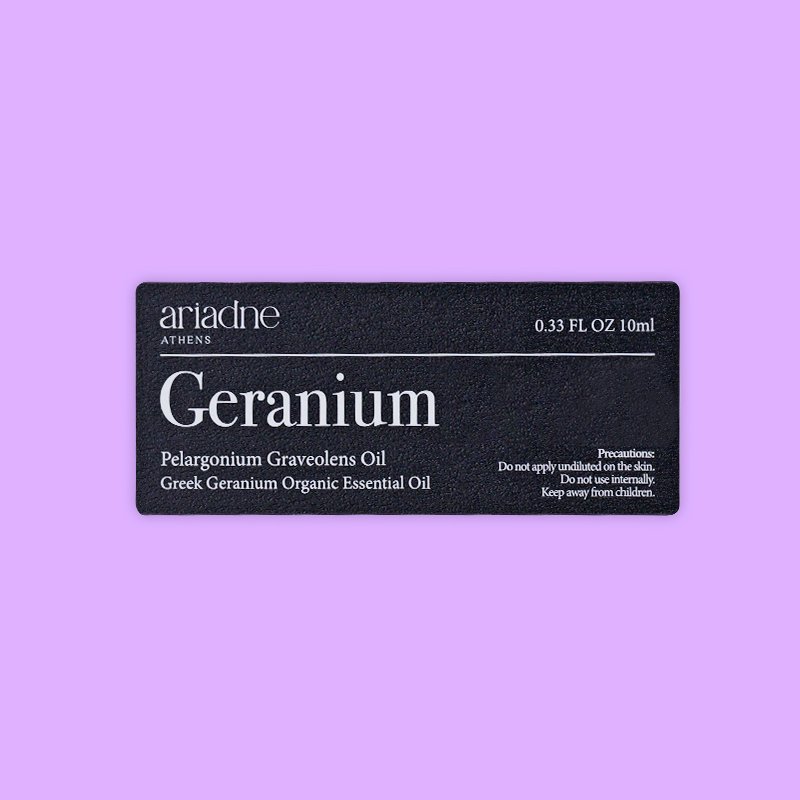
Gummy vitamin labels face a bottle that breaks the usual rules. The mouth is wide, the diameter is large, and the bottle is heavy enough that shoppers grip it instead of glancing at it. Gummy vitamin labels have to hold a full Supplement Facts panel on a surface that curves fast and gets handled hard. Both facts sit in the same file.
This guide walks the printing requirements in order. The panel challenges of the wide mouth, the label dimensions for large diameters, the materials and adhesives, the layout of the required content, and the final print checks each get a section. Each section ends with the working rule for a gummy bottle.
Label Panel Challenges on Wide-mouth Gummy Bottles
The wide mouth makes the bottle friendly to hands and hostile to flat labels.
The wide mouth pushes the shoulder down and the wall up, so the label zone is often taller than on a pill bottle of the same volume. The extra height helps the panel, while the large diameter stretches the wrap. Both changes show up in the quote as a bigger label area.
The Geometry Shift
A wide-mouth bottle carries its opening at nearly the full body diameter, which leaves a shorter, steeper shoulder and a long straight wall. The label rides that wall. The shift means fewer fit problems at the top edge and more wrap length to manage around the body. The wrap becomes the label’s working dimension.
The Handling Reality
Gummy bottles get shaken, squeezed, and set down hard, because the product itself is sticky and the daily dose is a ritual. The label’s edges and the panel’s small type both take that handling. The print requirements below assume a bottle that lives in a hand, not a display case. Every material and adhesive decision inherits that assumption.
Selecting Label Dimensions for Large-diameter Containers
A large diameter means a longer wrap, and the wrap is where most fit errors hide.
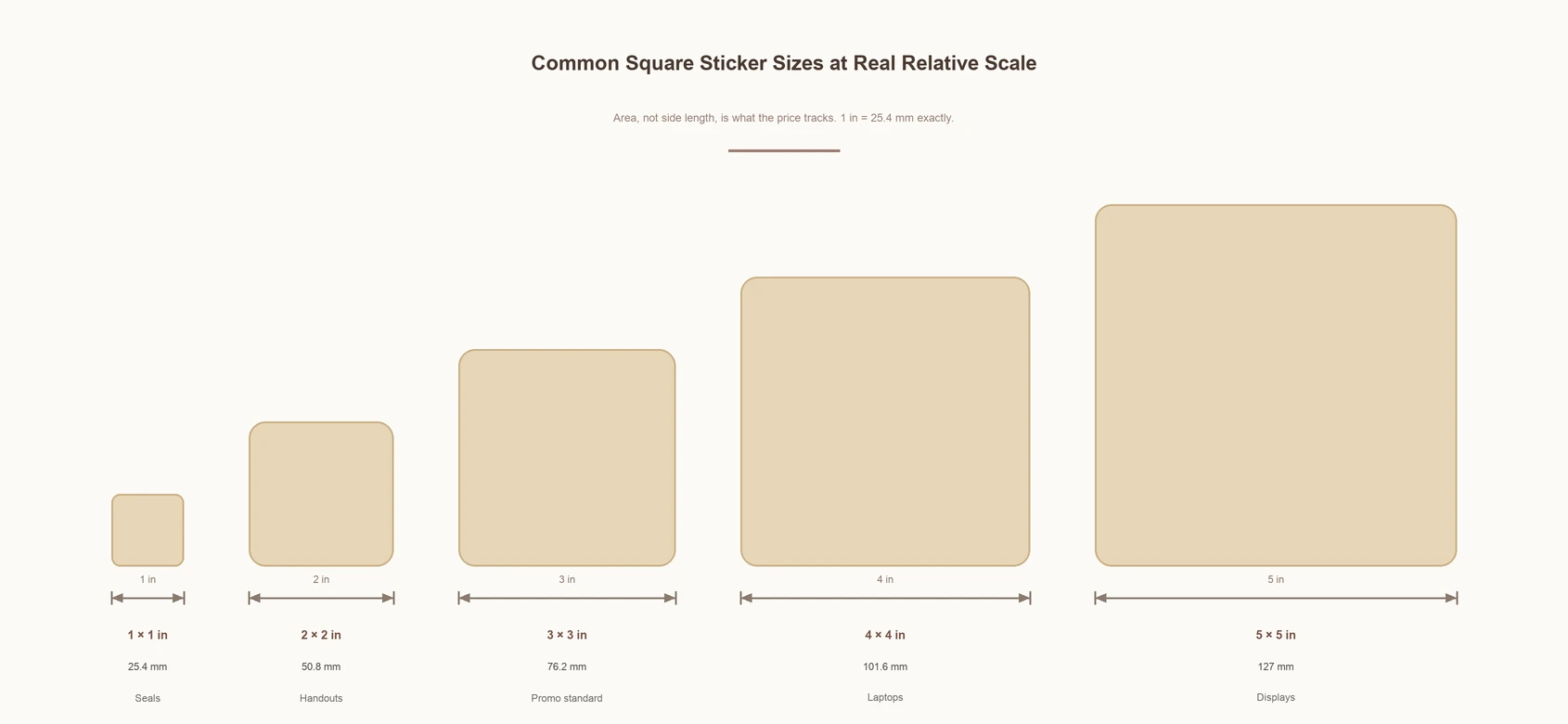
The wrap length follows the circumference at the label zone, and a wide-mouth gummy bottle usually lands between six and ten inches of wrap. The height follows the straight wall, typically two to four inches on the common sizes. Both numbers come from the real bottle, never from a similar product’s file. The real bottle is the only chart that counts.
Reading the Wrap
On a large diameter the wrap length grows fast with every added millimeter of radius. A small bottle spec copied onto a wide bottle comes out short and gaps at the seam. The wrap is checked against the circumference plus the overlap, and the overlap gets the same attention as the print. A short wrap is the most common reprint in the category.
The Height Budget
The label height spends its budget in a fixed order: the top margin under the shoulder, the panel block, the brand zone, and the bottom margin above the base stop. Wide-mouth bottles give more wall, and the extra height goes to the panel first, because the panel is what the shopper reads. The brand zone takes what remains, not the other way around.
The reference chart by bottle capacity and the seam rules that follow from it are covered in our article on vitamin and supplement bottle label sizes. The gummy bottle reads the same chart at the large-diameter end.
Materials and Adhesives for Heavy, Frequently Handled Bottles
A gummy bottle is heavy for its size, and the label has to survive being grabbed, not just being seen.
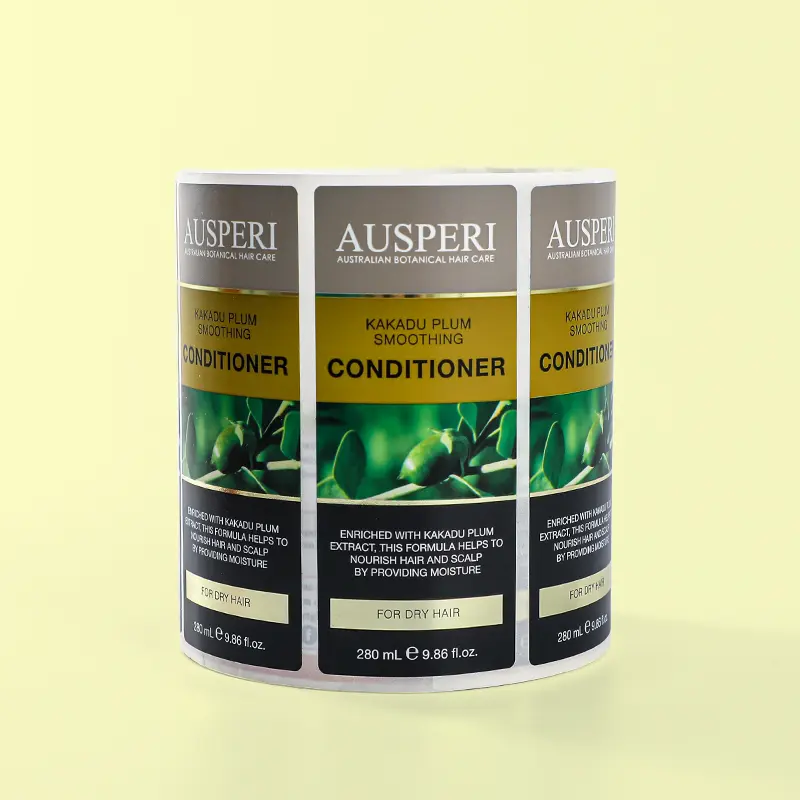
The material choice starts from the handling: film labels survive the grip and the flex of a heavy bottle, while paper needs a laminate to reach the same point. The adhesive then has to hold on a plastic body that flexes, so the grade is chosen for the bottle’s plastic, not for the label’s looks. The grip and the flex are the two tests the stack must pass.
Film for the Grip
White polypropylene film is the default for gummy bottles, because it flexes with the body and shrugs off the moisture of a bathroom shelf. The white film also carries the panel’s contrast without a white underprint. Clear film exists for window effects, and it adds the underprint pass back. The default holds unless the window earns its cost.
Adhesive for the Flex
The adhesive has to survive the bottle flexing under a full hand, so a permanent grade formulated for the bottle’s plastic is the starting point. A weaker grade lifts at the edges after a few weeks of handling. The supplier tests the label on the actual filled bottle before the run, not on a clean sample panel. The filled bottle is the only honest test rig.
The paper-versus-film decision behind that default is compared in detail in our article on supplement facts label printing. The gummy bottle lands firmly on the film side of that comparison.
Fitting Supplement Facts and Product Details Into the Layout
Gummy labels carry the same required panel as any supplement, with a serving line that counts pieces.
The gummy panel’s signature line is the serving count: two gummies, three gummies, or a count with a gram weight beside it. That count must match the front of the label and the directions, and the mismatch is the classic gummy artwork error. The gummy panel reads no differently from any other panel in the category. The panel otherwise follows the same required format as every supplement, with resources such as Nutrition.gov keeping the shopper-side reading guidance separate.
The Serving Line First
The serving line opens the panel and sets the reading scale for everything below it. On gummies it reads as a piece count plus a weight, and the count also drives the net contents math on the front. The layout places that line at the top of the panel with nothing competing above it. The count and the weight print side by side.
The Sugar and Other Ingredients Line
Gummy formulas carry sugar, glucose syrup, or their alternatives, and those ingredients print in the required order under the active list. The sugar line is the one shoppers hunt for, so the layout keeps it readable rather than shrinking it. The inactive list stays separate and complete. Nothing hides in the fine print. Shoppers hunt for the sugar line, and the layout respects the hunt.
The panel-first layout discipline that organizes those lines is walked through in our article on collagen supplement labels. The gummy label inherits the same order and swaps the scoop table for a piece count.
Gummy Bottle Labels Built for the Grip
Print and Application Checks for Gummy Vitamin Packaging
The final check happens on a filled bottle, because gummies settle and the label must not.
The gummy bottle’s checks run on a filled bottle, because the weight changes the flex and the settling changes the fill line. The three checks below are the ones that catch gummy-specific failures: the seam gap, the panel contrast, and the closure clearance. A filled bottle is the only test stand that behaves like the product. The unfilled bottle flatters the label. Each one runs before the run ships.
The Seam and Gap Check
The checker looks for a seam that meets without a gap and an overlap that holds under the full bottle’s flex. A gap at the seam opens wider when the bottle is squeezed. The check happens on the filled bottle at the label’s production position. The squeeze test follows the seam check on the same bottle.
The Panel Contrast Check
The smallest required line is measured against its background on the printed sample, at the label’s real size. Gummy labels often sit on bright or pastel brand colors, and the panel’s dark text must hold its contrast there. The check reads the sample the way a shopper reads the shelf. The arm’s length rule applies to the smallest line.
The Closure Clearance Check
The label must clear the wide-mouth closure, because the cap’s skirt extends over the top of the wall. The clearance is measured with the cap on, and any interference sends the height back for a trim. The cap goes on before the label is approved. The tamper band that rides that junction is covered in our article on tamper-evident labels for supplements.
Häufig gestellte Fragen
Why avoid gummy vitamins?
The most common reason is the added sugar, which the label’s ingredients line lists plainly. The label shows the sugar and the serving count, and shoppers decide from those lines. The panel itself takes no position. The sugar line and the serving count carry the shopper’s whole decision.
Do gummies work better than pills?
The label makes no claim about which works better, and the panel lists the same kind of ingredient amounts either way. Gummies and pills differ in serving form, and the label states that form plainly.
Can I take 3 vitamin gummies a day?
The answer lives on the label’s serving line, which states the gummy count for one serving. Taking more than the stated serving is outside the directions. The serving line is printed to be read, not guessed at. The count and the weight sit on the same line.
I accidentally took 3 gummy vitamins instead of 2. What should I do?
One extra gummy is usually not a cause for alarm, but the label’s directions and any medical questions are the reference points. Read the label first, and call a doctor or a poison control line for anything beyond a routine serving. The label’s directions are the first reference point.
What do gummies do in the body?
Gummies deliver their listed ingredients through a chewable candy-like format, and the panel states what those ingredients are. The label’s job is the contents, not the biology. Any permitted statement prints within the required format.
What is the size of a sticker label?
Sticker labels run from tiny half-inch dots to full wraps several inches wide, and the size follows the surface they sit on. There is no single standard size. The product’s panel decides the dimensions. The surface is the spec, always.
Is there a downside to taking a multivitamin?
The label lists the amounts so a shopper can compare against their own needs, and any medical judgment belongs to a professional. The panel prints the facts without adding a recommendation of its own. The comparison stays with the shopper.
What form of multivitamin is best absorbed?
Absorption questions are medical, and the label answers a different question: what is inside and in what amounts. The form of the vitamin, gummy, pill, or liquid, is stated on the label’s product line. The panel stays out of the biology debate. The form line and the amounts are the label’s answer.
What’s the best time to take vitamins?
Timing is a preference the label does not usually rule on, so the directions state the serving and leave the schedule to the shopper. If the brand recommends a time, it prints in the directions block. Most labels leave the schedule open.
How much vitamin do I need every day?
The panel’s daily value column states the reference amounts, and personal needs are a question for a healthcare professional. The label prints the reference values, not a prescription for any one shopper. Personal needs live outside the panel.
Conclusion
Gummy vitamin labels succeed when the print job treats the bottle the way shoppers do: heavy, handled, and read at the panel. The dimensions follow the real circumference, the material follows the grip, and the layout follows the serving count. The checks run on the filled bottle, which is where every gummy label finally earns its place on the shelf. The shelf is where the checks finally pay off.
For brands printing labels on wide-mouth gummy bottles, Meikei sizes the wrap to the real bottle, specifies film for the handling, and proofs on a filled container before the production run.