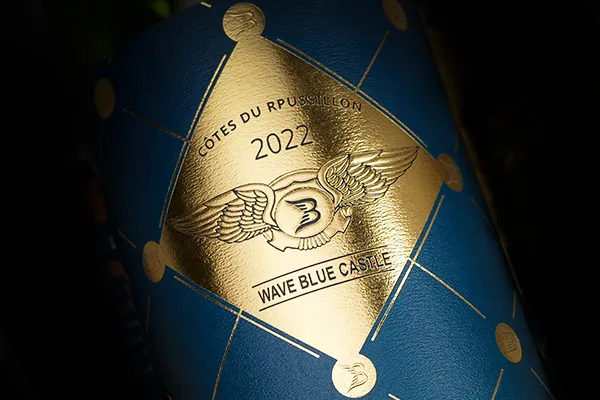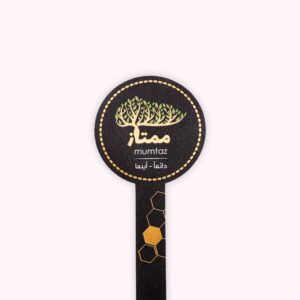
The way a sticker is cut affects more than its final appearance. It can change how easily the sticker is peeled, handled, stored, and applied, especially when the same design is produced in sheets, rolls, or individual pieces. That makes the choice between kiss cut and die cut more relevant than it may seem at first.
Kiss cut and die cut stickers can look similar on the finished artwork, but the way they are separated from the backing creates a very different handling experience. This article compares the two formats across application, design complexity, storage, and presentation to help you choose a cut style that fits your project.
What Is the Difference Between Kiss Cut and Die Cut Stickers?
Before finalizing your next production run, you must understand the core difference between kiss cut and die cut stickers. Choosing the wrong format directly slows down manual labeling and frustrates users trying to peel your designs.
Kiss-cut stickers keep the backing paper intact as a larger sheet, while die-cut stickers slice completely through both the vinyl and backing to match the exact design shape.
How Kiss Cutting Leaves the Backing Intact
For detailed designs or easy manual application, kiss cutting uses controlled cutting pressure to slice through the sticker material while leaving the release liner intact.
- Precise Layer Slicing: The cutting blade precisely slices through the top vinyl layer and adhesive while keeping the backing release liner fully intact.
- Expanded Margin Space: Stickers remain mounted on a larger sheet or rectangular border, providing extra space for handling or printing branding details.
- Frictionless Peeling: The intact backing structure makes individual stickers easier and faster to peel, making this format ideal for multi-sticker sheets.
How Die Cutting Separates the Sticker and Backing
When your goal is to distribute standalone merchandise that looks finished right out of the box, die cutting offers a clean, contour-matched finish. This method treats the sticker as an independent product, maximizing its immediate visual impact.
- Through-All Slicing: The blade cuts completely through both the printable vinyl face stock and the underlying paper release liner in a single pass.
- Contoured Standalone Format: Each custom sticker detaches as an individual, standalone piece with a backing that matches the exact shape of the artwork.
- Custom-Shape Finish: The finished sticker can follow the outline of the artwork, creating a clean presentation that works well for promotional handouts, packaging inserts, and branded merchandise.
How Do Kiss Cut and Die Cut Stickers Compare in Use?
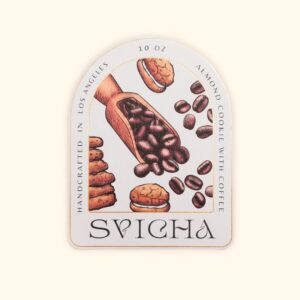
Evaluating kiss cut and die cut stickers comes down to application speed and distribution format, balancing retail presentation against backend production logistics.
Applying stickers efficiently requires analyzing how the backing material interacts with the adhesive vinyl. The physical cutting method dictates the entire manual workflow, whether you are running a retail counter or a high-volume packaging line.
Peeling and Application Experience
The differences in user interaction become immediately clear at the point of application. How the backing paper is trimmed changes how quickly and safely a user can separate the sticker from its liner.
- Kiss Cut Sheets: The intact backing lets operators flex the sheet to lift detailed graphics without edge damage, speeding up repetitive manual application for retail packaging or event labeling.
- Loose Die Cuts: These pieces require peeling directly from the outer boundary, which can slow down high-volume labeling workflows because there is no border leverage.
- Standalone Merch: Individual die-cut stickers work well for retail merchandise, product inserts, event handouts, and branded giveaways where each sticker needs to be distributed separately.
If you are handing out individual swag at a trade show, the aesthetic value of a clean, custom-shaped contour outweighs minor peeling friction. But for a fulfillment center processing thousands of orders, every fraction of a second spent locating an edge adds up to substantial labor overhead.
Handling, Storage, and Distribution
On the logistics side, packaging format shapes how inventory moves through your supply chain. Loose items behave differently in a warehouse compared to organized sheets.
- Storage Efficiency: Kiss cut sheets and rolls stack flat, shielding delicate sticker borders from shifting and scuffing during warehouse transit.
- Inventory Management: Fulfillment teams track and pick kiss cut sheets easily as unified items, reducing counting errors during assembly, while loose die cuts depend on secondary bags or bands to prevent bent corners and scattered inventory.
- Marketing Real Estate: The extra border area on kiss cut sheets serves as a canvas for printing application guides, QR codes, or promo messages directly on the backing.
Choosing the right cut means matching the physical format to your operational limits. High-speed labeling lines rely on the unified structure of rolls or sheets, while retail environments often require individual, retail-ready pieces that can stand alone on displays.
Elevate Your Brand With Premium Custom Labels
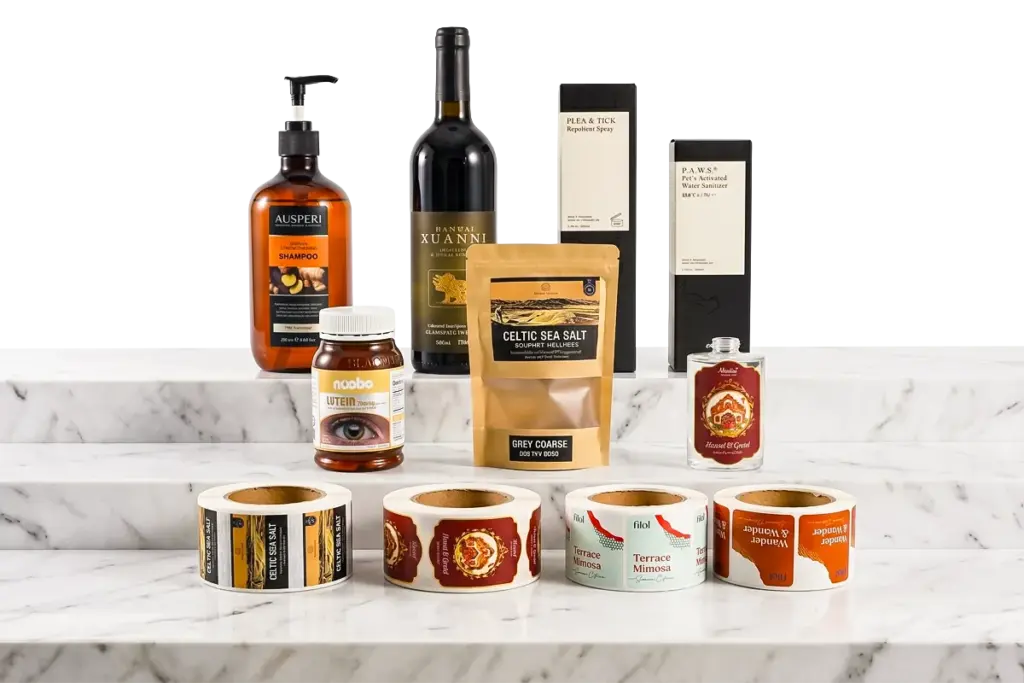
When Should You Choose Kiss Cut Stickers?
Select kiss cut stickers when you need multi-design sheets, fast manual labeling workflows, and maximum edge protection for highly detailed graphics.
Sticker Sheets, Packaging, and Easy-Peel Applications
Fulfillment lines slow down when staff spend too much time clawing at the backing paper of individual decals. Choosing kiss-cut stickers solves this exact bottleneck by providing a wider carrier sheet that dramatically improves peeling speed.
- Multi-Design Sheets: Keeps several distinct graphics on a single shared backing, simplifying inventory management and lowering packaging costs compared to individual die-cut pieces.
- Workflow Efficiency: Speeds up packaging and manual labeling because the larger backing margin allows shipping or retail staff to lift and apply stickers rapidly.
- User Accessibility: Improves user experience at trade shows, schools, and events where fast-moving attendees need to peel stickers without frustration.
- Production Tolerances: Spacing, bleed, and safe-area requirements vary by sticker size, layout, and cutting method. For consistent results, artwork should follow the printer’s specified production tolerances.
This combination of easy handling and layout flexibility makes kiss-cut stickers practical for packaging applications, sticker sets, promotional materials, and other projects where quick peeling is useful.
Detailed Designs and Additional Backing Space
Detailed branding elements often suffer from edge lifting and shipping friction when die-cut directly to the design border. Keeping the backing intact solves this geometric vulnerability while providing an extra canvas for critical communications.
- Edge Protection: Protects intricate borders, script lettering, and delicate protrusions by keeping them anchored to a supportive backing sheet during shipping and handling.
- Marketing Real Estate: Turns the unused border area around the sticker into secondary marketing space for printing social media handles, website URLs, and brand taglines.
- Functional Content: Accommodates usage instructions, barcodes, or safety warnings on the backing margin without cluttering the main sticker artwork.
- Flat Storage Stability: Ensures delicate custom designs remain completely flat and protected against edge damage while stored in retail bins, mailing envelopes, or product packages.
Using this extra margin effectively replaces separate informational inserts, cutting down your total printing bill and keeping the primary visual assets clean.
When Should You Choose Die Cut Stickers?
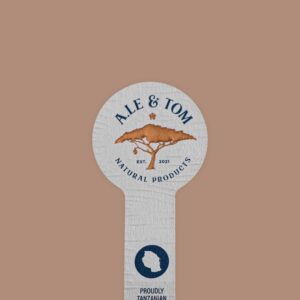
Choose die cut stickers when you need standalone, retail-ready products where the backing paper matches the exact silhouette of your custom artwork for premium individual distribution.
Are you distributing individual swag at events or selling custom decals directly to customers? Choosing die cut stickers ensures each piece functions as a self-contained, premium product with no awkward square backing.
Standalone Stickers and Brand Giveaways
If customers receive and apply one graphic at a time such as a branded packaging insert, product seal, gift sticker, or promotional sticker, the piece should feel complete and easy to handle right out of the package.
Using these individual pieces as packaging inserts or event hand-outs turns basic collateral into a collectible. It changes the psychology from a promotional flyer to premium swag that people want to keep.
If your goal is mass labeling in a fast-paced warehouse, or if you are distributing sheets of tiny, complex icon clusters, look toward kiss cut sheets instead. They keep the backing intact for rapid peeling.
Custom Shapes and Premium Presentation
A die cut border tracks the exact silhouette of your logo, mascot, or flagship product. Slicing through the sticker material and backing creates an individual piece that can follow the shape of the artwork, making it suitable for product packaging, promotional inserts, gift packaging, and branded merchandise.
This format elevates your unboxing experience. The clean, shape-matched edges photograph beautifully for e-commerce listings, customer unboxing videos, and social media platforms.
For brands that use stickers as part of packaging, gifting, or promotional materials, an individual die-cut format can make the finished piece feel more distinctive while keeping the focus on the shape of the artwork.
How Do You Choose the Right Cut Style for Your Project?
Choosing the right custom sticker cut style requires balancing your application workflow, aesthetic goals, and design complexity to avoid application delays and user frustration.
Aligning your sticker cut style with application workflows and design complexity prevents edge damage, reduces peeling frustration, and optimizes packaging efficiency.
Cut Style Формат Best Application User Experience Die-Cut Loose individual pieces Standalone brand stickers, promotional merchandise, premium giveaways Clean presentation, custom-shaped, may require more care when peeling Kiss-Cut Sheets Multiple designs on one flat sheet Sticker packs, label sets, multi-sticker collections Easy to peel, organized, protects intricate designs before use Kiss-Cut Rolls Continuous rolled backing liner Product packaging, high-volume labeling, automated or manual application Easy to dispense, efficient for repeated application Individual Custom Stickers Individually separated custom-shaped stickers Product packaging, promotional inserts, gift packaging, branded merchandise Easy to distribute, distinctive presentation, highlights the custom shape
Matching the Cut With Application and Customer Experience
Matching your chosen cut with the specific end-use application ensures your stickers perform perfectly and satisfy your customers’ expectations upon arrival. The visual format directly defines how people interact with your brand assets during the crucial moment of application.
- Die-Cut Formats: Standalone brand stickers, logo decals, and promotional merchandise gain the strongest visual impact from die-cut formats that feature no extra backing border, emphasizing the custom silhouette.
- Kiss-Cut Sheets: Sticker packs, planner designs, and multi-sticker collections use kiss-cut sheets to keep the entire set organized and easy to handle before use, maintaining a clean presentation.
- Rolled Kiss-Cut Labels: Functional product packaging and high-volume fulfillment operations require rolled kiss-cut labels to support rapid manual or machine-assisted application, optimizing factory throughput.
- Individual Custom Stickers: Custom-shaped stickers are suitable for product packaging, promotional inserts, gift packaging, and branded merchandise when the design itself is intended to stand out as an individual piece.
Considering Design Complexity, Quantity, and Production Requirements
Beyond the customer experience, production variables like design complexity, order volumes, and structural requirements dictate which cutting method is technically feasible. Misaligning your design with the wrong cut style often leads to high scrap rates or transport-related damages.
- Design Geometry: Both cut styles can accommodate custom shapes, but intricate details, fine lines, or delicate elements may benefit from the added backing support of a kiss-cut format during handling and storage.
- Order Volume: Low-volume drops and specialized creator merchandise prioritize die-cuts for a premium retail look, while large runs utilize kiss-cut sheets or rolls to minimize packing costs.
- Tooling Mechanics: Die-cutting requires precise tooling to slice completely through the adhesive material and backing paper, whereas kiss-cutting depends on careful depth calibration to leave the liner intact.
- Packaging Workflows: High-volume product labeling often benefits from rolled formats that work with manual or automated dispensers, while individual hand application is well suited to standalone promotional stickers.
Evaluating these technical and volume constraints early in your design process saves production time and ensures your final products match your exact functional specifications.
Frequently Asked Questions
What is the difference between kiss cut and die cut stickers?
Die cut stickers are sliced through both the vinyl and the backing paper, matching the exact outline of the design. Kiss cut stickers are cut only through the top vinyl layer, leaving the backing sheet intact as a larger rectangle or square around the sticker.
Which type of sticker is easier to peel?
Kiss cut stickers are much easier to peel because the backing paper remains intact around the design. This extra border provides a convenient grip area, allowing you to bend the backing sheet and lift the sticker easily without picking at the edges. Die cut stickers require more precision to peel since the backing matches the design outline exactly.
Can kiss cut stickers have custom shapes?
Yes. Kiss cut stickers can be cut into any custom silhouette or outline. The blade tracks your custom artwork precisely through the vinyl layer, while the underlying backing paper remains a larger, easy-to-handle square or rectangular sheet.
Are die cut stickers individually separated?
Yes. Die cut stickers are fully separated into standalone, loose pieces. Because the cutter slices through both the face vinyl and the backing liner, each sticker is delivered as an individual product in the exact shape of your design.
Do kiss cut stickers come on a sheet?
Yes, kiss cut stickers frequently come on sheets, making them ideal for planner stickers, label sets, and multi-design collections. They can also be produced as single stickers on an individual backing card with a protective margin.
Which is better for packaging and giveaways?
Die cut stickers are preferred for standalone handouts and premium giveaways because the contour-matched design looks like finished, retail-ready merchandise. Kiss cut stickers are better for packaging seals, small product labels, and promotional sheets where quick, easy peeling is necessary for efficient application.
Are kiss cut stickers more durable than die cut stickers?
Once applied, both stickers offer identical durability if they are printed on the same vinyl material with the same protective laminate. Before application, kiss cut stickers offer better edge protection during shipping and storage because the surrounding backing paper acts as a protective shield.
Which cut style is best for detailed sticker designs?
Kiss cut is the ideal choice for highly detailed designs, thin lettering, or delicate outlines. The surrounding backing paper protects fragile elements from bending in transit and provides structural support so users can peel the sticker without tearing fine details.
Final Thoughts
The difference between kiss cut and die cut comes down to how the sticker will be handled, applied, and presented after printing. A format that works well for a sticker sheet may not be the right fit for individual giveaways or product packaging, so the cutting method should be considered alongside the material, adhesive, and final use.
For brands sourcing custom labels and other packaging solutions, a physical sample is often the simplest way to compare peeling, adhesion, and finish before production. Meikei Print provides custom label printing and packaging solutions, with material and finishing options suited to different product and brand requirements.
📖 Complete Guide
← Back to “What Are Custom Labels?” — The Complete Guide
Learn everything about custom labels: types, материалы, printing techniques, cost factors, and how to choose the right solution for your brand.
Related Products You May Like
Want to know more about Meikei? Visit view our customization options or explore learn more about Meikei.