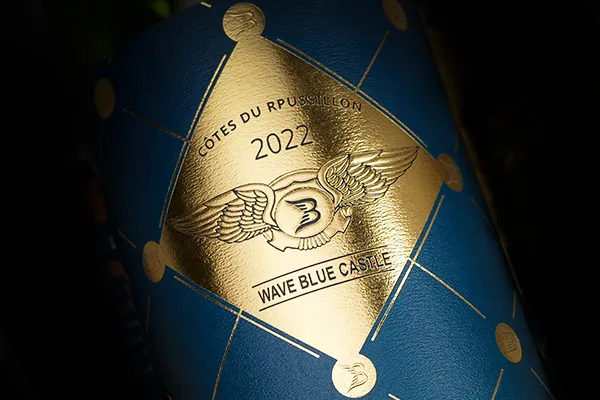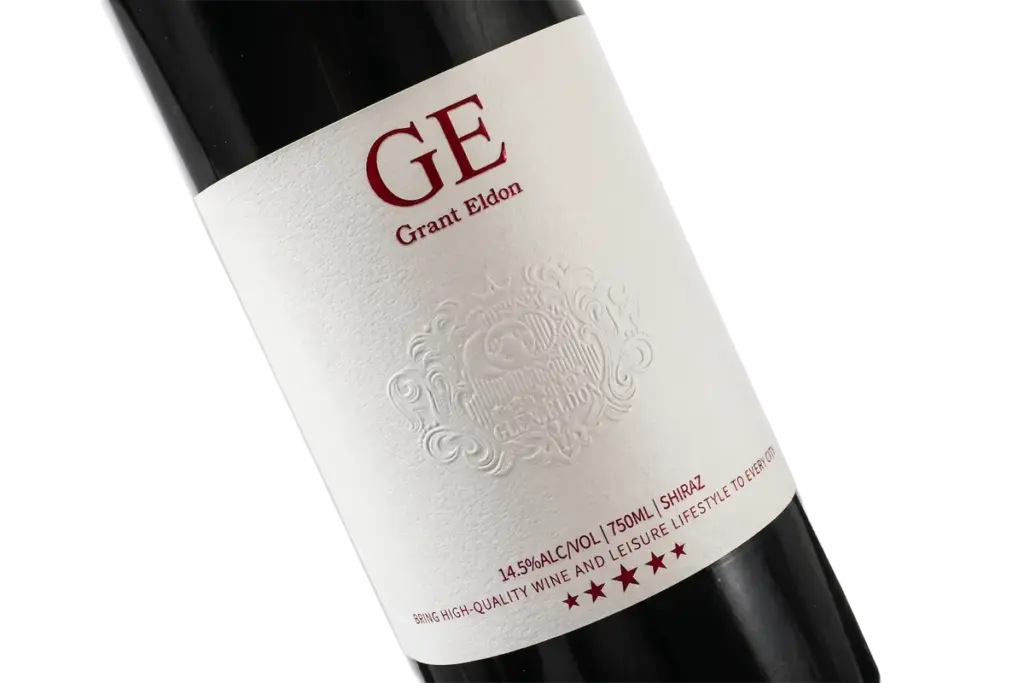
Developing a reliable embossed labels craft guide is essential for luxury brands looking to capture shelf attention without suffering high material failure rates on the packaging line. When physical tooling deformation is executed incorrectly, standard paper fibers fracture, leading to high rejection rates, adhesive failure, and ruined brand presentation during customer handling.
This guide covers the key factors behind successful embossed label production, including artwork preparation, tooling design, material compatibility, and finishing considerations that affect final label quality.
What Are Embossed Labels and How Do They Work
Embossed labels use customized metal tooling to physically reshape packaging materials, creating raised, light-catching three-dimensional designs that enhance visual appeal and encourage consumers to interact with the package.
Core Definition and Tactile Characteristics
Embossed labels rely on structural deformation to elevate simple packaging into a multi-sensory branding tool. Rather than relying solely on flat ink, this method physically alters the substrate to create areas that stand out above the surface plane.
- Three-Dimensional Manipulation: The process physically alters paper, foil, or film substrates to create raised or recessed design elements.
- Sensory Appeal: The tactile surface lets customers feel the design, raising the perceived value of the product during physical handling.
- Visual Depth: Raised elements catch ambient light and cast subtle shadows, distinguishing the label from flat, ink-only prints.
- Permanent Deformation: The physical reshaping of the material’s fibers ensures the 3D relief remains stable and readable over the life of the package.
The Mechanical Pressing Process
Creating a high-quality raised label requires precise control of pressure, tooling alignment, and material properties to achieve consistent embossed details. The manufacturing sequence uses matched male and female dies to lock the new shape into the chosen material.
- Matched Metal Tooling: A custom-made metal male die and a matching female counterdie sandwich the label material on the press.
- High-Pressure Mechanical Force: The press applies massive mechanical force to squeeze the substrate directly into the engraved cavities of the tooling.
- Mechanical Pressure: Controlled pressure reshapes paper and natural-fiber substrates, creating defined relief without relying on heat-based forming.
- Dwell Time and Cooling: The material sits under pressure briefly to relieve internal stress before cooling, locking the physical deformation into the material.
Key Material Selection Criteria
Not every material can handle the physical strain of mechanical deformation. Selecting the right substrate determines whether the finished design stays crisp or tears on the press.
- Heavyweight Papers and Premium Cardstocks: Thicker substrates provide the structural integrity needed to hold deep impressions without cracking.
- Foil Papers and Metallic Stocks: These materials offer high visual contrast and retain sharp, fine details better than standard films.
- Fiber Density and Structure: Long-fiber papers stretch and compress under load, preventing structural failure during deep deformation.
- Specialized Adhesive Backings: The factory applies adhesive strictly to the flat side to secure the label without distorting the raised front pattern.
Embossing vs. Debossing Mechanics
While both techniques rely on matched dies and heavy mechanical pressure, they serve different aesthetic roles by changing the direction of the physical force.
- Embossing: This method pushes design elements upward from the label surface to create a prominent, raised 3D effect.
- Debossing: This process presses the artwork downward into the substrate, creating a recessed, indented, or engraved look.
- Tooling Reversal: Both techniques utilize identical machinery but require reversed die orientations to alter the direction of the pressure.
- Combination Designs: Advanced layouts combine both styles to create complex, multi-textured surfaces on a single label.
Embossed Labels Manufacturing Process
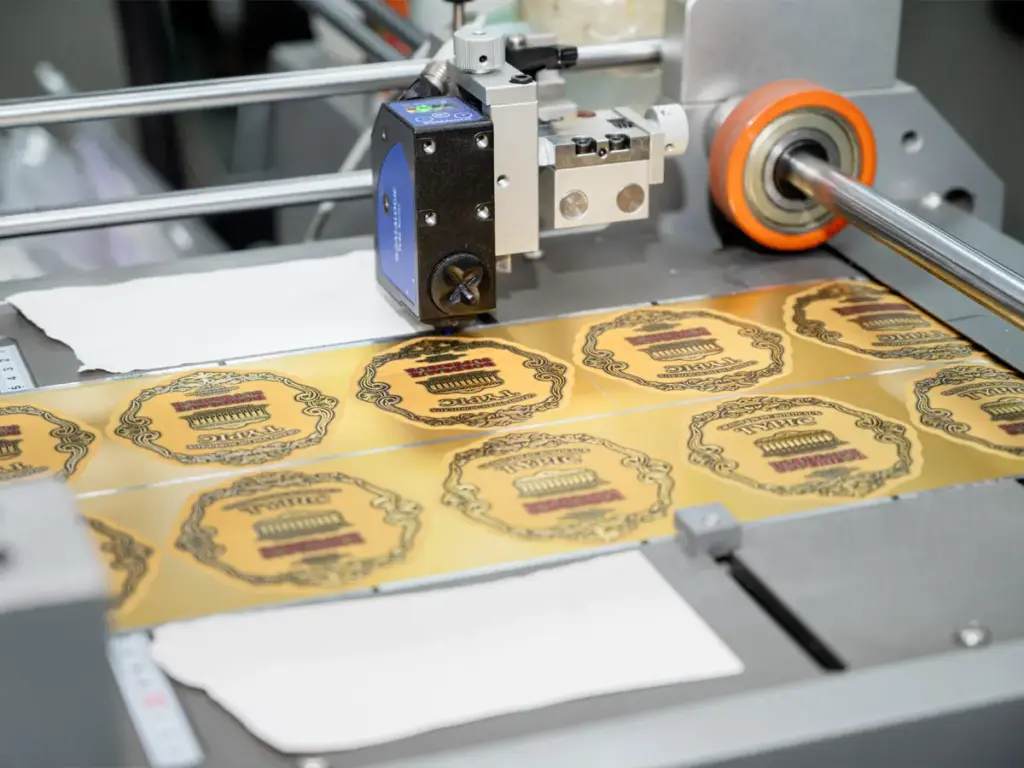
Precision mechanical tooling deforms high-strength fibers under managed heat and pressure to yield permanent, light-catching tactile brand elements.
Design and Prepress Feasibility
The production pipeline begins with structural planning in vector design software. High-resolution raster images fail at the tooling stage, so designers build dedicated vector layers to isolate raised elements from flat-printed graphics, barcodes, and text. This isolation guarantees the metal engraving systems receive clean path data.
Before cutting metal, operators run feasibility checks against the mechanical properties of the target substrate. Engineers define exact specifications for relief depth, feature angles, and bevel radiuses. Setting these parameters prevents the material from shearing or tearing when subjected to high tonnage.
- Minimum line thickness: Fine embossed details should be carefully evaluated during prepress to ensure the design can be reproduced clearly without damaging the substrate.
- Element spacing: Adequate spacing between raised elements helps maintain definition and prevents fine details from becoming unclear during embossing.
Substrate and Material Selection
Substrate selection dictates the final height and crispness of the three-dimensional relief. Uncoated, long-fiber papers compress and stretch under pressure without fracturing, making them the primary choice for premium spirit and wine bottles. In contrast, non-porous synthetic films require highly specialized handling to prevent memory recovery and edge softening.
- Heavy paper stocks: Thick, textured, or uncoated papers compress internally to retain maximum tactile shape.
- Natural-Fiber Substrates: Bagasse, bamboo fiber, cotton remnants, and post-consumer waste materials can be shaped through mechanical embossing to create tactile, dimensional finishes.
- Adhesive systems: High-tack acrylics and permanent liners prevent the raised surfaces from delaminating or lifting near bottle curves.
Die Design and Fabrication
Embossing relies on a matched die set designed in 3D CAD environments. The male die features raised structures that force the label stock into the corresponding cavities of the female counterdie. Machinists engineer these tools with precise tolerances, factoring in substrate caliper to prevent the metal from pinching or cutting the sheet.
- Hardened steel dies: High-durability tooling engineered to withstand millions of cycles in high-volume industrial runs.
- Brass dies: Hand-sculpted or CNC-milled tooling preferred for shorter craft runs and complex, multi-level designs.
- Fabrication methods: Toolmakers deploy CNC machining, high-resolution laser engraving, or chemical etching to produce burr-free bevels.
Printing Integration and Alignment
Embossed label printing requires careful coordination with the printing process to ensure the design remains clear and accurate. Depending on the label design and finishing requirements, printing can be completed before or after embossing. During production, the printed artwork is aligned with the embossing tooling to ensure logos, patterns, and decorative details are positioned correctly.
Embossing changes the surface of the label material, so the printing process must consider the effect on inks and coatings. Proper material selection and finishing methods help maintain clear graphics and avoid issues such as ink cracking or uneven appearance on raised areas.
- Design and Process Alignment: Artwork and embossing areas are checked during prepress to ensure accurate positioning and smooth production.
- Print Quality Control: The production team checks colors, printed details, and embossed areas to maintain consistent label quality.
Mechanical and Heat-Assisted Embossing Operations
The actual physical transformation happens inside the embossing press under heavy mechanical loads. The moving web passes between the mounted male and female cylinders. As they close, the substrate undergoes plastic deformation, permanently restructuring the fibers into the target profile.
When processing polymer films or metallic foils, ambient mechanical pressure is insufficient. Polymers possess elastic memory and will naturally flatten over time if cold-pressed. To lock in the shape, inline heating elements warm the web below its melting point, allowing the molecules to reform and freeze in position upon contact with the chilled counterdie.
- Mechanical force: Embossing presses apply controlled pressure based on the label material, design complexity, and required embossing depth.
- Pressure Settings: Controlled embossing pressure determines the depth and definition of the relief while helping maintain substrate integrity.
- Dwell optimization: Operators balance dwell time, speed, and temperature to maximize throughput without risking fiber rupture.
Post-Embossing Finishing and Quality Control
After the embossing station, the web moves immediately to finishing. Rotary or flatbed die-cutting units trim the labels into their final profiles. Correct tool pressure is mandatory here: excessive tension during waste stripping or rewinding can crush the freshly formed three-dimensional profiles.
Quality control teams pull samples from the production line to verify structural integrity. They inspect embossing depth and consistency after production to identify deformation, uneven results, or other quality issues and make adjustments when necessary.
- Die-cutting: Rotary tools cut custom contoured shapes while avoiding contact with the raised areas.
- Calibrated rewinding: Slitting systems operate under low web tension to prevent crushing the raised 3D profiles on the core.
- Inspection parameters: Technicians check for registration alignment, fiber fracturing, and relief height consistency across the web.
Command Attention with 3D Tactile Labels
Embossed Labels vs Flat Printed Labels
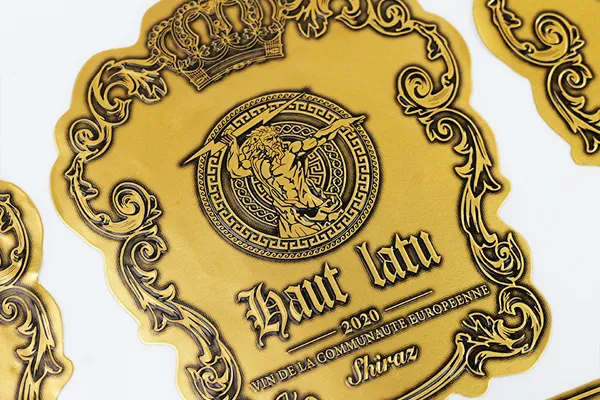
Embossing physically alters label substrates to create tactile 3D relief, while flat printing relies entirely on ink deposition to manage precise branding graphics on smooth surfaces.
Core Structural and Manufacturing Differences
Choosing the right labeling method requires understanding how physical forces alter the base material. Embossed labels and flat printed labels operate on fundamentally different mechanical principles during production.
- Embossed labels: These rely on custom metal dies (male and female plates) and high mechanical pressure to create a physically raised, three-dimensional tactile surface.
- Flat printed labels: This method transfers ink directly onto a smooth surface using digital, flexographic, or offset printing without altering the material height.
- Manufacturing requirements: Embossing requires precise physical tooling, heat, and dwell time to shape fibers, whereas flat printing focuses on high-speed ink deposition and rapid UV curing.
Visual and Tactile Sensory Impact
The sensory difference between a raised pattern and a flat graphic changes how consumers interact with a package on retail shelves. Physical texture shifts the product experience from passive viewing to active handling.
Raised elements on embossed labels catch ambient light and cast natural shadows. This interaction with light establishes a dynamic visual hierarchy that draws attention to brand names, logos, or specialty seals.
The physical texture of embossed designs invites touch and can increase shelf appeal compared with flat labels. Conversely, flat labels deliver uniform visual consistency under any lighting angle, making them highly effective for precise, predictable brand color management.
Material Compatibility and Design Constraints
Substrate physical properties dictate which designs are technically feasible. Not every paper or film can handle the structural stress of heavy mechanical relief.
- Paper stocks: Embossing performs best on thick, long-fiber uncoated papers that stretch without tearing. Synthetic films like BOPP yield softer, more rounded relief edges under the same pressure.
- Minimum line thickness: Fine embossed details require adequate line thickness and spacing to maintain clarity and prevent fiber distortion.
- Graphic complexity: Flat printing accommodates complex multi-color graphics, tight color gradients, and photographic details that are difficult to align on 3D relief surfaces.
Durability, Longevity, and Environmental Resistance
Once products enter the supply chain, they face friction, moisture, and temperature fluctuations. The physical structure of the label determines its survival rate.
The permanent physical deformation of embossing ensures the design remains legible even if the printed ink fades over time. This makes relief shapes highly reliable for long-term identification.
However, raised embossed surfaces may be more prone to scuffing and friction during transport, so protective packaging may be needed. For demanding environments, flat-printed synthetic films such as BOPP or PET can offer better resistance to moisture, oil, and temperature changes.
Production Costs and Operational Trade-offs
Financing a packaging run requires balancing upfront tooling investments against long-term unit costs. The choice between these two methods directly impacts operational flexibility.
- Tooling investment: Embossing introduces custom metal die tooling costs and post-print setup steps, making it less economical for short production runs or seasonal items.
- Setup flexibility: Flat printing requires minimal setup fees, supporting fast turnaround times, frequent artwork iterations, and multiple SKUs without tooling delays.
- Volume economics: Unit costs for embossed labels decrease significantly at scale, making them a viable, high-value investment for established premium product lines.
Best Applications for Custom Embossed Labels
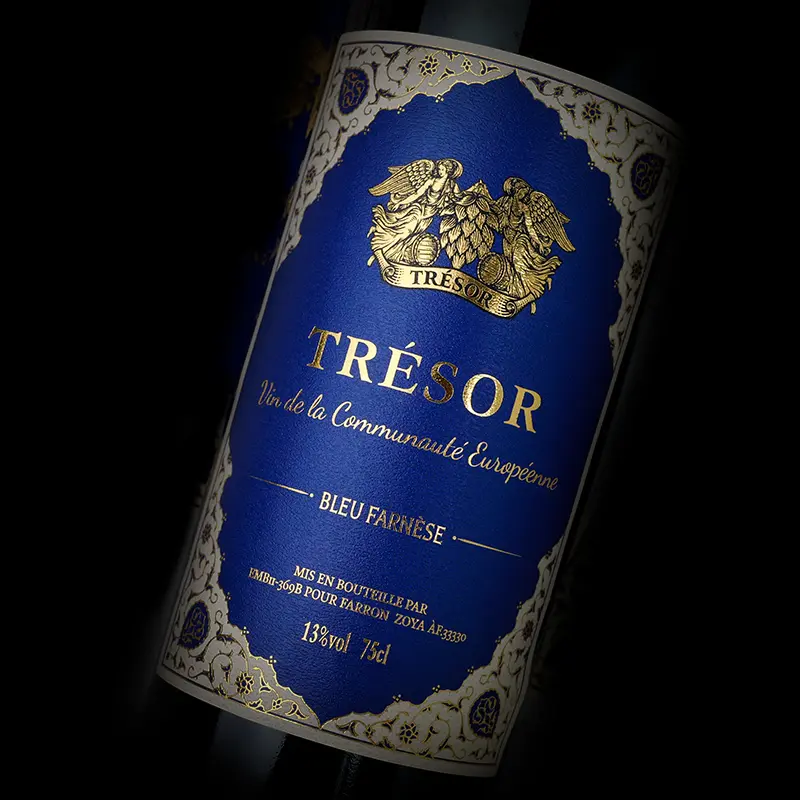
Custom embossed labels enhance premium packaging by adding tactile depth and visual contrast, helping products create a stronger presence on retail shelves.
Вино, Spirits, and Craft Beverages
The high-involvement purchasing behavior of the alcohol and craft beverage sectors makes it a primary market for tactile packaging. Brands leverage physical dimension to justify premium pricing and capture immediate attention on crowded retail shelves.
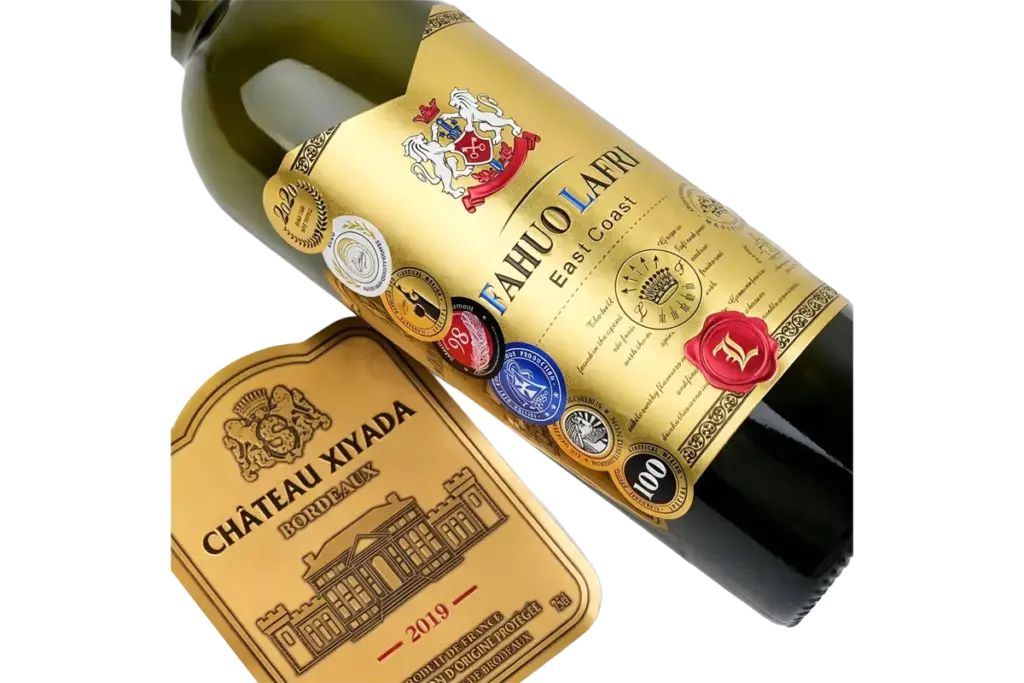
- Embossed Elements: Distillery logos, raised foil-stamped crests, and sculpted varietal marks elevate brand assets.
- Substrate Choice: Estate papers and long-fiber uncoated stocks deliver exceptionally sharp, distinct embossed edges.
- Curvature Planning: Designing dies carefully around bottle curvature prevents dimensional distortion on curved glass surfaces.
Health, Красота, and Cosmetics
Cosmetic packaging relies heavily on sensory touchpoints during consumer handling. Incorporating structural relief transforms minimalist or monochrome designs into highly tactile experiences that communicate clinical or organic authority.
- Tactile Details: Raised brand wordmarks, minimal icons, and tactile background patterns establish a premium skincare identity.
- Moisture Defense: Embossing synthetic BOPP films secures crucial moisture resistance for bathroom and shower environments.
- Flexibility Matching: Matching relief depth to film thickness eliminates the risk of label cracking on flexible, squeezable tubes.
Gourmet, Specialty, and Artisan Foods
Small-batch food producers use structural dimensions to signal heritage, quality, and meticulous craftsmanship. The physical raise on a jar or tin immediately separates gourmet spreads, oils, and chocolates from mass-market alternatives.
- Visual Anchors: Adding tactile weight to brand banners, regional origin badges, and small-batch quality seals on jars and tins.
- Heritage Signaling: Communicating craftsmanship on specialty oils, chocolates, coffees, and organic spreads.
- Environmental Selection: Selecting moisture-resistant synthetic materials over paper for refrigerated items prone to heavy condensation.
Luxury Packaging, Gift Boxes, and Limited Editions
The unboxing process serves as a critical branding milestone for luxury products. Multi-level textures and ink-free structural details turn rigid setup boxes and sleeves into memorable, sensory touchpoints.
- Unboxing Impact: Elevating the experience with blind embossing and raised monograms on rigid cartons, sleeves, and premium gift sets.
- Tooling Precision: Employing multi-level CNC-engraved dies to achieve complex, sculpted depths for detailed family crests and serial marks.
- Aesthetic Minimalism: Using blind embossing on deeply colored, textured stocks to create a highly sophisticated, ink-free aesthetic.
Final Thoughts
While standard flat labels offer cost advantages, precision embossing with matched metal tooling can add tactile value and help premium products create a more distinctive shelf presence.
Choosing the right embossed label solution requires careful consideration of materials, adhesive systems, and finishing techniques based on product requirements and application conditions. Proper planning helps ensure embossed details remain clear and consistent throughout production and use.
At Meikei Printing, we help brands evaluate suitable materials, finishes, and embossing options for different packaging applications. We recommend testing samples before mass production to confirm the final appearance, texture, and performance. Contact our team to review your design files and explore the right solution for your packaging project.
Frequently Asked Questions
What are embossed labels?
Embossed labels feature raised designs, lettering, or patterns created by pressing the label material between embossing dies. They add tactile depth and a premium finish to product packaging, making them suitable for brands seeking a distinctive shelf presence.
How are embossed labels made?
Embossed labels are made by placing the label substrate between matching male and female dies and applying controlled mechanical pressure. The pressure reshapes the substrate to create the desired raised profile and tactile texture.
What is embossing in printing?
Embossing is a finishing process that creates a raised three-dimensional design on a printed label or packaging surface. It can highlight logos, typography, borders, and decorative elements while adding a tactile dimension to the printed design.
Are embossed labels expensive?
Embossed labels generally cost more than standard flat labels because they require custom tooling and an additional finishing process. Final pricing depends on the label size, material, design complexity, order quantity, and embossing specifications.
Can embossed labels be waterproof?
Yes, embossed labels can be designed for moisture-resistant applications. Synthetic materials such as BOPP can provide good resistance to water and humidity, while the final performance depends on the substrate, printing, adhesive, and application environment.
What products use embossed labels?
Embossed labels are commonly used for wine and spirits, cosmetics, skincare, candles, gourmet foods, and premium retail packaging. They are especially effective when brands want to emphasize logos, product names, or other key visual elements.
What is the difference between embossed and debossed labels?
Embossing raises a design above the label surface, while debossing presses the design into the material to create a recessed effect. Both techniques add texture and dimension, but they create opposite surface profiles.
How long does embossing take?
Production time depends on the label design, tooling requirements, material, order quantity, and overall production schedule. Simple projects can move quickly, while custom dies and complex multi-finish labels may require additional preparation time.
Can logos be embossed on labels?
Yes. Logos are one of the most common elements to emboss. Raised logos can add tactile contrast and make key brand elements more noticeable, especially when combined with premium printing, foil stamping, or other label finishes.
What materials work best for embossed labels?
Paper and natural-fiber substrates are well suited to embossing because their structure can be reshaped through controlled mechanical pressure. Eco-conscious options such as bagasse, bamboo fiber, cotton remnants, and recycled materials can create distinctive tactile finishes, while BOPP can be considered for applications requiring greater moisture resistance.
📖 Complete Guide
← Back to “What Are Custom Labels?” — The Complete Guide
Learn everything about custom labels: types, материалы, printing techniques, cost factors, and how to choose the right solution for your brand.
Related Products You May Like
Want to know more about Meikei? Visit end-to-end-customization or explore learn more about Meikei.