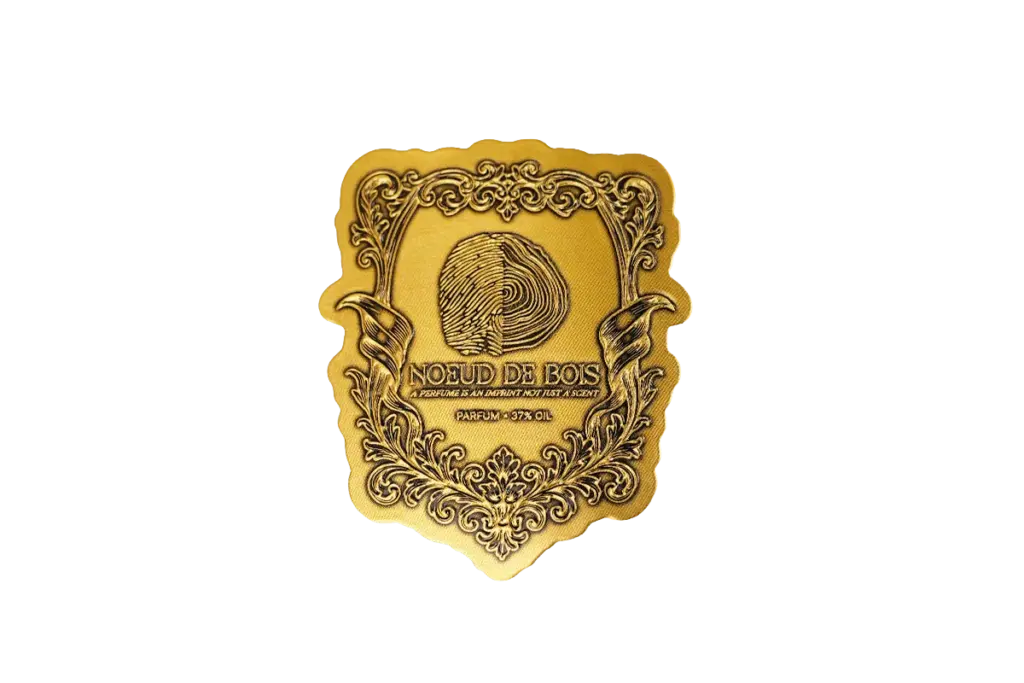
The European Union’s Packaging and Packaging Waste Regulation (PPWR) now requires all packaging placed on the EU market to be recyclable by 2030. For brands that sell into Europe or that market themselves as sustainable anywhere, this is not a future concern. It is a present one.
A 4-inch label on a glass jar may seem insignificant, but if the face stock, adhesive, and ink are incompatible with the container’s recycling stream, the entire package can fail compliance testing.
I this guide, you’ll learn more about the five main categories of eco-friendly label materials, the certification frameworks that define them, how soy-based ink changes the printing equation, and how to source eco-friendly labels from a manufacturer without overpaying for materials you do not need.
What Are Eco-Friendly Labels?
An eco-friendly label is one whose face stock, adhesive, ink, and liner are selected to minimize environmental impact across the product’s full lifecycle, from raw material extraction through disposal or recycling.
That definition breaks into four components:
| Component | Traditional Label | Eco-Friendly Label |
|---|---|---|
| Face stock | Virgin white paper, PVC vinyl, BOPP | Recycled paper, kraft paper, compostable film, bamboo fiber, bagasse |
| Adhesive | Solvent-based acrylic | Water-based, vegan, biodegradable adhesive |
| Tinta | Petroleum-based | Soy-based or vegetable-based ink |
| Liner/backing | Virgin glassine | Recycled content liner, or linerless format |
The difference is not cosmetic. A kraft paper label printed with soy ink on a compostable face stock behaves fundamentally differently in a recycling stream than a PVC vinyl label printed with solvent ink. One can be processed; the other contaminates.
For a broader overview of label materials across all categories (including synthetic films and specialty substrates), see our guide on what materials are used for custom stickers.
Types of Eco-Friendly Label Materials
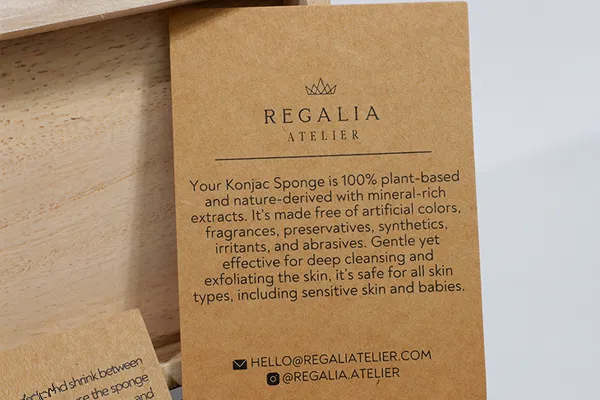
Kraft Paper Labels
Kraft paper is the most widely used eco-friendly label substrate. Made from unbleached wood pulp through the kraft process, it retains its natural brown color and requires fewer chemical treatments than white paper.
Key properties:
- Natural brown tone that signals “orgânico” e “handmade” to consumers
- Compatible with soy-based and vegetable-based inks
- Fully recyclable and biodegradable
- Cost-effective — typically the lowest-cost eco option
Best applications: Candle labels, organic food packaging, craft beer bottles, handmade soap and cosmetics. For a deeper look at how kraft paper performs specifically on candle packaging, see our guide to candle label materials.
Limitations: Kraft paper is porous and absorbs moisture. It is not suitable for products that will be refrigerated, submerged, or exposed to condensation without a protective overlaminate — and adding a laminate may reduce recyclability.
Recycled Paper Labels
Recycled paper labels are manufactured from post-consumer waste (PCW) fibers. The recycled content percentage varies, 30% PCW is common, 99% PCW is available from specialized suppliers.
Key properties:
- Diverts waste from landfills and reduces demand for virgin fiber
- Slightly greyer tone than kraft paper
- Compatible with most printing methods including flexography and digital
- Recyclable in standard paper streams
Best applications: Food and beverage labels, retail packaging, health and beauty products, any brand that wants to communicate a measurable recycled-content claim.
Limitations: Recycled fibers are shorter than virgin fibers, which can reduce tensile strength. Very high PCW content (above 80%) may require a protective coating for labels that will face abrasion or moisture.
Compostable Labels
Compostable labels are designed to break down into non-toxic components under specific conditions within a defined timeframe. There are two categories:
- Industrial compostable: Requires commercial composting facilities (temperatures above 58°C). Certified under EN 13432 (Europe) or ASTM D6400 (US).
- Home compostable: Breaks down at ambient temperatures in a home compost bin. A smaller but growing category.
Key properties:
- Face stocks made from cellulose, wood-free paper, or bio-based polymers (PLA, PHA)
- Adhesives must also be compostable — a critical detail often overlooked
- Certified products carry a logo (por exemplo, seedling logo for EN 13432) that consumers and regulators recognize
Best applications: Organic food packaging, fruit and vegetable stickers, compostable pouches and bags, products marketed for home composting.
Limitations: Compostable labels have a shorter shelf life than conventional labels. High heat or humidity during storage can degrade the material before it reaches the printer. Most compostable face stocks are also more expensive than kraft or recycled paper — typically 20–40% more.
Biodegradable Labels
Biodegradable labels will break down naturally over time, but unlike compostable labels, there is no defined timeframe or conditions requirement. “Biodegradable” simply means the material can be decomposed by microorganisms.
Key distinction from compostable: All compostable materials are biodegradable, but not all biodegradable materials are compostable. A biodegradable label might take 2–5 years to break down; a compostable label must break down within 90–180 days under controlled conditions.
Key properties:
- Often made from bio-based polymers or blended natural/synthetic fibers
- No standardized certification — “biodegradable” claims vary widely
- Can be a practical middle ground for brands not ready to commit to full compostability
Best applications: Agricultural product labels, floral tags, short-lifecycle consumer goods, brands transitioning toward fully compostable options.
Limitations: The lack of a universal standard means “biodegradable” claims can be vague. Brands making this claim should verify the specific test method and degradation conditions with their supplier.
For a detailed comparison of these two categories, see our dedicated article on compostable vs biodegradable labels (coming soon).
Alternative Materials: Bamboo, Bagasse, and Cotton
Beyond the four mainstream categories, several alternative substrates are gaining traction:
- Bamboo fiber labels: Bamboo grows to maturity in 3–5 years (compared to 20–40 years for hardwood trees), making it a rapidly renewable resource. Bamboo fiber labels have a distinctive texture and natural off-white tone.
- Bagasse (sugarcane waste) labels: Bagasse is the fibrous residue left after sugarcane is crushed for juice. Rather than burning this waste, it can be processed into label stock. This diverts agricultural waste and avoids virgin fiber entirely.
- Organic cotton labels: Cotton remnants from textile manufacturing can be processed into label stock. These are particularly popular in the fashion and luxury cosmetics sectors.
These materials are currently niche — you will not find them at the same price point as kraft or recycled paper — but they offer strong differentiation for brands that want to go beyond the standard eco options.
Eco-Friendly Certifications You Should Know
Certifications give your label claims credibility. Without third-party verification, terms like “eco-friendly” e “sustainable” are marketing language, not evidence.
| Certification | What It Covers | Region | Who Issues It |
|---|---|---|---|
| FSC® (Forest Stewardship Council) | Paper sourced from responsibly managed forests | Global | FSC International |
| EN 13432 | Industrial compostability (packaging must break down within 12 weeks under controlled conditions) | EU | European Committee for Standardization |
| ASTM D6400 | Compostability of plastics (US standard, similar to EN 13432) | US | ASTM International |
| ISCC PLUS | Sustainable and circular raw materials (mass balance approach) | Global | ISCC System |
| Carbon Trust | Verified carbon footprint reduction | Global | Carbon Trust |
For brands selling into the EU, FSC certification is effectively table stakes. The EU PPWR regulation explicitly references recognized certification schemes for demonstrating packaging sustainability. If your label supplier cannot provide FSC-certified material, you will face compliance gaps.
Sustainable Printing: Soy-Based Ink vs Traditional Ink
The label material gets most of the attention, but the ink matters just as much. Petroleum-based inks contain volatile organic compounds (VOCs) that off-gas during drying and can contaminate paper recycling streams.
Soy-based ink replaces petroleum-derived carriers with soybean oil. The practical differences:
| Property | Petroleum Ink | Soy-Based Ink |
|---|---|---|
| VOC emissions | Higher | Significantly lower |
| Color vibrancy | Good | Equal or brighter (soy ink spreads more evenly on paper) |
| De-inking during recycling | More difficult | Easier to remove — improves recycled paper quality |
| Drying time | Faster | Slightly slower (requires adjusted press settings) |
| Substrate compatibility | Broad | Best on porous substrates (paper, kraft, recycled); not ideal for non-porous films |
Soy-based ink is the default printing method for eco-friendly labels. It pairs particularly well with uncoated and recycled papers, which are notoriously absorbent. Modern soy ink formulations are engineered to dry cleanly on these porous surfaces without the color dullness that older soy inks produced.
At MeiKei, soy-based and vegetable-based inks are standard across the eco-friendly & natural label range, specifically formulated for high-adhesion on uncoated eco-papers.
How to Choose the Right Eco-Friendly Label for Your Product
The right material depends on your product’s environment, your target market’s regulatory requirements, and your brand positioning. Here is a practical decision framework:
| Indústria | Material recomendado | Key Consideration |
|---|---|---|
| Candles & home fragrance | Kraft paper | Natural aesthetic, low cost, soy ink compatibility. Avoid if candle will be stored in high humidity. |
| Organic food & beverage | Recycled paper or compostable film | Check if your packaging will be composted industrially (→ compostable) or recycled (→ recycled paper). |
| Cosmetics & personal care | Recycled paper + soy ink | Moisture exposure is the main constraint. Consider a thin compostable overlaminate if the product will be used in wet environments. |
| Fresh produce & agriculture | Biodegradable or compostable | Fruit stickers and produce labels must break down with the produce. Home-compostable is preferred. |
| Arte & artisan goods | Kraft paper or bamboo fiber | Differentiation matters. Bamboo or bagasse signals a deeper commitment than standard kraft. |
| Luxury & premium brands | Cotton or bagasse + blind embossing | Blind embossing creates texture with zero ink or chemicals — the ultimate eco-luxury finish. |
If you are not sure which material fits your specific application, the fastest path is to request physical samples from your supplier and test them in real conditions, refrigeration, moisture, abrasion, UV exposure.
Eco-Friendly Labels vs Traditional Labels: Cost & Performance
Eco-friendly labels cost more than conventional labels. That is the reality. But the gap has narrowed significantly over the past five years, and the total cost picture is more nuanced than the per-unit price suggests.
| Factor | Traditional Label | Eco-Friendly Label |
|---|---|---|
| Material cost | Lower (baseline) | 10–40% higher, depending on material (kraft ≈ +10%; compostable film ≈ +40%) |
| Printing cost | Standard | Comparable (soy ink is now priced similarly to petroleum ink at scale) |
| Regulatory compliance | May require redesign to meet new regulations | Built-in compliance with EU PPWR and similar frameworks |
| Brand value | Neutral | Measurable consumer preference — studies show willingness to pay more for sustainable packaging |
| Recycling compatibility | May contaminate recycling stream | Designed to integrate with recycling or composting infrastructure |
The regulatory cost is the factor most buyers underestimate. If your current label fails recycling compatibility testing under the EU PPWR framework, you will pay for a redesign anyway. Switching to an eco-friendly material now avoids a forced redesign later, with tighter timelines and higher costs.
How to Source Eco-Friendly Labels from a Manufacturer
When evaluating a label supplier for eco-friendly materials, check these five points:
- FSC-certified supply chain. Ask for the FSC certificate number and verify it on the FSC public database. A supplier that claims FSC but cannot provide the certificate number is not FSC.
- Adhesive transparency. The face stock gets attention, but the adhesive matters just as much. Ask whether the adhesive is water-based, vegan, and biodegradable. Some suppliers use compostable face stocks with conventional adhesives — which defeats the purpose.
- Ink system. Confirm that the supplier uses soy-based or vegetable-based ink as standard, not as a premium upsell. At MeiKei, soy ink is the default for all eco-friendly label production.
- Sample availability. Request physical samples on the specific material you are considering. Run your own tests: moisture exposure, refrigeration, abrasion, and adhesion on your actual container surface.
- Minimum order quantities and lead times. Eco-friendly materials sometimes carry higher MOQs because suppliers run them in dedicated batches. Confirm MOQs and lead times before finalizing your material selection — a 40% cost premium on a small run may be manageable, but a 6-week lead time may not be.
For a broader introduction to custom labels and how they are structured (face stock, adhesive, liner, finish), see our complete guide to custom labels.
Perguntas frequentes
What makes a label eco-friendly?
A label is eco-friendly when its face stock, adhesive, ink, and liner are selected to minimize environmental impact. This typically means recycled or rapidly renewable face stocks (kraft paper, recycled paper, bamboo, bagasse), water-based biodegradable adhesives, soy-based or vegetable-based inks, and compatibility with recycling or composting streams.
Are kraft paper labels recyclable?
Sim. Kraft paper labels are fully recyclable in standard paper recycling streams. The unbleached fibers can be reprocessed alongside other paper waste. Kraft paper is also biodegradable under natural conditions.
What is the difference between compostable and biodegradable labels?
All compostable materials are biodegradable, but not all biodegradable materials are compostable. Compostable labels must break down within a defined timeframe (90–180 days) under specific conditions (industrial composting at 58°C+ or home composting at ambient temperature). Biodegradable labels will break down eventually, but there is no guaranteed timeframe.
Do eco-friendly labels cost more than traditional labels?
Sim, typically 10–40% more depending on the material. Kraft paper adds the least premium (~10%). Compostable films add the most (~40%). Recycled paper and soy-based ink are now close to conventional pricing at scale. The gap has narrowed significantly and continues to shrink.
Can eco-friendly labels be used on curved or textured surfaces?
Sim, but material selection matters. Kraft paper and recycled paper conform well to slightly curved surfaces. For tight curves or textured containers, a thinner compostable film or a bamboo-blend substrate may perform better. Always test samples on your actual container before production.
Are soy-based inks as durable as petroleum-based inks?
On porous substrates (paper, kraft, recycled paper), soy-based inks deliver equal or better color vibrancy and comparable durability. On non-porous substrates (BOPP, BICHO DE ESTIMAÇÃO, vinyl), soy ink is less effective — petroleum or UV-cured inks remain the better choice for synthetic films.
What certifications should I look for in eco-friendly label suppliers?
The most important certifications are FSC (for paper sourcing), EN 13432 or ASTM D6400 (for compostability claims), and ISCC PLUS (for sustainable raw materials). If a supplier claims to be eco-friendly but cannot provide third-party certification, treat the claim as unverified.
Conclusion
Eco-friendly labels are no longer a niche option for brands that can afford the premium. With the EU PPWR now setting recyclability deadlines, and consumers actively choosing products with visible sustainability credentials, the question has shifted from “can we afford to switch” to “can we afford not to.”
If you want to evaluate which eco-friendly label material fits your specific application, MeiKei offers free material consultations and physical sample kits across the eco-friendly & natural label range. Our FSC-certified supply chain, soy-based ink standard, e 100% biodegradable adhesive commitment mean you can verify every claim before you commit to production.