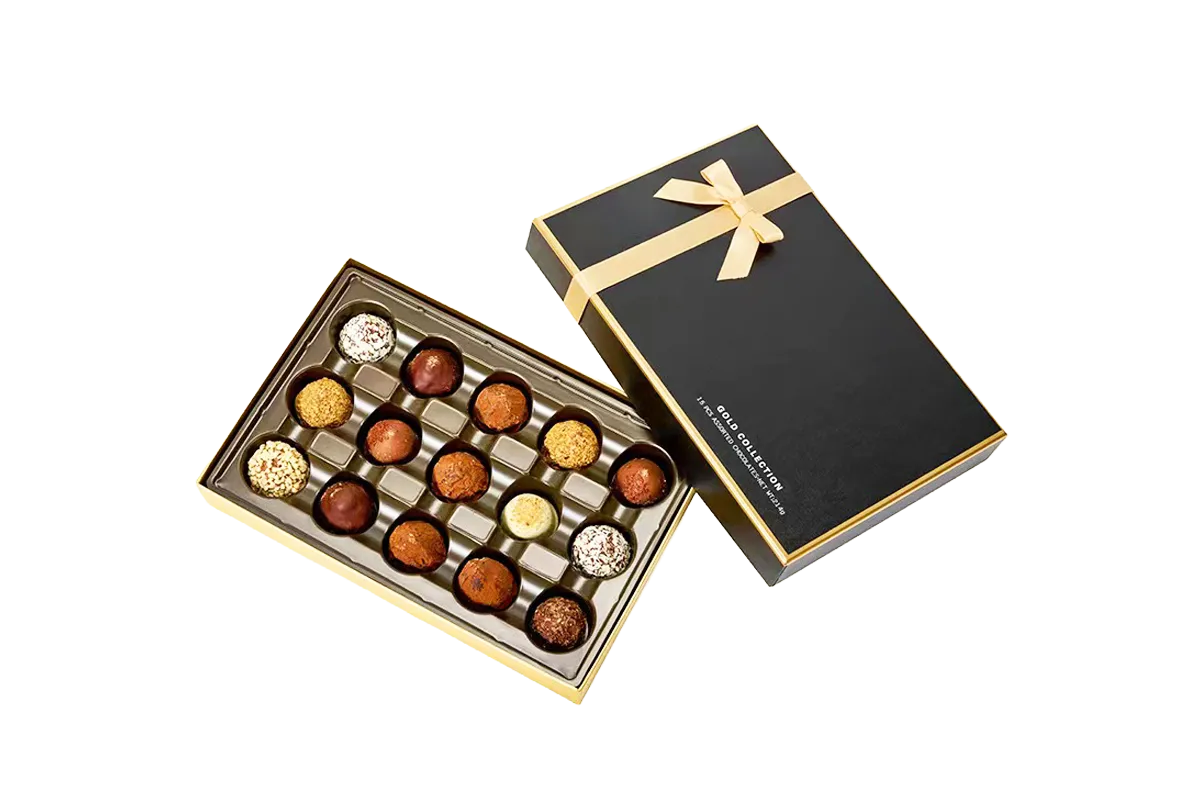
Snack labels live on the most flexible surfaces in food packaging: crinkly films, gusseted pouches, and resealable closures that flex with every grab. Snack food labels on pouch, bag, and resealable formats are a printing, adhesion, and placement problem wrapped in one crinkly package, and they fail most often where the three overlap.
This guide covers the labeling options for flexible snack packs, the material and adhesive choices that hold on film, and the placement rules that keep barcodes scannable. It ends with the high-volume production considerations for multi-SKU snack lines, where the smallest spec error costs the most.
Labeling Options for Flexible Snack Packaging
Flexible snack packs take three labeling routes: printed film, applied labels, and combination packs that use both together.
The three routes answer different volume and flexibility questions, and most snack brands end up using at least two of them across their range. Understanding each route is the starting point for every other label decision on a snack pack.
Printed Film
Most snack bags are printed directly on the film by the packaging converter, with branding, nutrition, and barcodes in the print run. Direct print suits high-volume, single-design production where every bag carries the same artwork. The label question then moves to the variable data, batch codes, and promotional stickers added later, and those small labels still follow every single placement rule below.
Applied Labels
Applied labels cover the packs that need flexibility: seasonal flavors, regional variants, and small runs where direct print cannot justify its setup cost. The label brings the branded face to a stock pouch. The trade is label cost against print plate and setup savings, and the crossover point between them shifts with every order size.
Combination Packs
Many lines combine both: a printed pouch for the base design and a small label for flavor, batch, or promotion. The combination keeps the pouch print simple and the variants cheap. It is the standard answer for multi-flavor snack families, and it turns a ten-flavor range into one pouch design plus ten small labels on one template.
Labels for Stand-up Pouches, Pillow Bags, and Resealable Packs
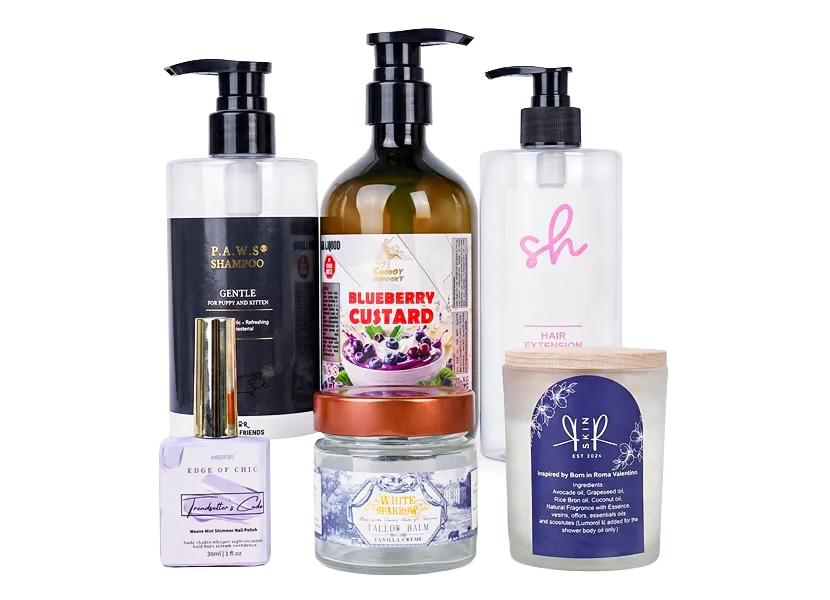
Each flexible format bends differently: gussets fold, pillow bags pillow, and resealable packs stretch the label across the closure.
The format’s bend map doubles as the placement map: where the film folds is where the label must not sit. The three formats below each draw their bend lines differently.
Stand-up Pouches
Stand-up pouches give the label a flat front panel and a bottom gusset that expands with the product. The front label has to stay clear of the gusset fold, where flexing would crease it. The format rewards labels placed on the pouch’s flattest zone, and punishes any label that crosses a fold line with visible creases.
Pillow Bags and Flow Packs
Pillow bags have no flat panel at all, so labels conform to the curve and the crimped end seals. The label film has to be soft enough to follow the bag’s pillow shape without lifting at the edges. The crimp zones stay label-free, because a label placed across a crimp creases on day one.
Resealable Packs
Resealable packs add a closure that the label must not interfere with, so the label sits beside or below the zipper line. The pack flexes every single time it opens, which tests the label’s elasticity through the product’s whole life. Closure-aware placement is the entire difference between a label that lasts and one that cracks at the first open.
Material and Adhesive Choices for Flexible Film Surfaces
Flexible film needs flexible labels: soft PE facestocks and elastic adhesives that move with the pack instead of fighting it.
Every material choice on a snack label traces back to one single property: does it move with the film or against it. The three choices below answer that one question layer by layer, from surface to seal.
Soft Film Facestocks
PE facestocks lead flexible packaging because they stretch and recover with the pack, while rigid films crack and paper creases. The facestock’s conformability matters more than its print surface on a crinkling bag. The flexible packaging industry’s materials work, tracked by groups like the Flexible Packaging Association, treats conformability as a core film property, sitting right next to barrier and seal strength.
Elastic Adhesives
The adhesive on a flexible pack has to stay bonded through repeated bending, so elastic adhesives replace the standard permanent grades. A stiff bond on a moving film fails at the edges first. The adhesive and facestock are specified as one flexing system that bends together. See our article on what materials are used for custom stickers for the pairing map, and test the pair on the filled pack before committing.
Coatings and Laminates
A laminate over the label print keeps the artwork intact through the crinkle, and a soft laminate follows the flex better than a rigid one. The laminate choice is part of the same conformability decision. Glossy rigid laminates on soft pouches are the mismatch to avoid, because they crack where the pack bends.
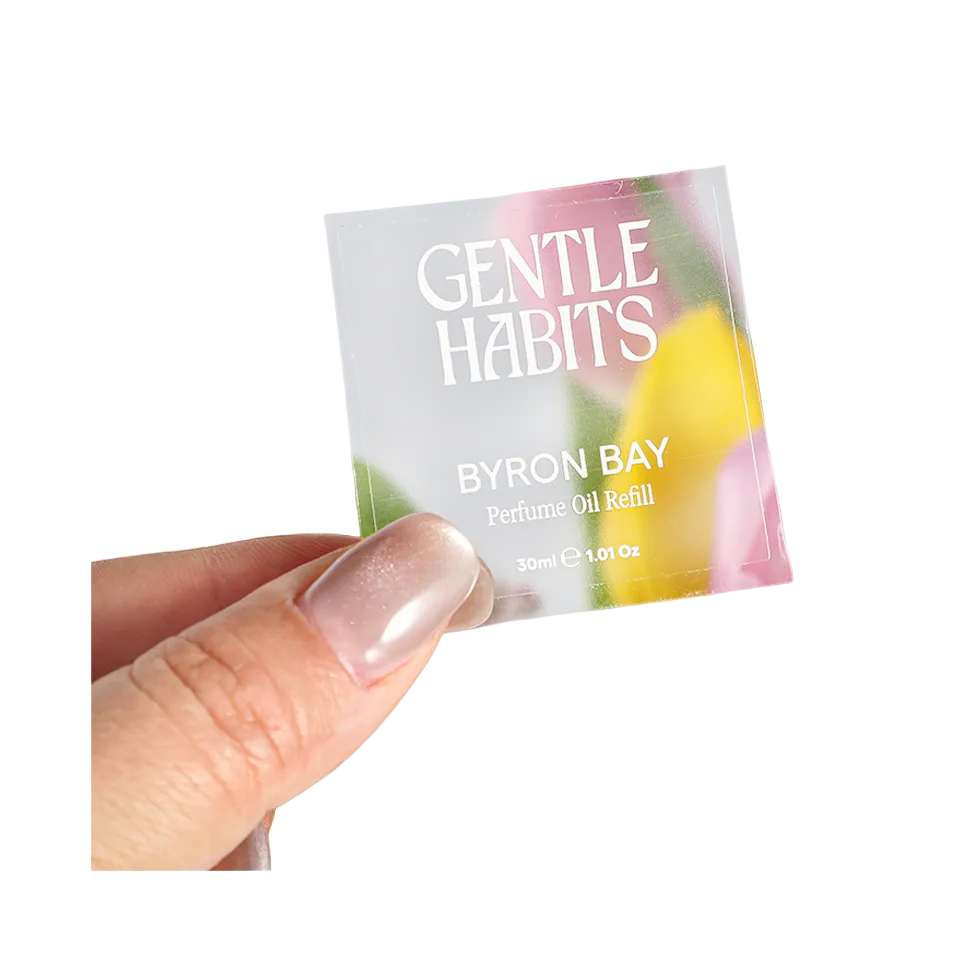
Snack Labels That Flex With the Pack
Label Placement, 可読性, and Barcode Space
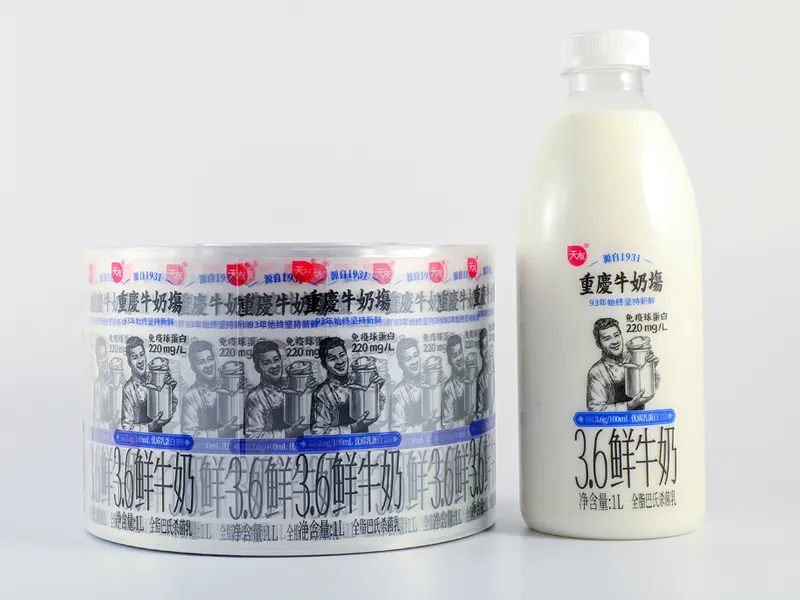
Placement decides readability on a moving pack: the flattest zone wins the label, and the barcode wins the flattest spot inside it.
Placement is free to get right and expensive to get wrong, because a misplaced label fails gradually and very visibly on the shelf. The three checks below lock the placement firmly before any artwork starts.
Finding the Flat Zone
Every flexible format has one zone that flexes least, the stand-up pouch’s front panel, the pillow bag’s center, and that zone gets the label. Placing the label across a fold or gusset is the most common placement failure. The zone is found by flexing the empty pack, not by looking at a flat drawing, because the drawing never shows where the film moves.
Barcode on the Flattest Spot
The barcode sits at the label’s flattest point, sized up and kept out of crease zones, because a scanner reads a flat code far more reliably than a curved one. Snack bags that scan at the till pass through hundreds of hands first. The code’s placement is tested on the filled pack, using the same scanner model the retailer uses.
Readable Required Text
Nutrition and ingredient text on a flexible label has to stay legible through crinkling, so it gets generous type sizes and sits away from the pack’s moving zones. The text survives the flex because it is placed for it. Legibility on the shelf is the placement’s final exam, and a crinkled panel is an automatic fail.
Print and Application Considerations for High-volume Snack Skus
High-volume snack lines reward boring specs: one roll format, one applicator setup, and a template that absorbs new flavors.
On snack lines, creativity belongs on the artwork itself, not anywhere in the production spec. The three habits below keep the line running smoothly while the range keeps growing.
Roll and Applicator Specs
Snack lines run labels from rolls through high-speed applicators, so the roll’s core, unwind, and pitch follow the machine’s manual exactly. A mis-spec here stops the line entirely, which on a snack SKU means thousands of packs an hour lost. See our article on how to choose custom roll labels for automated labeling for the complete line-side spec.
The Flavor Template
Multi-flavor snack lines run one label template, with color and name changing per SKU and everything else locked. The template keeps changeovers fast and the shelf family consistent, and it makes a ten-flavor range read as one brand. For the box formats that share the line, see our guide on custom candy and snack boxes.
Testing at Line Speed
The label gets trialed at production speed on the real film, because crinkle, static, and speed change application behavior. The trial catches misfeeds and placement drift before the full run. A snack label that applies perfectly at half speed can fail at full speed in ways no bench test predicts, which is exactly why the trial exists.
よくある質問
What is the definition of snack food?
Snack food is a portion-sized product eaten between main meals, sold ready to eat, and built entirely around convenience. The definition drives the packaging: small formats, single-serve options, and resealable closures. The snack label has to carry full nutrition on formats smaller than any meal pack.
What makes a snack a snack?
A snack is defined by portion, occasion, and convenience more than by the food itself: small, ready-to-eat, and eaten between meals. The same food served as a plated course stops being a snack. Packaging follows the occasion, with formats that fit a hand, a bag, or a desk drawer.
What are the characteristics of junk food?
Junk food is typically high in calories, salt, sugar, or fat relative to nutrients, and engineered for easy, fast eating. The label carries that nutritional profile in plain sight through the nutrition facts. For the packaging side, the same convenience characteristics drive the small, flexible formats.
Why do humans snack?
People snack for convenience, energy between meals, habit, and emotional comfort, with modern schedules blurring the old three-meal structure. The behavior drives one of packaging’s biggest growth categories. The label’s job is to serve the impulse and the information in the same glance.
What are some common snacks?
Common snacks span chips, crackers, nuts, cookies, bars, and confectionery, plus fresh options like fruit and yogurt. The list maps to packaging formats: flexible bags, pouches, and boxes. Each format carries its own label logic, but all share the same small-panel readability challenge.
What is the most popular snack of all time?
No single authoritative ranking exists, but potato chips and popcorn are the names most commonly cited across surveys and sales data. Popularity also shifts by country and generation. What is certain is the packaging pattern: the leading snacks all run high-volume flexible formats.
What material are pouches made of?
Stand-up pouches are typically multi-layer films combining barrier, strength, and seal layers, though mono-material versions are gaining ground for recyclability. The label applied to a pouch has to match the film’s flexibility. The pouch material and the label material are chosen together, not separately.
What is the most addictive snack in the world?
There is no scientific ranking, but the term usually points to snacks combining salt, fat, and sugar, which food scientists link to repeat consumption. The combination is a formulation story. For packaging, the lesson is simpler: the most repeated purchases happen in the most convenient formats.
What are 10 healthy snacks?
Common healthy snack lists include nuts, fresh fruit, yogurt, vegetable sticks, popcorn, and similar whole-food options. The health-oriented snack aisle is one of packaging’s fastest-growing segments, with clean-label and portion packs leading. The label’s front panel carries the health story, and the back panel carries the evidence.
What are some easy homemade snacks I can make?
Homemade snack lists usually start with trail mixes, energy bites, roasted nuts, and simple baked goods made in small batches. The homemade trend feeds the artisan snack segment, where small brands package kitchen-style products. Those brands bring the same compliance and label requirements as the big ones, just in shorter runs.
What are the top 10 snacks for kids?
Kids snack lists commonly include fruit snacks, crackers, yogurt tubes, granola bars, and similar grab-and-go favorites, though no universal top-ten exists. The kids segment drives single-serve and portion packs. Those small formats carry the same label requirements as full-size packs, which is why the label design has to stay legible at small sizes.
Conclusion
Snack labels succeed by matching the pack’s flex in four ways: soft film facestocks, elastic adhesives, placement on the flattest zone, and barcodes on the flattest spot inside it. The brands that treat the crinkle as part of the spec ship snack packs that still scan and read cleanly at the end of a long, handled life on the shelf.
For snack brands labeling flexible formats, Meikei prints soft film labels with elastic adhesives, sampled on your real pouches and bags before the full run.