Frozen meat and seafood labels live in the toughest corner of the cold chain: damp processing rooms, frosted packs, and product liquids that want to eat the adhesive. The best label materials for frozen meat and seafood packaging are the ones that survive the plant, the freezer, and the thaw at the customer’s kitchen.
This guide walks the protein cold chain from its failure points to the facestock, 接着剤, and test choices that prevent them. The rules overlap with general frozen food, with meat and seafood adding water, 油, and processing residue on top, and the stakes higher because protein packs carry more compliance text.
Labeling Challenges in Frozen Meat and Seafood Processing
Meat and seafood plants combine the worst of every environment: cold, wet, greasy, and fast, with labels applied mid-stream.
- Cold and humid air: Condensation on every surface, all day.
- Product liquids: Purge and oils that contaminate label areas.
- Fast lines: Labels applied to moving, flexing packs.
- Deep freeze: Storage conditions that test every bond.
Cold, Wet Processing Rooms
Protein plants run chilled and humid, and every surface carries a film of moisture or condensation. The label meets that film at application, before the pack ever reaches the freezer. An adhesive that cannot bond through damp wins nothing downstream, and the damp application is the first filter in the material decision.
Product Liquids and Oils
Meat purge and fish oils migrate onto pack surfaces through the production day, and they contaminate the very spot the label lands. The facestock and adhesive both have to tolerate those residues, or the label lifts at the edges within hours. The residue is part of the environment the spec must name, not an accident the spec can ignore.
Speed and Application Stress
Protein lines run fast, and labels get applied to moving packs that flex, drip, and bump each other. The construction has to hold through the mechanical stress of application, not just the cold storage that follows. A label that needs a slow, dry, flat surface belongs on a different product.
Film and Paper Facestocks for Frozen Protein Packaging
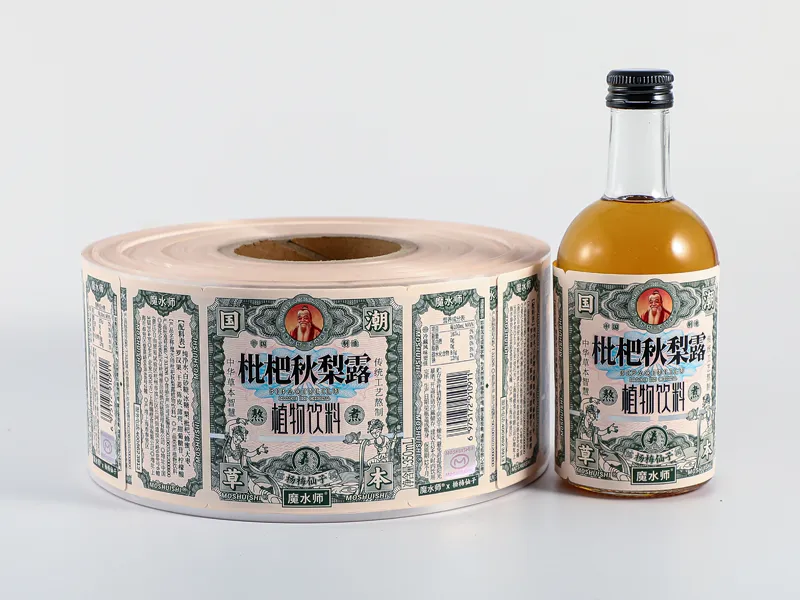
Film facestocks dominate frozen protein packaging: they ignore water, resist oils, and stay flat through freeze-thaw cycles.
The facestock is the layer the shopper never thinks about and the plant never stops testing. For the pack-level format guide, see our article on best packaging options for ready-to-eat and frozen foods. For the pack-level material guide behind that facestock, see our article on frozen food packaging materials. For the chilled version of the same stack, see our article on best waterproof labels for refrigerated food products. On protein packs, the film family has won the argument, and the remaining choices are inside the family.
BOPP as the Default
BOPP is the standard facestock for meat and seafood packs, combining moisture and oil resistance with a cost that suits high-volume protein lines. White BOPP carries full-color artwork; clear BOPP gives the no-label look on clean trays and films. The white version dominates, because the label carries the nutrition and handling text protein packs require.
PE for Flexible and Shrink Systems
Meat and seafood ship in vacuum bags, shrink films, and flexible wraps that move and stretch. Soft PE facestocks flex with the film instead of cracking, and they survive the shrink tunnel’s heat where paper would fail outright. The shrink step is a separate stress test that flexible protein packs put every label through.
When Paper Still Fits
Frozen cartons and boxes, the dry side of the frozen aisle, still run coated paper labels at lower cost. The paper sits on board that stays dry and rigid. The moment the pack itself is film or the product weeps, paper leaves the discussion, and the film default returns for the primary packs.
Adhesives for Cold, Damp, and Frosted Surfaces
The adhesive does the hardest work on a protein pack: bonding through damp, holding through frost, and staying put on greasy film.
If the facestock is the armor, the adhesive is the grip, and on a wet, greasy pack the grip decides everything. The three ratings below make up the complete adhesive spec.
Cold-Application Grades
Protein packs are cold when labeled, so the adhesive needs a low application-temperature rating that matches the plant’s actual conditions. The rating is checked against the line temperature, not the freezer temperature, because the two are different numbers. A label rated for freezer storage can still fail on a colder application line.
Damp and Contaminated Surface Bonding
Adhesives formulated for damp surfaces bond through the moisture film and tolerate the purge and oil residues typical of meat and fish. Standard grades fail exactly there. The supplier needs to know the pack surface is wet and greasy, because the adhesive choice changes with that one fact.
Service Temperature Ratings
Beyond application, the adhesive has to hold through freezer storage down to the coldest point of the supply chain. The service temperature rating is a separate number, and both ratings belong in the spec, because the two get confused more often than any other line on the data sheet. See our article on why custom labels peel off for the mechanics behind the failures.
Protein Labels That Hold the Cold Chain

Resistance to Water, Oils, and Handling During Distribution

Distribution is the long test: frost, thaw, stacking, and rough handling all work the label between plant and pantry.
The pack that leaves the plant perfect still has to arrive at the freezer aisle perfect, and the trip is not gentle. The three resistances below are what the trip demands.
Laminate Protection
A laminate over the print keeps the artwork and the barcode intact through frost, moisture, and scraping. On protein packs the laminate is standard equipment, not an upgrade, because the pack’s own environment works against the print. See our article on how to make waterproof labels for the construction details.
Oil and Purge Resistance
Fish oils and meat purge are chemically aggressive, and they reach the label through pinholes, seams, and edges. Film facestocks with oil-tolerant adhesives keep the label intact, while the laminate keeps the oils off the ink. Seafood’s cold-chain and product handling standards, tracked by bodies like the FAO fisheries division, run on the same durability logic the label has to match.
Abrasion in Transit
Frozen packs grind against each other through the supply chain, and the label surface takes the friction. A matte laminate hides light scuffing, a gloss laminate wipes clean, and both protect the print underneath. The friction test is part of the approval, not an afterthought.
Material and Application Tests for Meat and Seafood Labels
Protein labels earn their spec on the test bench: apply cold, freeze hard, thaw, and handle before the order is approved.
Testing is where the spec stops being a document and starts being a fact. The three tests below are the standard sequence for protein pack labels, and each one kills a different class of failure.
The Cold Cycle Test
The test replicates the pack’s life: apply the label in cold, damp conditions, freeze the pack, cycle it through thaw and frost, and inspect for lifting, wrinkling, and print damage. The pass standard is agreed before the test starts, so the result is a decision, not a discussion. Several packs run through the cycle, because one passing sample is not a passing material.
Testing with Real Product Residue
The test uses the actual product, because fish oil and beef purge behave differently from the lab’s clean water. A label that passes a clean-surface test and fails the real pack is a known, avoidable outcome. The residue is part of the test setup, and any supplier that tests without it is testing the wrong pack.
Line Trials Before Full Production
The tested label then runs a line trial on the actual application equipment, at production speed, on production packs. The trial catches what bench tests cannot: applicator settings, surface temperature, and the mechanical reality of a fast line. See our article on how to choose custom roll labels for automated labeling for the line-side specifications. The line trial is the last gate before the purchase order.
よくある質問
What is freezer burn on meat?
Freezer burn happens when frozen meat’s surface loses moisture to dry cold air, leaving grey, leathery patches that are safe but poor eating. It is caused by air contact through poor packaging or a broken seal. On the packaging side, the same air and moisture movement is what tests a label’s adhesion and laminate through the pack’s storage life.
How long does raw chicken last in the fridge?
Raw chicken lasts one to two days in the refrigerator, which is why most retail chicken moves through chilled or frozen supply chains quickly. The short window puts pressure on pack handling and labeling speed. The label’s job is to stay readable through that fast, cold journey without failing first.
Is meat still good after 5 years in the freezer?
Meat kept continuously frozen stays safe indefinitely, but quality declines, and freezer burn makes it unpalatable long before five years. The safety record is what matters for labeling, because date codes still carry meaning for quality. Labels on frozen protein packs must therefore keep their date and batch information legible for the pack’s whole storage life.
Can I eat meat 1 day after use by date?
Food safety guidance treats the use-by date as the limit for fresh meat, and eating it after that date carries risk, so the standard advice is not to. The date is a safety marker, unlike best-before dates, which mark quality. For pack labels, the distinction decides how the date code is printed and how much it has to stand out.
Can you eat 20 year old frozen food?
Food kept frozen at a constant, safe temperature stays safe indefinitely in theory, but texture and taste degrade badly over years, and freezer burn sets in. The practical answer is that it is safe but not worth eating. The extreme example makes the labeling point: pack information has to outlast realistic storage, not impossible storage.
How long for food in the freezer?
Freezer storage times are quality guidelines, not safety limits, and they run from a few months for seafood to a year or more for beef, with continuous freezing keeping food safe indefinitely. The label carries the pack’s own storage and date information for that whole window. That is why frozen labels are specified for the longest realistic life on the pack.
Why can’t you freeze cooked chicken?
You can freeze cooked chicken, but its texture suffers when ice crystals break down the cooked fibers, which is why the result often disappoints. The freeze-thaw cycle that damages the food is the same cycle that challenges its packaging. Labels on cooked and raw protein packs both face it, which is why the material rules stay identical.
What are the downsides of eating frozen chicken?
Frozen chicken can lose moisture and texture through freezing and thawing, and freezer burn dulls its quality, though nutrition stays intact. The downsides are quality issues, not safety ones. The same moisture movement inside the pack is what works against the label on the outside, so both problems trace back to one source.
Why put a penny in the freezer?
The penny trick is a power-outage check: freeze a cup of water with a coin on top, and if the coin has sunk, the freezer thawed and refroze while you were away. The trick shows how much freeze-thaw cycling happens in ordinary storage. That same cycling is what label specifications are built to survive.
Is 20 year old frozen meat safe?
Meat kept continuously at a safe frozen temperature stays safe in theory. After twenty years the quality is ruined and freezer burn has taken over, so safety and edibility are two different answers. The extreme case shows why date codes exist. For commercial packs, the label has to stay readable for the realistic shelf life, with the date code legible to the end.
Conclusion
Frozen meat and seafood labels are built for the plant first: film facestocks, cold-application adhesives, laminates, and tests that replicate the real pack’s wet, greasy, frozen life. The brands that test before ordering are the ones whose labels still read correctly at the customer’s kitchen counter. The brands that skip the test learn the same lesson at reprint cost.
For meat and seafood processors, Meikei supplies frozen-protein label constructions with cold-cycle and residue testing on your actual packs.