Supplement label printing costs move with a handful of measurable factors, and none of them is a mystery. The label size, the material stack, the printing method, and the order volume each push the unit price up or down in predictable ways.
For the film-family choice inside that material stack, see our article on clear film labels. For the wholesale and MOQ structure that reads the same stack, see our article on wholesale supplement bottle labels.
The format choice between roll labels and shrink sleeves changes that stack, compared in our article on roll labels vs. shrink sleeves. Supplement label printing costs are best read as a bill of materials plus a bill of process steps, not as a single fixed number pulled from a rate card.
This guide breaks the quote into its cost drivers in the order they hit the price. Material usage, materials and finishes, the printing process, order volume, and the smaller costs that hide at the end of a quotation each get a section. Each section explains how the driver works and where you can find the leverage.
Material Usage Linked to Label Size and Shape
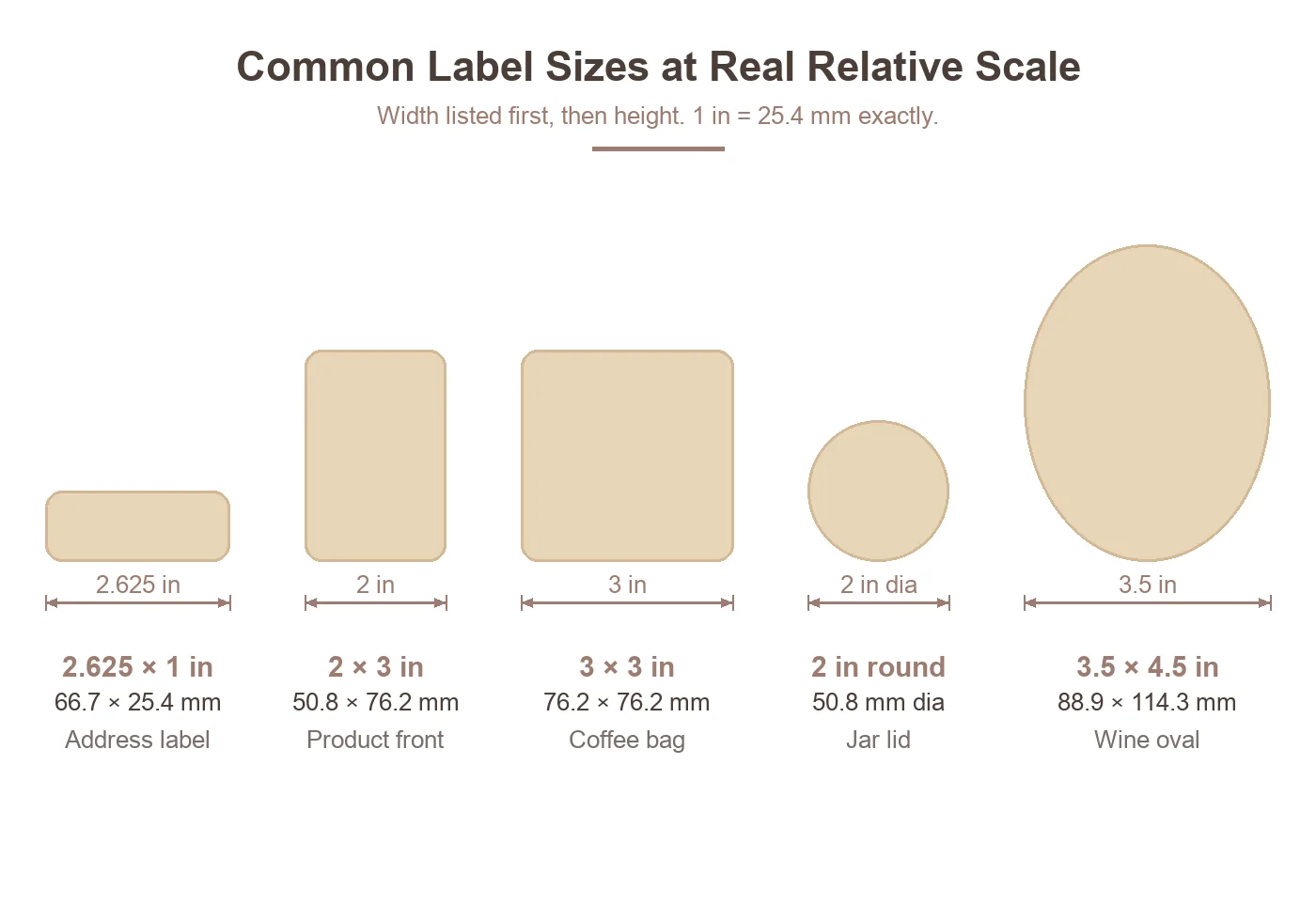
Size is the quietest cost driver on the quote sheet, because material waste rises with every extra millimeter of label.
Label material is bought and consumed by area, so the size of the label is the first multiplier in the quote. For the reference dimensions by bottle capacity, see our article on vitamin and supplement bottle label sizes.
A label that runs 10 mm taller on a 100,000-unit order adds the same extra area to every single label, and the press, the stock, and the waste all bill against it.
The Supplement Facts panel carries a required format set out in federal regulation, and that fixed block costs the same on every label of a given size. That fixed block is the one part of the area budget with no negotiation.
Where the Area Goes
The material price is quoted per square meter, and the label converts that rate into per-label cost through its finished dimensions plus its die-cutting waste. Nesting matters, because labels that share a common height or width across the range fill the press sheet with less leftover trim.
Two labels of the same height bill differently when one wraps the bottle twice, so the circumference belongs in the quotation too.
Shapes, Corners, and Waste
A rectangle wastes the least stock, because it tiles edge to edge with almost no trim. Rounded corners add a die-cut pass and leave a small arc of scrap at each corner, while fully custom contours lift waste and the die cost together.
- Rectangular labels tile the sheet with the lowest trim waste.
- Rounded-corner shapes add one die-cut step and a little scrap per label.
- Custom contours raise both die cost and sheet waste at the same time.
Because size is settled at the design stage, the shape decision sits upstream of the price.
For the reading order that decides a label’s real estate, see our article on how to design professional supplement labels. The cost conversation simply converts that artwork into square meters.
Materiale, Adhesive, and Finish Choices That Change Cost
The material stack is where two labels that look identical can land far apart on price.
Carta, film, and specialty stocks each sit at a different cost point, and the difference is visible in the raw roll price before a single label prints. The stack also includes the adhesive and the finish, two layers that quietly move the total.
| Material Layer | Cost Behavior | Where It Pays Off |
|---|---|---|
| Paper stock | Entry-level cost per square meter | Dry products on straight panels |
| Film stock | Higher cost, durable | Moisture, oli, and squeezable packs |
| Permanent adhesive | Standard cost | Bottles and cartons that stay closed |
| Repositionable adhesive | Moderate premium | Lids that buyers peel and reset |
| Gloss or matte varnish | Small add-on | Scuff protection on the shelf |
| Laminazione | Mid-level add-on | Wet or chilled handling |
| Foil and embossing | Highest add per label | Gift lines and premium launches |
Stock Selection
For supplements, film labels on a squeezable bottle cost more than paper on a rigid jar, and the trade is not negotiable. The film survives the squeeze while the paper flexes and lifts.
Choosing the stock for the actual use case keeps the budget from paying for performance the product never needs.
Adhesives
The adhesive line item changes with the surface it must grip, not just with the stock. Low-energy plastics and matte-coated finishes demand a stronger adhesive grade, and that grade carries a small premium per roll.
The same bottle can need a different adhesive at refrigerated temperatures, and the quote should say which grade applies.
Finishes
Varnish, lamination, and foil each add a station and a cost, and most supplement lines pick one protective finish while they reserve foil for the hero SKUs. For a fuller look at how these options add up, see our article on how much custom labels cost.
Printing Method, Color Count, and Special Processes
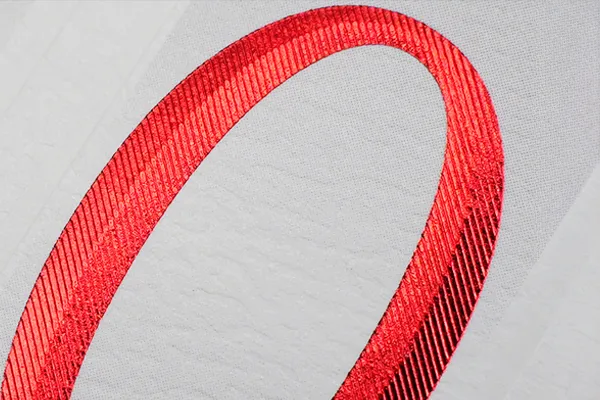
The printing method prices the run twice: once in setup, once in every meter the press produces.
Digital presses skip plates, which keeps setup costs low on short runs and lets a brand print variable versions of the same label in one pass. Flexo and offset spread a higher setup across long runs, so their per-label cost drops hard once the volume covers the plates.
Color Count
Every extra color means another ink station, another plate, and another pass of the press for the same label. A one- or two-color label costs less to produce than a five-color version of the same shape, and the saving repeats on every reorder.
On reorders the same plate set prints again at zero extra tooling, which is one more reason to hold the design steady.
Special Processes
Cold foil, hot foil, embossing, and spot varnish each add a dedicated station after the base print. They bill per station, so stacking three special processes can outweigh the base label itself. The disciplined version of premium is one special process that the shelf actually rewards.
- Cold foil adds metallic areas without a heated die.
- Hot foil and embossing pair well on rigid boxes and hero labels.
- Spot varnish isolates gloss on one area instead of the whole sheet.
Supplement Label Quotes With Every Cost Driver Listed
Unit Price Variations from Quantity, MOQ, and Repeat Orders
Quantity is the leverage a buyer actually holds, and it works on every line of the quote at once.
The same label quoted at three volumes rarely costs the same three times the price. Setup, plates, and makeready stay roughly constant, so each added unit spreads those fixed costs thinner and the unit price falls.
| Order Size | Setup Cost Per Label | What It Buys |
|---|---|---|
| 1,000 units | High share | Fast turnaround on digital print |
| 10,000 units | Moderate share | Flexo or offset becomes practical |
| 50,000 units | Low share | Plate cost spread thin |
| 100,000 units and up | Minimal share | Lowest per-label price point |
MOQ and Its Trade-Offs
Most label factories set a minimum order quantity, because a run that cannot cover makeready loses money for everyone involved. Buying below the MOQ usually means a sample-level price per label, and the honest fix is to consolidate SKUs into one order. One shared size across several SKUs often clears the MOQ with room to spare.
Repeat Orders and Reused Tooling
On the second order, the plates and dies already exist, so the quote drops the tooling line entirely. Reorders also let the buyer keep the exact same stock and inks, which removes the risk of a color shift between runs. For the comparison method that catches inflated line items, see our article on how to compare quotes for bulk orders.
Sample, Tooling, Setup, and Delivery Costs to Include in A Quote
The small lines at the bottom of a quote decide the real landed price.
A quotation is not complete until the one-time items are written down. Samples, dies, plates, and delivery each arrive as separate lines, and a missing one shows up later as a surprise invoice instead.
Samples and Proofs
A physical sample costs a small fee that a serious supplier usually credits against the bulk order. The sample exists to catch errors before tooling is cut, and every dollar it finds saves a full production run.
Tooling and Setup
Dies for custom contours and plates for flexo print are one-time charges that stay with the customer’s artwork for future reorders. Ask the supplier to state plainly whether the tooling is reused, stored, and quoted only once.
Delivery and Timing
Freight changes with the carton count and the destination, and expedited production can cost more than the freight itself. A buyer who plans the print schedule around the supplier’s standard lead time avoids paying rush fees on both lines. Quoting delivery as a separate line keeps the label price itself comparable across suppliers.
- Sample and proof fees are often credited against the bulk order.
- Tooling charges are one-time items that belong to your artwork.
- Rush production and air freight are the two fastest ways to inflate a quote.
Domande frequenti
How much do labels cost?
Custom labels are priced per thousand once size, materiale, and quantity are fixed, so a universal number does not exist. Small paper labels in long runs land far below large foil labels in short runs. The quote only becomes comparable when all three drivers are stated.
How much does a brand label cost?
A brand label costs more than a plain one because it carries more colors, a coated stock, and often a finish like lamination or foil. The premium comes from the added print stations, not from the brand name itself.
How much should I charge for product label design?
Design fees usually sit in a range from a few hundred to a few thousand dollars, and the spread depends on the concepts, the revisions, and whether the artwork arrives print-ready. Studios and printing suppliers price this differently, so it is worth asking what the fee includes.
How much do 1000 stickers cost?
A thousand small stickers typically cost far less per unit than a thousand large labels, and the price depends on size, shape, and finish. Quantity is the biggest lever at this volume, so consolidating several designs into one order lowers the total.
Is it cheaper to print your own labels or buy them?
For business quantities, buying from a label printer is almost always cheaper per label than office printing, once ink, stock, taglio, and labor are counted honestly. In-house printing wins only for tiny, variable, or urgent runs.
What is the cheapest way to make labels?
The cheapest route is a standard rectangular size on an entry-level paper stock, printed in one or two colors, ordered in one large run. Every custom dimension, special stock, or extra color adds a station and a cost.
What is the difference between a sticker and a label?
The two words overlap, but a sticker usually carries a decorative or promotional job, while a label carries product information and compliance content. Printers price them on the same drivers: misurare, materiale, finish, and quantity.
Why are vinyl stickers so expensive?
Vinyl costs more per square meter than paper, and its thicker film runs slower through cutting and finishing. The durability that lets vinyl live outdoors is what you pay for at the material line.
What are the four types of labels?
A common grouping is pressure-sensitive labels, shrink sleeves, in-mold labels, and cut-and-stack labels. Each type has a different material and application path, so their cost drivers do not line up one to one.
How can I print my own product labels?
Small batches print on an office printer or a desktop label maker, but the finish, durabilità, and per-unit cost do not hold up against a professional run. Brands that need a real product look move to a label printer once volume passes the trial stage.
Conclusion
Supplement label printing costs are a sum of visible decisions, and the size, the stock, the print method, and the volume all price themselves line by line.
For brands pricing a supplement label range, Meikei quotes by the same factors this guide walks through, with material, process, and tooling listed separately so the comparison stays honest.