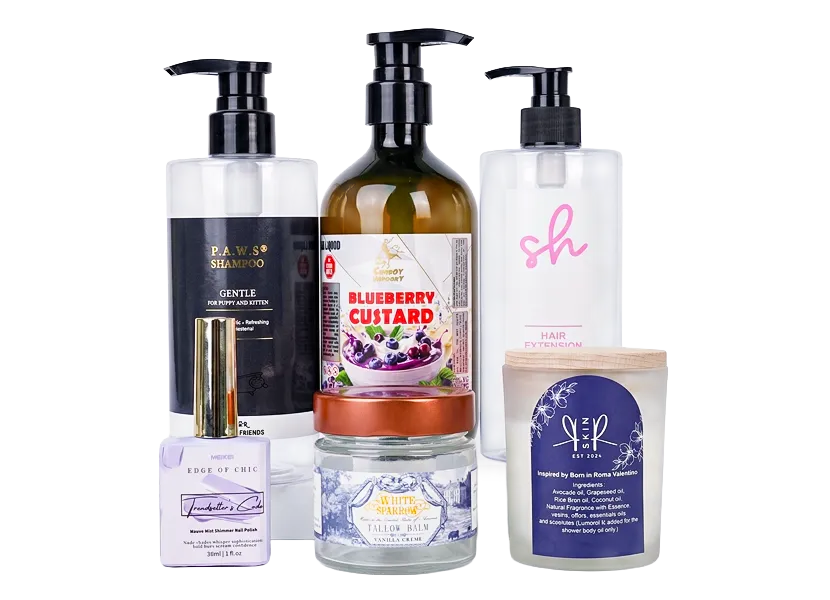
Most labels on the food shelf are never glued, heated, or shrunk: they are pressed on. Pressure-sensitive labels for food packaging are the self-adhesive workhorses of the industry, and their simplicity hides a three-layer construction that quietly decides where they work and where they do not.
This guide covers how pressure-sensitive labels work, where food brands use them, what the three components do, and how they compare with glue-applied labels. It ends with the application and specification details that keep them running on the line, because a great label spec means nothing if the applicator rejects it.
Operating Principles of Pressure-Sensitive Labels
Pressure-sensitive labels bond by pressure alone: press the label onto the surface, and the adhesive wets, grabs, and holds.
The mechanism is the same one behind tape and everyday stickers: a permanently tacky adhesive layer that bonds on simple contact. Understanding the three steps below is all the theory a label spec needs.
How the Adhesive Works
The adhesive is tacky at room temperature and flows into the surface’s microscopic texture under pressure, which is what creates the bond. No heat, water, or solvent is involved. The pressure and dwell time at application decide how completely the bond forms, and skimping on either shows up later as edge lifting.
The Three-Layer Sandwich
Every pressure-sensitive label is three layers: the facestock that carries the print, the adhesive behind it, and the release liner that protects the adhesive until application. The liner peels away and leaves the label ready to press on. Each layer gets specified separately, which is the source of the format’s flexibility and the reason two labels that look identical can behave completely differently.
Why the Format Won Food Packaging
The format won because it applies fast, fits any container shape, and needs no wetting or curing step on the line. A food line can label thousands of packs per hour with a compact applicator. The packaging sector’s standard setters, like the World Packaging Organisation, track labeling methods as part of the wider packaging technology picture, and self-adhesive is the method that keeps gaining share.
Common Food Packaging Applications for Self-adhesive Labels
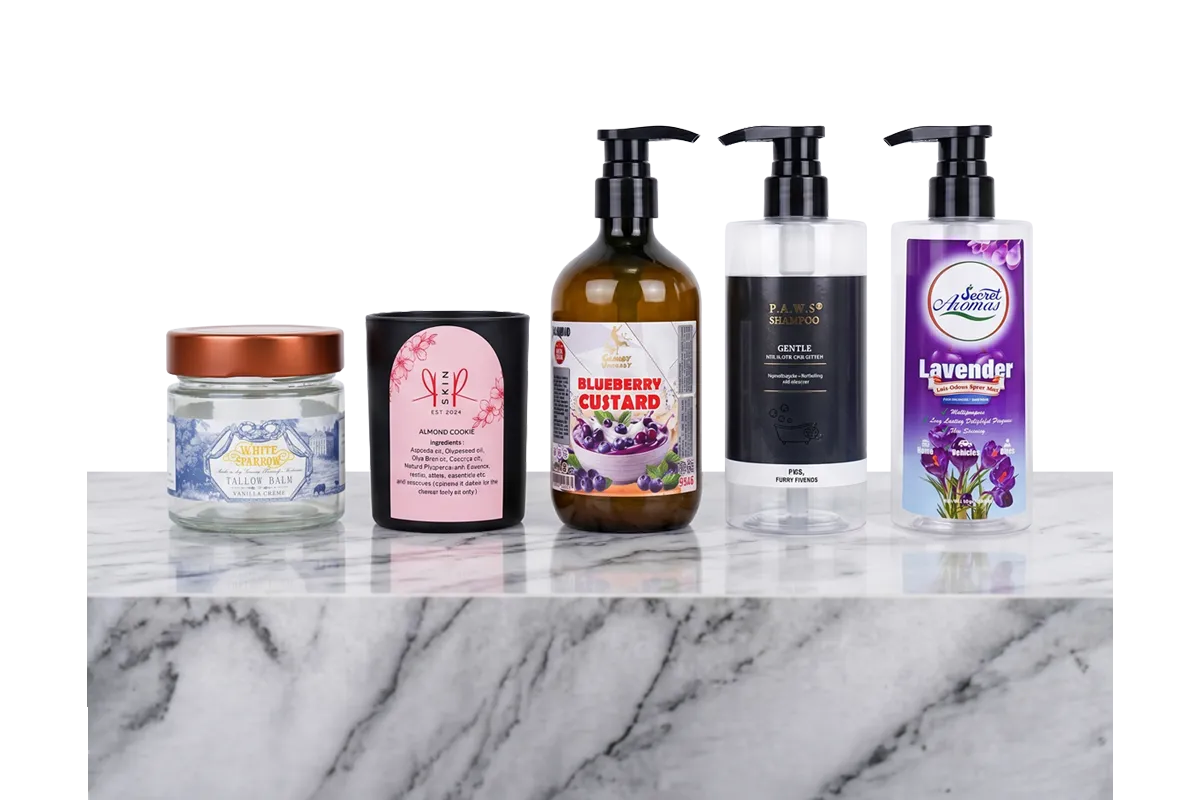
Self-adhesive labels cover the food shelf end to end: bottles, jars, tubs, trays, and the promotional stickers between them.
The format’s reach comes from its indifference to container shape: flat, curved, ridged, or flexible, the label conforms. The three application families below show where it lives.
Bottles and Jars
Beverage bottles, sauce jars, and condiment bottles are the format’s home ground, with wrap labels applied on high-speed lines. The label follows the container curve and stays put through filling, chilling, and handling. The application is dry and instant, which suits the speed, and the changeover between flavors is a roll swap rather than a glue-pan change.
Tubs, Trays, and Clamshells
Deli tubs, meal trays, and clamshells carry their branding and nutrition on self-adhesive labels because the pack shapes resist other methods. The label bridges odd surfaces and curved lids without redesigning the pack. Tamper features ride the same label where the lid meets the tray, so one label does the branding and the security work together.
Cartons and Promotional Pieces
Cartons often combine printed board with self-adhesive labels for batch codes, promotions, and seasonal overlays. The label adds variable information to a fixed box. The format’s flexibility makes it the default for anything the box printing cannot know in advance, and it lets the brand print one box for many variants.
Facestock, Adhesive, and Release Liner Components
The three components are chosen as a system: facestock for the surface, adhesive for the bond, liner for the application.
Buyers who see a label as one product miss the whole point: it is three materials working together. Each section below isolates one layer and the questions it answers.
Facestock: Paper or Film
Paper facestocks serve dry, ambient packs, while film facestocks carry moisture, oil, and flex duties. The facestock also decides print quality and the label’s hand-feel, which is why premium lines pick textured papers and chilled lines pick film. See our article on what materials are used for custom stickers for the full facestock map.
Adhesive: The Bond Layer
The adhesive grade follows the container surface: general grades for glass and PET, polyolefin grades for HDPE and PP, and cold or oil-tolerant grades for the hard environments. The adhesive is the layer that fails when the pairing is wrong, so it carries the most spec weight, and the spec should name the grade, not just the word permanent.
Release Liner: The Silent Partner
The release liner protects the adhesive and feeds the applicator, so its thickness, stiffness, and release level all matter to the line. A liner that is too light flutters at speed; one that releases too tightly slows the peel. The liner is specified for the machine, not for the shelf, and the machine’s manual usually names the grade it wants.
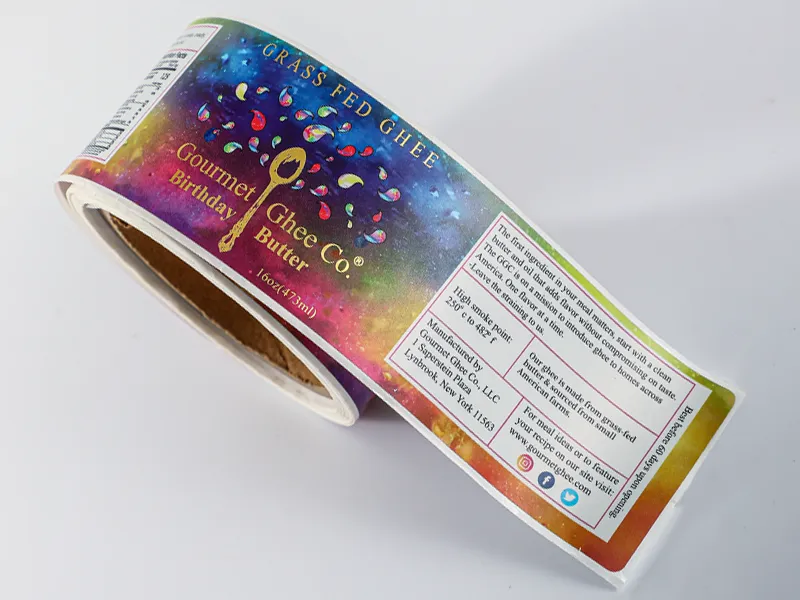
Self-Adhesive Labels Built for Your Line
Benefits and Limitations Compared with Glue-applied Labels
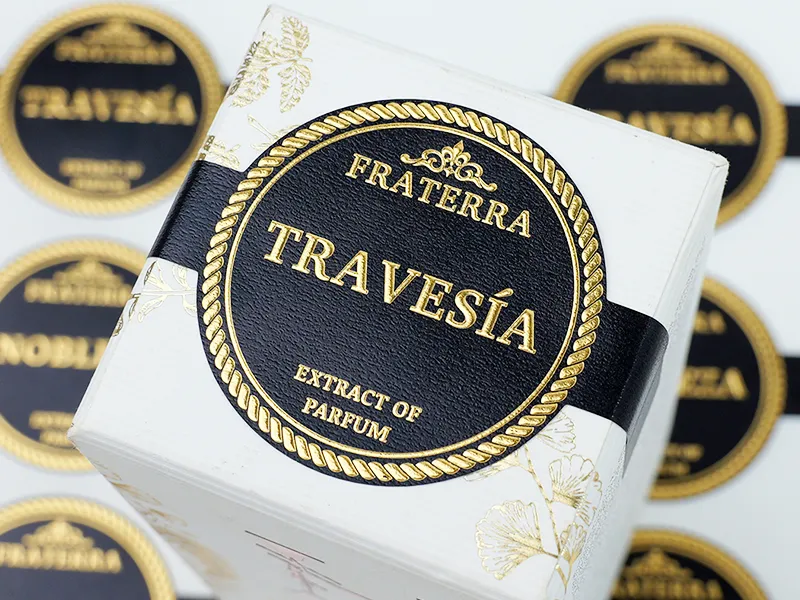
Pressure-sensitive labels trade a higher unit cost for dry, instant application, while glue-applied labels trade speed for lower material cost.
The comparison matters at the order desk, where the two methods fight over the same budget. The three contrasts below are the ones that decide it.
Where Self-adhesive Wins
Self-adhesive wins on speed, cleanliness, and flexibility: no glue pots, no drying, no cleanup, and quick format changes between SKUs. Small and medium runs favor it strongly, because setup costs stay low. The dry process also suits lines where moisture is the enemy, and it leaves no glue residue on the equipment or the pack.
Where Glue-applied Wins
Glue-applied labels cost less per label at very high volume, which keeps them on beer bottles and other mega-run formats. The trade is wet glue handling and longer changeovers, plus the drying time self-adhesive never needs. The comparison is economics first, technology second.
Choosing Between Them
The choice follows volume and line philosophy: high-volume, single-format lines can justify glue, while multi-SKU food brands almost always land on self-adhesive. The decision is worth revisiting at each scale-up, because the crossover point moves with the line. The table below lines up the two methods side by side.
| Factor | Pressure-sensitive | Glue-applied |
|---|---|---|
| Unit cost at mega volume | Higher per label | Lower per label |
| Application process | Dry and instant | Wet glue, drying needed |
| Changeovers | Quick roll swap | Slower, glue handling |
| Best volume range | Small to large runs | Very high single-format runs |
Most food brands never reach the volume where glue-applied pulls ahead, which is why self-adhesive dominates the category’s shelves, and why the format gets the default slot in most packaging briefs.
Application Equipment and Specification Considerations
The label and the applicator are one system: roll format, unwind direction, and core size have to match the machine exactly.
Half the spec’s value sits in these machine details, and they are decided by the applicator, not by the brand’s preference. The three checks below close the loop between print and line.
Roll Specifications
The roll spec names the web width, core size, unwind direction, and the label pitch the applicator expects. A mismatch shows up as misfeeds, skew, and downtime. The spec comes from the applicator manufacturer and travels to the label supplier unchanged, because the machine cannot adapt to a wrong roll.
Matching Speed and Pressure
Application speed and pressure set the bond, so the label is tested at the line’s real speed, not a comfortable crawl. Fast lines need stiffer liners and quicker release. The trial run is where the label and the machine learn to work together. See our article on how to choose custom roll labels for automated labeling for the full line-side checklist.
Specifying for the Shelf
Beyond the line, the label has to survive the product’s whole journey, so the shelf conditions close the spec loop. The facestock, adesivo, and laminate get tested in storage before the order, on the filled pack, not the empty sample. For the complete label decision framework, see our guide on what custom labels are.
Domande frequenti
How do I use a pressure-sensitive adhesive?
Apply the adhesive-coated surface to a clean, dry substrate and press firmly, giving the adhesive a moment to wet the surface before stressing it. No heat or water is needed. On production lines, the same steps become cleaning, pressure, and dwell settings on the applicator.
What are three types of adhesive?
A common split lists pressure-sensitive adhesives, which bond on contact, reactive adhesives, which cure chemically or with moisture, and hot-melt adhesives, which bond as they cool. Labels use pressure-sensitive chemistry almost exclusively. Each family exists because it solves a different bonding situation.
What is a release film?
A release film is a film-based liner with a release coating that lets the label peel away cleanly, used where paper liners are too weak or too thick for the application. Film liners suit fast, high-precision label lines. The liner is the layer shoppers never see and applicators never forgive if it is wrong.
What is liner in packaging?
In labeling, the liner is the backing sheet that carries the adhesive until application, then peels away. It protects the adhesive and feeds the applicator machine. The liner is waste after application, which is why liner recycling and linerless formats are part of the sustainability conversation.
What is an adhesive liner?
An adhesive liner is the release-coated backing behind a self-adhesive label, the layer that keeps the adhesive from sticking to itself on the roll. It peels away at application. The liner’s release level is tuned so the label separates at the right force for the machine.
Is adhesive shelf liner removable?
Many adhesive shelf liners are removable by design, using adhesives that peel away without leaving residue, though some stick permanently. The removable grades are the low-tack end of the same pressure-sensitive family. On product labels, removable adhesives serve price stickers and reuse schemes rather than the permanent label itself.
What is the highest strength adhesive?
There is no single strongest adhesive, because strength is defined by the job: structural epoxies lead on rigid bonding, while pressure-sensitive adhesives lead on instant, removable, flexible bonding. Labels need the pressure-sensitive kind, matched to the surface. The question is not which adhesive is strongest but which one is right.
What does structural adhesive mean?
A structural adhesive carries load between rigid parts, like epoxies and acrylics used in construction and assembly. Pressure-sensitive adhesives are the opposite philosophy: thin, flexible, instant bonds made for surfaces, not loads. Labels live entirely in the pressure-sensitive world.
What is an example of a solvent-based adhesive?
Rubber cement and many construction adhesives are solvent-based, relying on a solvent carrier that evaporates as the bond forms. Pressure-sensitive label adhesives mostly avoid solvents, using water-based or hot-melt chemistry instead. The example matters because solvent adhesives are the family labels rarely use.
What is the best structural adhesive?
The best structural adhesive depends on the materials and the load, with epoxies and structural acrylics leading most rigid bonding jobs. None of them belongs on a label. Packaging uses the pressure-sensitive family instead, where the right adhesive is the one matched to the container surface.
What does loparex make?
Loparex manufactures release liners, the silicone-coated paper and film backings that carry self-adhesive labels until application. Liner makers like Loparex supply the converting industry rather than the end brand. The liner a label carries is chosen from their product range for the applicator’s speed and precision.
Conclusion
Pressure-sensitive labels earn their place on food packaging through one trade. A slightly higher unit cost buys dry, instant application, total format flexibility, and a construction that can be tuned layer by layer. The brands that spec the facestock, adesivo, and liner as one system get the format’s full value on the line and on the shelf, run after run.
For food brands running self-adhesive labels, Meikei supplies pressure-sensitive constructions matched to your containers and applicator, with roll specs and line trials run before the full order is placed.