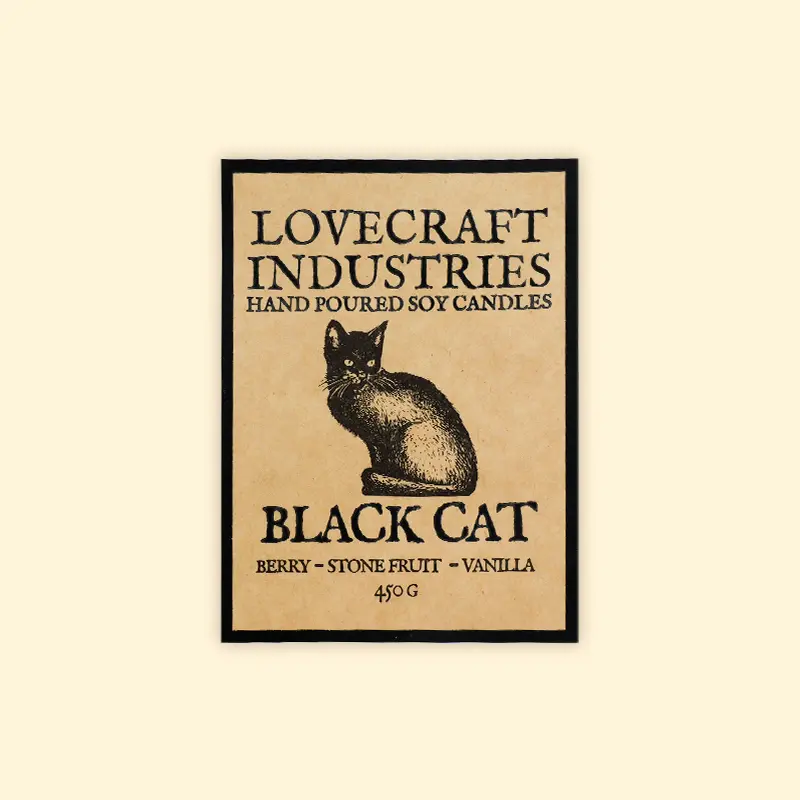
Oil is the label’s quietest enemy: it stains paper, softens adhesives, and ruins print with no water involved at all, which is why it catches so many brands off guard. Choosing oil-resistant labels for food packaging means building the label around the oil it will meet, from the facestock to the laminate. Water fails loudly and then dries; oil fails silently and stays forever.
This guide covers the oil problem layer by layer: how oil attacks labels, which facestocks resist it, how adhesives behave on greasy surfaces, and the tests that prove the choice. Sauces, oils, nut butters, and takeout all read from the same playbook, and the same label construction that survives chili oil will survive almost anything else in the pantry.
Label Performance Under Cooking Oil and Grease Exposure
Oil attacks labels three ways: it stains the facestock, it breaks down the adhesive, and it smears the printed surface.
- Staining: Oil soaks into paper fibers and never leaves.
- Bond loss: Oil softens adhesives and starts edge lifting.
- Smearing: Unprotected ink lifts off under oily fingers.
Unlike water, oil penetrates paper fibers and never really leaves, which is why an oil-stained label stays stained. It also plasticizes many adhesives, turning a firm bond soft, and it lifts print off the surface when the ink has no protective layer. The packaging sector’s material standards, tracked by bodies like the World Packaging Organisation, treat grease resistance as a core label property for food categories.
The Staining Path
Oil can spread beyond the initial contact area through paper fibers, creating visible translucent stains that affect the label’s appearance. Coatings slow the path, films stop it entirely. The stain is the visible failure, but it starts at the same place as every other oil problem: the uncoated surface. A label with one oil spot on the shelf is already telling the shopper the pack has been handled poorly.
Adhesive Breakdown
Many adhesives soften in contact with oil, losing tack exactly where the label meets the pack edge. The failure starts as edge lifting and ends as a label on the shelf. Oil-tolerant adhesives are formulated to keep their structure when oil reaches the bond line. The edge is the warning sign: watch the label edges on an oily pack first.
Print Smearing and Legibility
Ink without protection smears under oily fingers, and the barcode is usually the first casualty. The legibility loss has a compliance cost, because the required text has to stay readable for the product’s shelf life, oil or no oil. A smeared ingredients list is a recall risk wearing a label problem’s clothes.
Paper and Film Facestocks for Oily Food Packaging
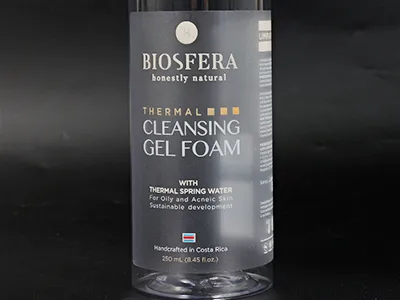
Facestock is the first line of oil defense: film resists oil penetration, while paper relies on coatings or barriers to improve resistance.
The facestock decision splits the whole category: choose film and the oil problem mostly disappears, choose paper and every later layer has to compensate. Both routes are legitimate, but they lead to different constructions.
Film Facestocks: BOPP and PET
BOPP is a common choice for oily food labels because its non-porous surface helps resist oil penetration. PET adds heat resistance for products that meet oil and warmth together, like filled bottles on a warm line. The film choice is the fastest way to close the oil problem, and it usually costs little more than the coated paper it replaces. The table below maps the choice to the oil load.
| Oil Load | Facestock | Protection |
|---|---|---|
| Light contact | Coated or barrier paper | Oil-resistant coating or varnish |
| Moderate contact | BOPP film | Gloss or matte laminate |
| Heavy or hot contact | PET film | Heat-rated laminate |
The table reads as a ladder: move up a row when the oil gets heavier, and the label stops failing in the field.
Coated and Barrier Papers
For brands that want paper, grease-resistant coated papers slow oil penetration and keep the label presentable through the shelf life, though they do not match film. A laminate over the paper closes most of the remaining gap. The paper route works for lower-oil products and fails fast on heavy oil. Brands choose it for the texture and accept the shorter oil window.
Choosing by Oil Load
The practical split runs by how much oil the pack carries: light oil contact tolerates coated paper, heavy and repeated oil contact belongs to film. The brief should state the worst case, because the label gets specified for the messiest jar on the line, not the cleanest. A brief that says oil-resistant but does not name the oil is only half written.
Adhesive Selection for Greasy or Contaminated Surfaces
Oily surfaces break ordinary adhesives, so the adhesive for greasy packs is chosen for bond strength on contaminated surfaces.
On an oily pack, the adhesive carries more of the load than the facestock does, because it is the layer that touches the contaminated surface. The adhesive spec deserves the same attention as the film choice.
Bonding Through Contamination
Filling lines leave a fine oil film on bottles and jars, and the adhesive has to bond through it. Aggressive, oil-tolerant adhesives grip the surface despite the film, while standard grades slip. The contamination level on the real line is part of the adhesive brief, and it is worth measuring rather than assuming.
Oil-Tolerant Grades
Oil-tolerant adhesive grades resist the plasticizing effect of oil over time, keeping the edge bond firm through months on the shelf. The grade is specified alongside the facestock, because the two have to work as one construction. See our article on how to choose waterproof label adhesive for the pairing logic that applies to oil the same way. The oil case adds one twist: the adhesive has to survive contact with the oil both at the edge and through any pinholes in the facestock.
Surface Preparation Limits
Clean surfaces make every adhesive easier, but oily filling lines rarely offer them. The realistic approach is choosing an adhesive rated for the contamination that actually exists, rather than specifying a clean surface that never happens. The supplier needs the contamination truth, because a spec built on a fiction fails on the real line.
Oil-Proof Labels for Messy Shelves

Protective Coatings and Laminates for Oil Resistance
Coatings and laminates are the second and third lines of defense: they protect the print and seal the facestock against oil.
- First line: The facestock blocks or absorbs the oil.
- Second line: The coating shields the printed surface.
- Third line: The laminate seals the whole construction.
Varnish vs Laminate
A varnish protects the print from light oil contact at low cost, while a laminate seals the whole label and survives heavy, repeated oil exposure. The choice follows the oil load, and the laminate version is the standard on sauce and oil bottles. See our article on how to choose the right lamination for your product labels for the full finish decision. On the oiliest packs, the laminate is the construction, not an option.
What the Seal Protects
The seal protects three things at once: the ink, the facestock surface, and the barcode contrast. A label that survives oil but loses its barcode has still failed, so the laminate choice gets checked against scanning, not just appearance. The check is a simple one: wipe the tested label with the product’s oil, then scan the barcode with the same reader the store uses.
Application Testing for Bottles, Jars, Pouches, and Takeout Packs

Oil resistance is proven by testing, not by spec sheets: the oil test on the real pack settles every argument.
Every construction in this guide passes or fails on the test bench before it earns a purchase order. The test is cheap, fast, and the only step that predicts the shelf.
The Oil Test
The test applies the product’s own oil to the labeled pack, waits, and checks for staining, edge lifting, and print smear at the end. Different oils behave differently, so the test uses the product’s actual oil, not a stand-in. A label that passes olive oil may not pass chili oil, and the difference matters on a shelf where both sit side by side. The wait time mirrors the product’s shelf life, not a convenient afternoon.
Testing Across Formats
Bottles, paso, pouches, and takeout packs each stress the label differently, so the test runs on the real format. The pouch flexes, the takeout pack meets hot food, and the jar gets handled by oily fingers. The pass mark is the same everywhere: no stain, no lift, no smear. One construction rarely covers all four formats, so multi-format lines usually end up with a short family of tested labels.
From Test to Production
The tested construction becomes the order spec: facestock, adhesivo, and laminate locked together. See our article on how to make waterproof labels for the production side of durable constructions, where the same discipline applies to water and oil alike. The spec that names all three layers is the one the reorder can reproduce without drift.
Preguntas frecuentes
Are polypropylene labels waterproof?
Yes, polypropylene labels are waterproof by structure, because the film is non-porous and does not absorb water. The same non-porous structure makes them oil-resistant, which is why BOPP is the default facestock for food packs that meet both water and oil. The printed surface still benefits from a laminate against handling wear.
What Materials Are Used for Oil-Resistant Food Labels?
Oil-resistant food labels commonly use BOPP, PET, or grease-resistant coated paper as facestock. BOPP and PET films help resist oil penetration, while coated papers provide an option for lighter oil exposure. The adhesive and protective finish, such as varnish or laminate, also affect the label’s overall oil resistance.
Can Oil-Resistant Labels Withstand Heat?
Some oil-resistant labels can withstand heat, depending on the facestock, adhesivo, and protective finish. PET is a common option for applications involving both oil and elevated temperatures, such as hot-filled bottles. The adhesive and laminate should also be rated for the intended temperature and exposure conditions.
What type of paper is best for water bottle labels?
Wet-strength and coated papers with a waterproof laminate work for water bottle labels, but the market standard is film, usually BOPP, because bottles live in condensation. Paper stays viable on ambient bottles with a laminate. For bottles that meet oil as well as water, film is the only reliable answer.
Conclusion
Oil-resistant labels are built, not bought: a film or barrier facestock, an oil-tolerant adhesive, and a protective laminate, locked together by an oil test on the real pack. The products that get this right keep their labels clean on the messiest shelves in the store, and their barcodes keep scanning at the till.
As a food label manufacturer, Meikei supplies custom oil-resistant labels for food brands, processors, and packaging companies, with tailored facestocks, adhesivos, and finishes for sauces, cooking oils, paso, bottles, and pouches.