Coffee and tea labels live between two extremes: the roaster’s heat and the kitchen’s steam. Coffee and tea label printing materials have to survive heat, moisture, valves, and curved containers while keeping roasted dates and origins fully legible.
This guide maps the heat and moisture conditions across coffee and tea packaging, the materials that answer them, and the print details that make each label work. It ends with the finishes and specifications that keep the label readable from roastery to cup, because the label is part of the product’s freshness promise.
Heat and Moisture Conditions Across Coffee and Tea Packaging
Coffee meets heat at the roaster and moisture in the kitchen, while tea meets steam and humidity around the kettle.
- Roastery heat: Warm bags and residual heat at application.
- Kitchen steam: Daily humidity beside kettles and dishwashers.
- Display condensation: Cold shelves cycling moisture onto packs.
Heat at the Roastery
Coffee labels are applied near the roastery, where warm bags and residual heat are part of the line. The label material and adhesive have to tolerate that warmth from the first application. A label that curls on the warm bag was never built for coffee, and the curl shows itself before the bag even reaches the shelf.
Steam and Humidity in the Kitchen
Coffee and tea packs live beside kettles and dishwashers, where steam and humidity work the label’s edges every day. The moisture cycle is the long test. The label that survives the kitchen counter survives everything the supply chain throws at it, and it is specified for that counter from the very start.
Condensation in Storage and Display
Cold shelves and air-conditioned cafés cycle condensation onto packs, and the label sits at the moisture’s landing zone. Film facestocks with condensation-rated adhesives answer it. The display case is the label’s second kitchen, and the cold-drink section of the store is its third.
Label Materials for Coffee Bags, Tea Boxes, and Tins
Each coffee and tea format picks its material: flexible bags lean film, boxes lean paper, and tins lean textured premium stocks.
The format map below is the material map, because each pack type carries its own moisture and heat profile. Reading the format correctly is half the material decision.
Coffee Bags and Pouches
Coffee bags and pouches are flexible film, so their labels are soft PE or BOPP film that moves with the pack. The one-way valve adds a raised surface the label works around. The bag’s flex and the valve’s shape are part of the label’s spec, drawn into the artwork plan before any ink touches the film.
Tea Boxes and Cartons
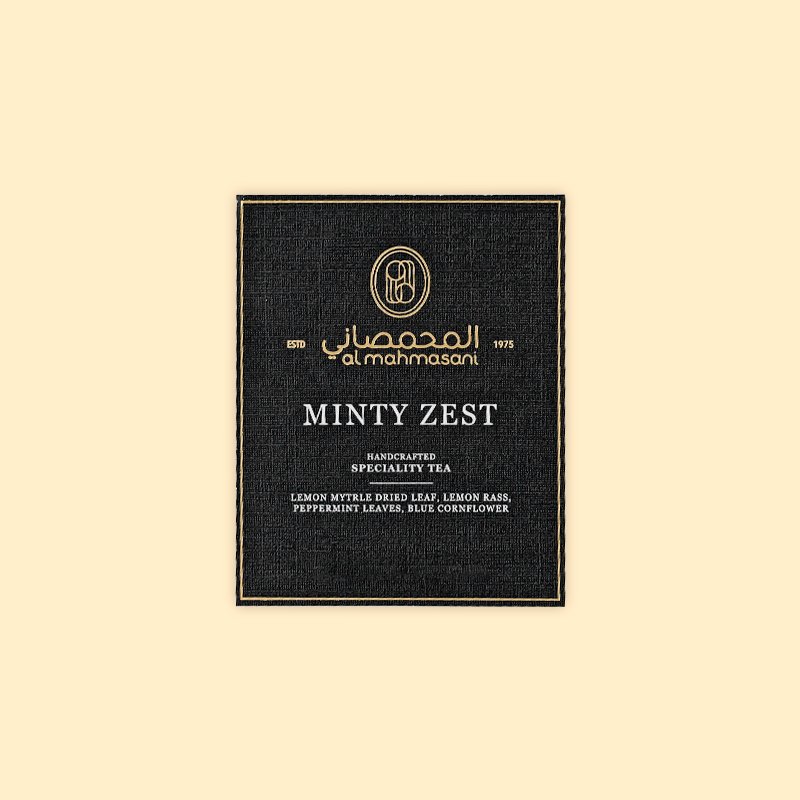
Tea boxes stay dry and rigid, so coated papers carry the design at lower cost, with laminates where the box meets humidity. The box is the label’s stable home. The dry pantry format lets paper keep its texture and its price, and the box’s flat panels let the artwork breathe. The table below lines up the three formats with their working constructions.
| Formato | Facestock | Finalizar |
|---|---|---|
| Coffee bags and pouches | Soft PE or BOPP film | Laminate for steam and scuffing |
| Tea boxes and cartons | Coated paper | Varnish or light laminate |
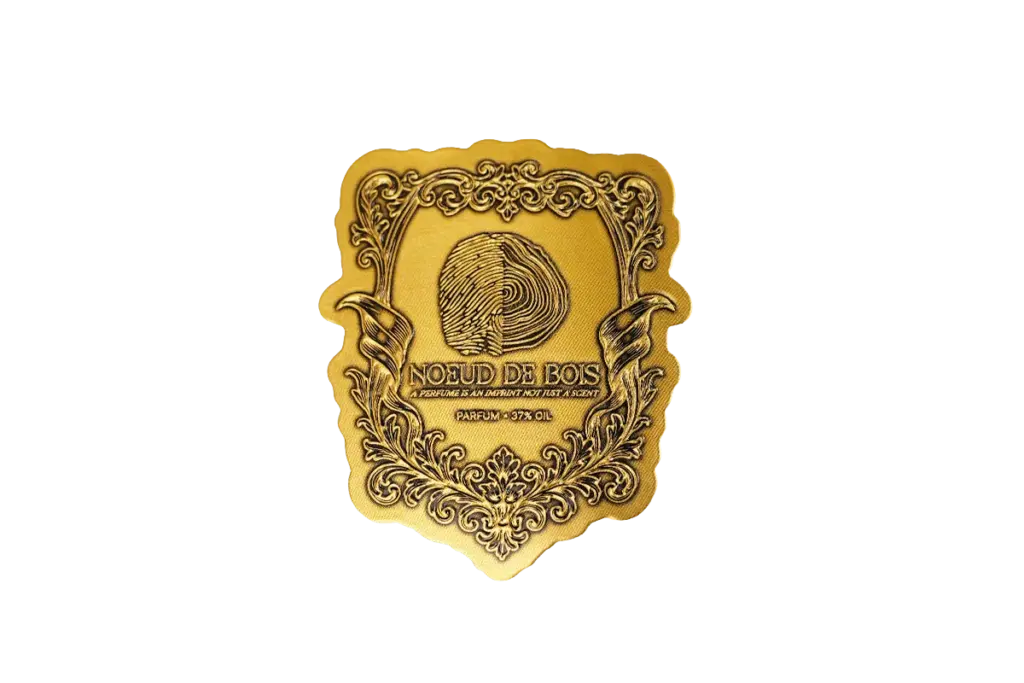
| Tea tins | Textured paper with foil and emboss | Laminate over premium finish |
The table reads as a ladder: the pack’s moisture load climbs from box to tin to bag, and the material climbs with it.
Tea Tins and Premium Formats
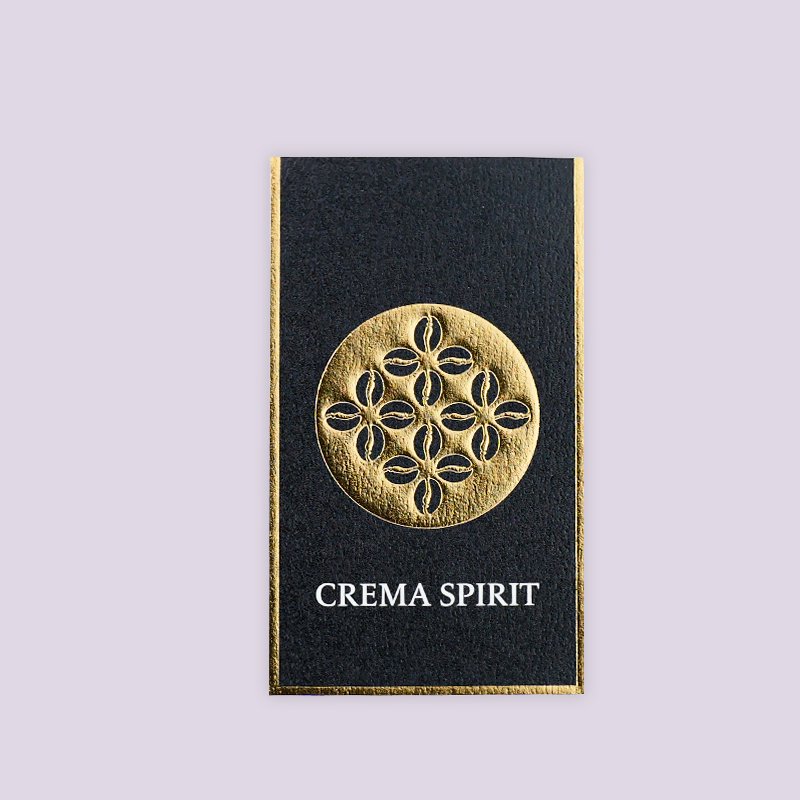
Tea tins take textured papers with embossing and foil, protected by laminates for the kitchen’s humidity. The premium finishes live on the same moisture-proof construction. See our article on custom tea tin labels for the full finish program on the same formats, from die samples to approvals.
Adhesives for Valves, Seams, and Curved Containers
The adhesive works around hardware: coffee valves raise the surface, bag seams fold it, and tins curve it.
Coffee and tea packs carry more hardware than most food formats, and the adhesive choice answers each feature. The three checks below are the hardware-aware part of the spec.
Adhesion Around the Valve
The one-way valve is a raised, moving part, so the label either stops before it or uses a conformable film that bridges it. The valve’s position is fixed in the artwork before the label is sized. A label that lifts at the valve lifts at the brand’s most technical feature, and shoppers read that as a quality problem.
Seams and Gussets
Bag seams and gussets fold under the label if the artwork ignores them, so the label’s edges stay clear of the fold lines. Elastic adhesives follow the folds that cannot be avoided. The seam map is drawn on the flat bag before the label exists, because the bag itself never tells you where it will fold.
Curved Tins and Jars
Curved tins and jars take wrap labels with adhesives matched to the metal or glass, sized to the exact circumference. The curve’s tightest part is where the label’s edges lift first. The wrap is measured on the real container, not the catalog drawing, because the catalog never shows the radius accurately enough.
Coffee and Tea Labels Built for Steam
Protective Finishes Against Scuffing, Condensation, and Handling

The finish is the label’s armor against the kitchen: laminates seal out moisture, and coatings keep the print from wearing away.
The finish layer is where the coffee and tea label actually earns its shelf life, because the kitchen never stops testing it, day after day. The two sections below cover the seal and the full-construction logic.
Laminates for Steam and Scuffing
A laminate seals the label against steam and gives the surface scuff resistance for daily handling. The laminate is standard on coffee and tea labels, not an upgrade. See our article on how to choose the right lamination for your product labels for the finish decision, and match the laminate to the kitchen’s humidity level.
Moisture-Proofing the Whole Construction
The moisture-proofing has to cover the full construction: facestock, print, and adhesive together, because one weak layer leaks the rest. The same logic governs every hot-drink label and every kitchen label. See our article on how to make waterproof labels for the full construction picture, and treat the three layers as one system.
Print Specifications for Roasted Dates, Origins, and Product Variants
Coffee and tea labels print data that changes every batch: roasted dates, origins, and variants need variable data and legible type.
The print spec carries the parts that make every bag unique, and the layout has to leave room for them. The three fields below are the moving parts of the coffee and tea label.
Roasted Dates and Batch Codes
Roasted dates change with every batch, so they print as variable data on a fixed label design, with a dedicated field reserved in the artwork. The date field is kept legible and stable across bags. Variable data printing makes the changing part cheap and the rest consistent, and the date field is placed exactly where buyers know to look.
Origins and Single-Origin Claims
Origin claims, from a region to a single farm, carry the coffee’s premium story and print as claims that have to be true. The origin’s type size follows the brand story’s overall importance. The label’s honesty about origin is what the premium price leans on, and every claim is checked against the sourcing before print.
Variants and Multi-SKU Lines
Multi-SKU coffee and tea lines run one template with the variant, roast, and origin changing per label. The template keeps the family consistent and the changeovers fast. The variant fields are the only parts that move, and their positions are locked so the range reads as one brand on the shelf.
Preguntas frecuentes
Can thermal labels withstand heat?
Thermal labels are sensitive to heat by design, darkening or fading under warmth, which limits them to short-life logistics use. They do not belong on retail coffee and tea packs. Printed labels with laminates are the heat-tolerant choice for products that live near roasters and kettles.
What kind of labels can withstand high temperatures?
Printed labels on heat-stable films like PET, with heat-rated adhesives, withstand the warmth coffee and tea packaging meets. Thermal and paper options fail first. The heat rating is specified for the warmest point the pack reaches, from the roastery line to the café counter.
What are the best weatherproof labels for thermal printers?
Weatherproof thermal stocks with protective topcoats extend thermal label life, but they still fall short of printed laminated labels for retail conditions. The weatherproof thermal option suits logistics and short-life use. For coffee and tea retail packs, printed film labels with laminates remain the standard.
Is it worth buying a thermal label printer?
A thermal label printer pays for itself in shipping and short-life labeling, where no ink and instant printing win. It does not produce retail-grade coffee or tea labels. The two printing worlds solve different problems, and the retail pack belongs to the converter’s presses.
What are the common problems with thermal label printers?
Common thermal printer problems are fading under heat and light, printhead wear, and sensitivity to the media’s chemistry. The fading issue is the one that rules thermal out for retail packs. Coffee and tea labels need print that outlasts heat, which is converter-printed territory.
Why do coffee bags have vents?
Coffee bags carry a one-way valve because freshly roasted beans release carbon dioxide, and the valve lets the gas escape without letting oxygen back in. The valve is a raised, technical feature on the bag. For labels, the valve is a placement constraint the artwork works around.
Where can I find wholesale coffee bags with valves?
Wholesale valved coffee bags come from flexible packaging suppliers, with valve placement and bag formats chosen per roaster. The label program rides on those bags. The bag supplier’s valve position is information the label artwork needs before it is drawn.
How should coffee be stored?
Coffee keeps best in a cool, dry, airtight container away from light, with the one-way valve bag doing that job on the retail shelf. The storage conditions are the same ones the label must survive. The pack and its label share one environment, which is why they are specified together.
What is a coffee tamper?
A coffee tamper is the barista’s tool that presses ground coffee evenly into the portafilter before brewing. It belongs to the café counter, not to packaging. The name sometimes confuses buyers of coffee equipment with packaging hardware like the degassing valve, which is the feature labels work around.
Does coffee go bad?
Coffee does not spoil in the food-safety sense when kept dry, but its flavor fades as aromatics escape, which is why freshness dating matters on the pack. The roasted date on the label tells the shopper exactly where the beans sit on that freshness curve. That date field is one of the reasons the label print spec is built around variable data.
How does the coffee vending machine work?
A coffee vending machine grinds or doses coffee, heats water, and brews a cup on demand, with the machine’s internals doing the café’s work unattended. The machines show how heat and steam dominate coffee’s world. The same heat and steam are what coffee packaging labels are specified to survive.
Are thermal label printers harmful to human health?
Thermal label printing carries no special health risk in normal use, beyond the usual care with any office device. The health question is separate from the performance question. For coffee and tea labels, the real reason thermal does not fit is durability, because heat and steam are exactly what the thermal coating cannot survive.
Bakeries fight the same battle with oils and butter — our guide to best grease-resistant labels for bakery packaging covers the coatings that hold up.
Conclusion
Coffee and tea labels succeed when the material, adhesivo, and finish are chosen for the roaster’s heat and the kitchen’s steam, and when the print carries roasted dates, origins, and variants legibly. The label that survives the kettle survives the whole journey from roastery to cup, and it keeps the brand’s freshness story intact at every single stop.
For coffee and tea brands, Meikei prints heat-tolerant, moisture-proof labels for bags, cajas, and tins, with valve-aware placement and batch-date printing on every run.