Food packaging labels face practical challenges during storage, transport, and use. Moisture can cause paper to wrinkle, oil can affect the printed surface, and an unsuitable adhesive can lead to edge lifting. The right food label materials should match the product’s storage conditions, packaging surface, and application process.
This guide works through the selection in order: the performance requirements first, then paper and film options, then adhesives, and finally the storage conditions that decide between them.
Key Performance Requirements for Food Product Labels
Food labels answer to five conditions at once: moisture, oils, temperature, surface geometry, and the handling between factory and pantry.
Every material choice traces back to a condition on this list. The product that lives dry on a shelf makes few demands; the product that sits in a cold cabinet in an oily kitchen makes all of them. Written as a checklist, the five demands are:
- Moisture: Condensation, spills, and washing on the pack’s route.
- Oils: Product residue that stains paper and softens adhesives.
- Temperature: Freezer, chilled, ambient, or hot-fill extremes.
- Surface: Glass, plástico, film, or board geometry and energy.
- Handling: Squeezing, stacking, and repeated contact in use.
Moisture and Condensation
Refrigerated and frozen products pull water onto the label surface, and paper that looks fine at room temperature can stain, bubble, and lift in the cooler. The moisture load is the first filter in material selection. A label that fails here fails visibly, because the stain and the bubble sit exactly where the brand mark is.
Oils and Product Residue
Cooking oils, sauces, and nut butters stain uncoated paper permanently and can soften ordinary adhesives. Oil-prone products need film facestocks or heavy protective coatings, matched with oil-tolerant adhesives. The oil test is the fastest way to disqualify a paper option on the shortlist.
Temperature and Handling
Freezers test adhesion at the low end, microwaves and hot fills test it at the high end, and repeated handling tests the surface. The material choice has to survive the whole trip, not the first shelf it reaches.
Paper Label Options for Dry and Shelf-stable Foods

Paper labels are often suitable for dry, ambient food packaging. They offer good print quality and a range of surface options, from smooth coated stocks to textured kraft papers.
Within paper, the choice is about surface, not strength: coated stocks hold detail, uncoated stocks hold texture, and both cost far less than film per label. The rule of thumb is simple: if the product never meets water, paper is the default answer.
Fiber labels carry the sustainability story as well as the brand story, and organizations like the American Forest and Paper Association track the industry’s recycled content and recovery rates behind that story. The paper family splits by surface treatment:
- Coated art paper: The brightest, sharpest print for dry retail packaging.
- Uncoated and kraft paper: Natural texture for artisan and organic lines.
- Wet-strength paper: Fiber engineered to hold up in brief moisture contact.
- Textured and estate papers: Premium hand-feel for gifting and spirits.
When Coatings Extend Paper’s Range
A varnish or light laminate pushes coated paper into semi-moist territory: wine racks, cool pantries, and products handled briefly. The coating protects the print and resists light staining, but it does not make paper waterproof. That line belongs to film. When the brief mentions condensation, ice, or squeezable packs, the paper section of this guide ends and the film section begins. The coating choice gets specified at the same time as the facestock, because the two are ordered as one construction.
BOPP, PET, and Other Film Materials Compared
Film takes over where paper quits: condensación, oils, flexing, and freezers all belong to polymer facestocks.
The film family breaks into a handful of polymers, each tuned to a different stress. The table below lines up the main options against the food jobs they serve.
| Film | Strengths | Food Packaging Fit |
|---|---|---|
| BOPP | Clear or white, moisture and oil resistant, cost-effective | The workhorse for bottles, paso, and pouches |
| PET | Heat and chemical resistance, dimensional stability | Demanding lines, hot fills, premium clear looks |
| PE | Soft and conformable, survives squeezing | Squeezable tubes and flexible packs |
| Vinilo (PVC) | Heavy-duty, flexible, outdoor grade | Rare in food, mostly promotional stickers |
Choosing Within the Film Family
BOPP covers most food jobs at the best cost, PET steps in for heat and stability, and PE handles the squeeze. The film also has to match the container polymer where recycling matters, a polyolefin label on a polyolefin bottle, so the environmental brief and the performance brief converge on the same choice.
Thickness is the last dial: lighter gauges cut cost and material, heavier gauges add stiffness for automatic application lines that run fast. When in doubt between two films, the application line usually settles it, because a label that misbehaves at speed costs more than any material saving.
Matching Label Adhesives to Food Packaging Surfaces
The best facestock fails on the wrong adhesive: surface energy, temperature, and product residue decide whether the label stays.
Adhesives are specified separately from the facestock, and the pairing is what the packaging line actually tests. Two labels can look identical and behave completely differently in the cooler.
Surface Energy and the Adhesive Match
Glass and PET take standard adhesives easily, while HDPE and polypropylene have low surface energy and need adhesives formulated for them. Flexible films add movement, which needs an adhesive that stays elastic. The container is half the adhesive decision, and getting it wrong shows up as edge lifting within days, not months.
Food-Grade and Migration Considerations
Adhesives on food packs should be food-grade, chosen for low migration into the product, especially on direct-contact areas and oily foods. The requirement gets documented in the order, because the label that performs perfectly but fails the food-grade brief is a reprint. Suppliers can provide the food-grade documentation alongside the material data sheets, and the brief should ask for both.
Testing Before Committing
Adhesion tests on the real container, filled, at the real temperature, are the only reliable proof. A sample stuck to an empty jar in an office proves nothing about a full jar in a cooler. For how sticker production handles these choices, see our article on how custom stickers are made. The test costs a few samples; the reprint it prevents costs the whole run.
Food Labels Specified for Your Storage Conditions

Material Selection by Storage, Handling, and Distribution Conditions
The final selection follows the product’s route map: dry pantry, chilled cabinet, freezer, or hot fill, each with its own material answer.
Mapping the route before choosing the material saves the most common food-label failure: a paper label specified for a product that later moved into the cooler. The route map below is the selection shortcut.
Dry and Ambient
Dry pantry goods stay with paper, coated for brightness or uncoated for craft, and the label recycles with the carton. This is the lowest-risk corner of the food world, and the material choice should reflect that with cost-efficient stocks. The savings on a dry label can then be spent on the premium finish that sells the product.
Chilled and Wet
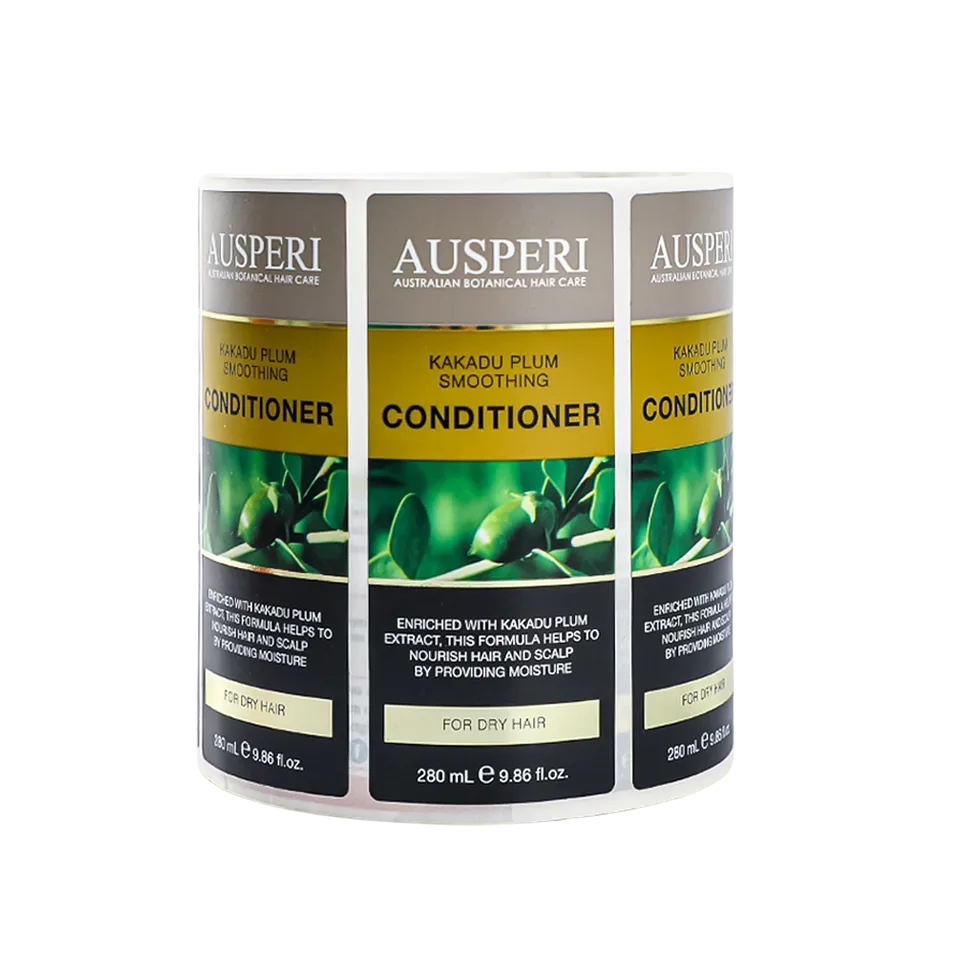
Chilled foods move to film: BOPP for most bottles and jars, with cold-rated adhesives for condensation. See our article on how to make waterproof labels for the construction details of that jump. The adhesive is the part that fails first in the cooler, so cold-application and condensation ratings belong in the spec.
Frozen, Hot Fill, and Oily
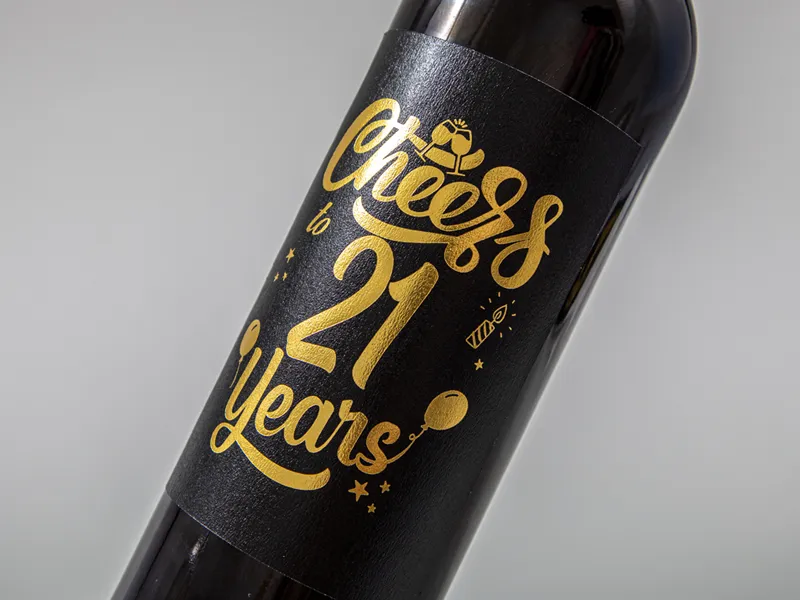
Frozen foods need freezer-grade adhesives that bond at application temperature and hold at storage temperature. Hot-fill lines need heat-stable film. Oily products combine both extremes with an oil-resistant surface. See our article on how labels for wine and spirits bottles are printed for another cold-chain example of the same logic. Each extreme narrows the material list until one construction is left standing, and that narrowing is exactly what a supplier’s sampling program is for.
Preguntas frecuentes
Do you have to list all ingredients on a food label?
Yes, packaged foods must list all ingredients in descending order by weight, with sub-ingredients shown where applicable. Certain incidental components and processing aids have exemptions, but the general rule is full disclosure. The ingredient list is printed on the same label stock as the brand artwork, so legibility at small sizes drives the material and finish choice.
What materials are commonly used for food packaging labels
Common food label materials include coated paper, uncoated paper, kraft paper, BOPP, PET, and PE. The right option depends on the product’s storage conditions, packaging surface, moisture or oil exposure, and printing requirements.
What information do food labels provide?
Food labels provide product identity, net quantity, ingredient and allergen information, nutrition facts, manufacturer details, and any required usage or storage instructions. The panel is a compliance document first and a marketing piece second. Material selection keeps every required element readable for the product’s shelf life.
What are 10 different types of food labels?
A common list runs: pressure-sensitive labels, wrap-around labels, shrink sleeves, tamper-evident seals, nutrition labels, ingredient labels, allergen labels, date-code labels, barcode labels, and promotional stickers. Each type carries its own material logic, from the moisture-proof sleeve on a bottle to the repulpable paper label on a carton.
What are the requirements for food labels in the USA?
US requirements cover the statement of identity, net quantity, ingredient list with allergens, nutrition facts in the current format, and manufacturer or distributor details. The rules are enforced by the FDA for most foods, with the USDA covering meat and poultry. Brands should verify the current format against agency guidance before each print run.
How do you label food?
Food is labeled by applying a printed label to the package with the required information arranged per the governing regulations, then sealing or finishing it to survive distribution. The process spans artwork, compliance review, printing, and application. Each step adds a requirement the material has to meet.
What are food codes?
Food codes usually refer to the FDA Food Code, the model regulation for foodservice and retail food safety that states adopt, or to the industry’s product and date codes printed on packaging. On a label, the printed lot and date codes are what the term most often means in practice. Those codes need variable data printing that stays legible in storage.
Which vitamin is no longer required on food labels?
Vitamins A and C are no longer required on the US Nutrition Facts label, because intake of both is no longer a public health concern. The current format requires vitamin D, calcium, iron, and potassium instead. The change shows why label artwork needs a compliance review against the current format before printing.
Are food packaging labels required to be waterproof?
No. Food packaging labels do not all need to be waterproof. The required moisture resistance depends on the product’s storage, handling, and distribution conditions. Dry pantry products may use suitable paper labels, while refrigerated, frozen, or frequently exposed-to-water products may require film facestocks and adhesives tested for those conditions.
Conclusion
Food label materials choose themselves once the conditions are written down. Paper covers dry and ambient products, film covers moisture and flex, and food-grade adhesives get matched to the surface. Testing on the real filled pack settles the rest. The material that survives the product’s whole journey is the one that was specified for it, which is why the brief matters more than the catalog.
For food brands, food manufacturers, and packaging distributors looking for a custom food label supplier, Meikei offers paper and film label printing options for different packaging requirements. Contact our team to discuss custom label specifications, material options, and bulk production needs.