Custom paper boxes look simple: one sheet of board, some creases, a fold, and a tuck. Pricing them is anything but. The same style of folding carton can carry very different unit prices depending on the board inside, the size of the die, the length of the print run, and the finishing stacked on top.
Learn what affects the cost per box, how order quantity changes unit pricing, and where you can cut costs without sacrificing quality. You’ll also find out what information to provide a supplier for an accurate quote.
Key Costs to Consider When Ordering Custom Boxes
No two carton quotes match, because no two boxes share board, size, run, and finish.
What Determines the Cost Per Box?
Every unit price is a stack of four decisions. Board sets the material base, structure sets the tooling and machine time, print settings set the setup burden, and finishing adds a cost line for every extra pass. A useful habit is to read any quotation in that order, because the same bottom line can hide very different structures underneath it.
Sample and Prototype Costs
The first unit is the most expensive unit. A blank structural sample checks fit, a printed proof checks color and layout, and a production pilot checks the whole line. Each stage is priced as individual work rather than as volume. Sample fees are usually credited against the bulk order, which makes confirming that credit one of the first questions worth asking.
Small-Batch vs. Bulk Order Costs
Small batches pay full setup on every box, while bulk runs spread the same setup across thousands of units. Digital printing softens the small-batch penalty by skipping plates, but its unit price overtakes offset once volumes grow. The practical consequence: the gap between a 500-box quote and a 5,000-box quote is not a discount, but a different cost structure.
| Order Type | Cost Structure | Best Use |
|---|---|---|
| Prototype | Priced per piece | Fit and design checks |
| Small batch | Setup dominates | Launches and tests |
| Bulk run | Material and press time | Established lines |
Custom Paper Box and Folding Carton Cost Drivers

Board, size, print, and finish each carry a lever, and the levers stack.
Board Grade and Thickness
Board is the largest single line in most quotations.
Folding cartons run on paperboard between 0.3 and 1.1 mm, and within that band the choice among solid bleached board, unbleached kraft, and recycled grades moves both price and appearance.
Buyers comparing quotes should confirm every supplier quoted the same specification, because a price gap often turns out to be two different boards. The board decision comes first in how folding cartons are made, and certified fiber options document their source through the FSC chain of custody.
Box Size and Structural Complexity
Size drives cost through sheet utilization: a carton that nests efficiently yields more boxes per sheet, while an awkward dimension forces waste the buyer still pays for. Complexity adds its own line, because every extra panel, window, or lock tab means more die cost, slower cutting, and higher setup reject rates. Window patches count double, adding film material and an extra converting step to the same footprint.
Print Run and Setup Costs
Every offset run pays for plates, make-ready sheets, die mounting, and color matching before the first sellable box. On a short run that setup sits on a few hundred units, and on a long run it disappears into thousands. That is why run length is the strongest single lever on unit price. Tooling such as cutting dies is a one-time charge, reusable on reorders of the same design.
Printing Methods and Color Requirements
Process color prints four inks in one pass, while each additional Pantone adds ink, plate, and setup. Full-bleed heavy coverage costs more than restrained layouts, and metallic or fluorescent inks carry premiums of their own. Digital presses skip plates entirely, which reshapes the economics of short runs but rarely wins at volume, so the print method should be chosen against the quantity, not the other way around.
Finishes and Insert Add-Ons
Finishing is priced per pass. Laminierung, spot UV, foil, and embossing each add a machine pass, a setup, and a handling step, so four finishes can multiply the converting cost of an otherwise simple box. Inserts add separate tooling: a folded paperboard tray stays close to the carton price, while molded foam and blister inserts are produced on their own lines.
| Cost Driver | What It Moves | Typical Direction |
|---|---|---|
| Board grade | Base material spend | Higher grade, higher base |
| Size and structure | Sheet yield and die cost | Simpler dies, lower unit |
| Run length | Setup spread per box | Longer runs, lower unit |
| Color count | Ink and plate lines | Each Pantone adds setup |
| Finish count | Converting passes | Each pass adds cost |
Folding Carton Costs by Quantity

Unit price falls fastest in the first quantity steps, then the curve flattens.
500, 1,000 and 5,000-Unit Orders
These three tiers describe three different buying situations. A 500-unit order suits a launch or a test market and pays the steepest setup burden, a 1,000-unit order often lands near the first meaningful price break, and a 5,000-unit order enters the range where material and press time dominate. Asking for a tiered quotation on a specific paper box style shows where that supplier’s curve bends for that exact box.
How Order Quantity Changes Unit Cost
The mechanism is amortization. Fixed costs, meaning plates, dies, make-ready, and color matching, stay flat as quantity grows, so the fixed share of each box shrinks in proportion. Variable costs, meaning board, ink, and press time, keep scaling with quantity, which is why the curve flattens instead of falling forever. The bend point is different for every design and every printer.
Production Volume and Unit Pricing
Volume also changes how the job is made. Larger runs justify faster press configurations, ganged layouts, and automated converting, all of which push unit price down further than quantity alone explains. The same logic explains why rigid gift boxes sit above cartons on every tier. They are hand-wrapped assemblies rather than machine-paced print products, so their curve bends on labor, not on press speed.
Get an Accurate Carton Quotation
How to Reduce Custom Box Costs Without Sacrificing Quality

Saving money without cheapening the box means removing variation, not material.
Standardize Board and Box Dimensions
Standardization saves money silently. Collapsing three near-identical sizes into one lets the supplier buy one board in volume, cut one die, and run one setup. A few millimeters of shift can align a box with full sheet yield without any visible change. The full savings checklist is short.
- Merge near-identical sizes into one dimension where the market will not notice.
- Standardize on one board grade across a product family.
- Align footprint dimensions with standard sheet yields.
Consolidate Print Runs
Separate SKUs printed separately each pay their own setup. Consolidation groups them: flavors or language versions share one layout with a single changing panel, and a seasonal set prints as one sheet that later splits into its parts. The saving is not in the ink but in the setups that never happen, and one shared setup also means one color match instead of several drifting ones.
Reduce Finishing Processes
Finish count is a budget dial. A box with lamination, spot UV, foil, and embossing pays four setups and four passes, while a box with matte lamination and one foil accent pays two and often looks more expensive. Fewer finishes also mean fewer points where a defect can scrap a finished box, so the saving shows up in reject rates as well as in quotations.
Use Color and Foil Strategically
Coverage costs. A logo-sized foil block prices by area and setup, while full-cover foil prices by everything. The same logic applies to ink: a two-color design with confident white space often beats a four-color flood on both cost and shelf clarity. Placement strategy lets the design carry the price down without carrying the perceived quality down with it.
What Your Supplier Needs for an Accurate Box Quote

An accurate quote is a document both sides can be held to, not an opening number.
Box Dimensions, Board, and Print Specifications
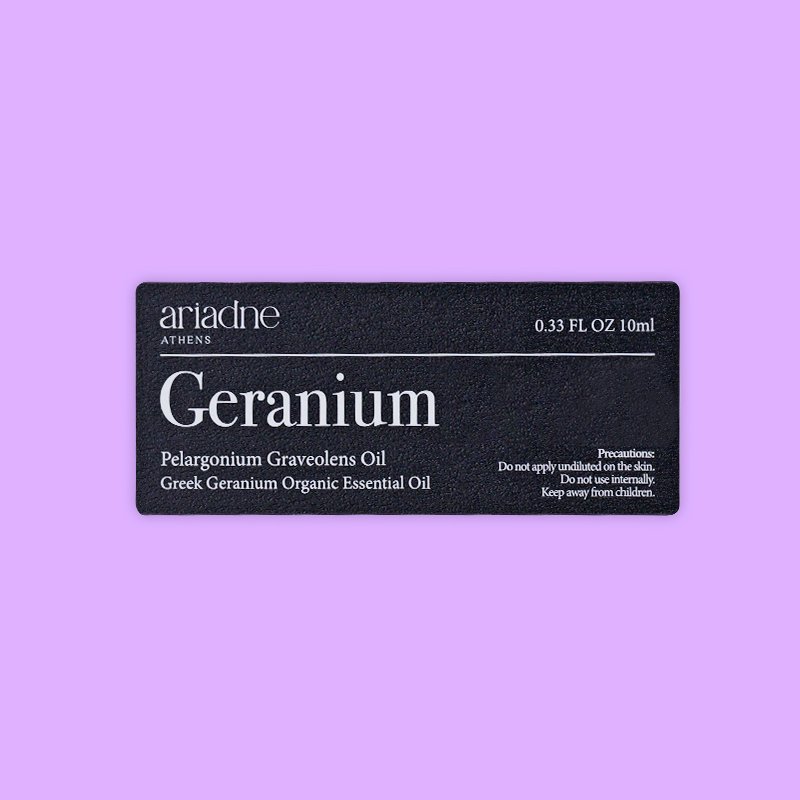
A quotation is only as accurate as the information behind it. Programs that pair cartons with matching labels, such as the combined carton and vial label sets used in supplement programs, should submit both components together so the print matches across the pair. The core package covers four items.
- A dieline with dimensions, panel uses, and fold directions.
- The board grade, grammage, and thickness named explicitly.
- Print files in CMYK with any Pantone references.
- Quantity tiers and the destination market for freight.
Finishing and Insert Requirements
Finishing must be specified, not implied. Gloss or matte lamination, spot UV areas, foil colors and coverage zones, and embossing depth each change the converting plan, and inserts need their own material, cavity drawing, and fit tolerance. A supplier who receives vague finishing instructions prices the uncertainty, which is why partial files come back as padded numbers.
Questions That Reveal Additional Charges
The quoted unit price is not always the full price. Four questions, asked in writing, surface most of the gaps.
- Whether the die is charged separately and kept on file for reorders.
- Whether the sample fee credits against the bulk order.
- How overs and unders are shipped and billed.
- Which packing style the unit price assumes, bulk packed or individually sleeved.
Lead Time and Shipping Requirements
Calendar is a cost factor. Ahead of retail gifting seasons, packaging capacity tightens across the industry, and late orders either wait in a queue or pay rush premiums. Shipping terms also belong in the quotation , because freight mode, destination, and incoterms move the landed cost more than most line items, and flat-packed cartons ship far denser than assembled boxes.
| Quote Package Item | Why It Matters |
|---|---|
| Dieline and dimensions | Fixes tooling and yield |
| Board specification | Keeps quotes comparable |
| Print files and color refs | Prevents re-proofing loops |
| Finish and insert list | Prices every pass honestly |
| Quantity tiers | Maps the real price curve |
FAQ
Are folding cartons cheaper than rigid boxes?
Ja, in general. Cartons print, cut, and ship flat on machine-paced lines, while rigid boxes are hand-wrapped assemblies of thick greyboard, so the two occupy different price tiers. Programs often use cartons for volume lines and rigid boxes for flagship sets.
What is the cheapest carton size?
Not the smallest one. The cheapest size is the one that nests onto a standard board sheet with the least waste, which usually means dimensions aligned to common sheet yields. A supplier can often restate a design a few millimeters and watch the unit price fall.
Can I reorder at the same price?
Often, within a window. If the die is kept on file and board prices hold, reorders repeat the original pricing. Quotations usually carry a validity period, and reordering inside it avoids re-quoting a moved market.
Do finishes change MOQ?
Frequently. Each finishing pass has its own minimum setup, and foil or screen processes can carry a higher minimum than the print run itself. Asking for the MOQ of every process, not just printing, prevents surprises at order time.
Conclusion
Carton pricing is structural. Board grade, size and structure, print method and color count, finish count, and run length build the unit price in that order of weight. Quantity bends the whole curve by spreading setup across volume. Buyers who understand the structure can read a quotation instead of just comparing its bottom line.
The practical steps are short. Standardize where the market will not notice, consolidate print runs, and spend the finish budget on two sharp choices rather than four muddy ones. Hand suppliers complete files so the numbers come back firm instead of padded.
When the specification is ready, talk to the Meikei team about quantity tiers and finish options in one inquiry. A tiered quotation with samples costs nothing and shows the real curve for the exact box.