Standardizing your custom labels supplier selection process is the only way to prevent adhesive failure and misaligned die-cuts on high-speed packaging lines. A single application error can halt your entire bottling or filling operation, leading to costly line downtime and rejected inventory.
This analysis benchmarks label manufacturers against baseline industry standards. We evaluate press run-length economics, die-cut accuracy, and G7 color calibration to help you secure a stable packaging workflow.
Custom Labels Supplier Quality Evaluation Checklist
A systematic label supplier audit mitigates application failures and color-matching errors through strict process controls, automated inspection systems, and documented pilot runs.
Misapplied adhesives and color drift on high-speed bottling lines halt production runs and drain margins. Establishing a strict custom labels supplier quality evaluation checklist prevents these supply chain bottlenecks before raw materials ever arrive at your facility.
| Evaluation Metric | Digital Press Standard | Flexographic Press Standard | Critical Quality Threshold |
|---|---|---|---|
| Run-Length Suitability | Under 4,000–5,000 units | Over 10,000 units | Flexible print scheduling |
| Color Calibration | Standardized CMYK Profiles | Spot Pantone Match | Delta E < 2.0 |
| Setup & Tooling | No plate fees; fast start | Physical plates required | Die-cut accuracy within ±0.2 mm |
| Delivery Speed | 3–5 business days | 10–15 business days | 99% On-Time In-Full (OTIF) |
Supplier Viability, Operational Stability, and QMS Certifications
Buyers frequently mistake brokers for direct manufacturers, which compromises quality control. Direct manufacturers own the physical facility and machinery, providing complete transparency over the production schedule and raw material origins.
- Business Tenure: Seek suppliers with at least 5–10 years of direct manufacturing experience in your industry vertical to ensure process maturity.
- In-House Assets: Confirm direct ownership of printing and finishing equipment rather than outsourced trading arrangements to maintain control over lead times.
- Baseline Certifications: Require ISO 9001:2015 as the minimum benchmark for consistent quality management systems, incorporating Six Sigma practices where available.
- Verification Routine: Require a virtual or on-site facility tour alongside direct client references to verify creditworthiness and long-term financial stability.
Production Capabilities, Press Technologies, and Lead-Time Reliability
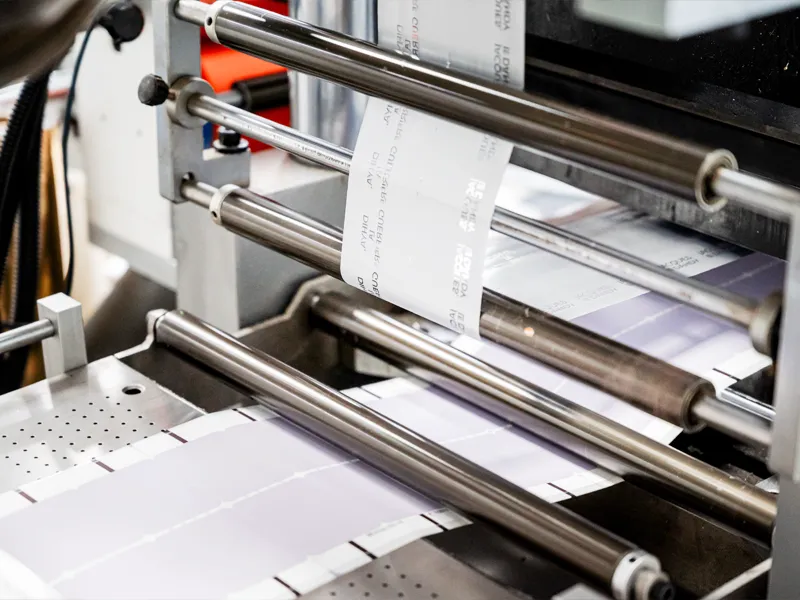
A balanced shop floor operates both digital and flexographic technologies, allowing seamless transitions as your volume demands scale. Relying on a single press technology limits your ability to optimize costs on short SKU runs.
- Press Calibration: Look for G7 or GRACoL certified calibration to maintain color integrity across different substrate materials and printing technologies.
- Maintenance and Capacity: Demand equipment log reviews to identify capacity ceilings and preventative maintenance routines before peak seasonal demand strikes.
- Pilot Capability: Verify the supplier’s willingness to execute small-scale pilot runs of 2,000 to 5,000 units before moving to high-volume production.
- Turnaround Benchmarks: Standard lead times should average 10–15 business days, with rush capacity operating in 24–48 hours for standard runs.
Material Suitability, Print Quality, and Incoming Inspection Standards
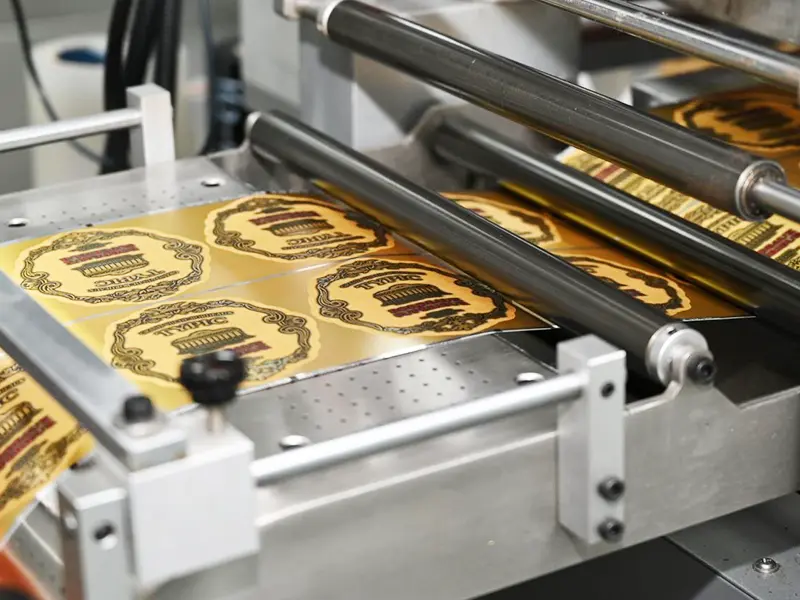
Labels fail in the field when substrates do not match container geography or local environmental stresses like moisture, refrigeration, and friction. Outlining explicit tolerances on arrival protects your inventory.
- Substrate Matching: Select appropriate films (PP, PET) or paper based on whether the container is glass, metal, or high-density plastic.
- Adhesive Selection: Specify permanent, removable, or freezer-grade adhesives based on line speed, filling temperature, and shipping conditions.
- Inspection Tolerances: Enforce a strict print quality check requiring a Delta E of less than 2.0 and automated barcode grading.
- Roll Configurations: Match roll unwind direction, gap spacing, and core sizes (typically 3-inch for automated lines) exactly to your applicator.
Regulatory Compliance, Traceability, and Support Infrastructure
Regulated markets leave no margin for error. A labeling recall caused by missing hazard warnings or unreadable batch codes creates massive corporate liability and brand damage.
- Mandatory Standards: Ensure full compliance with UL 969 for electrical components, ANSI Z535.4 for safety signs, or FDA food/pharma packaging requirements.
- Traceability Protocols: Require lot-by-lot batch records linking labels back to raw substrate and ink shipments.
- Nonconformance Control: Establish documented processes for segregating nonconforming product and managing material change-control notifications.
- CAPA Support: Verify that technical support responds to RFQs within 24 hours and provides structured Corrective and Preventive Action (CAPA) plans.
Pre-Production Testing, Pilot Run Frameworks, and Scorecard Performance
Do not commit to high-volume contracts based on a static print proof. Transitioning from sourcing to operations requires a phased pre-production check to observe real-world performance.
- 4-Week Pilot Framework: Launch a structured 4-week timeline covering spec finalization, scorecard comparisons, real-container testing, and low-volume run reviews.
- Weighted Scorecard: Grade candidates using an objective model: Print consistency (30%), technical support (20%), lead-time reliability (20%), communication speed (15%), and issue resolution (15%).
- Continuous Evaluation: Track defect rates under a 2% print flaw target and utilize total cost of ownership (TCO) audits during quarterly business reviews (QBRs).
Evaluating these criteria provides an objective pathway for matching the physical and operational realities of your packaging line to your supplier’s capabilities.
Production Capacity and Equipment Requirements
Matching your production volumes to the correct printing press and finishing tolerances prevents costly line stoppages and protects product margins.
Evaluating a custom labels manufacturer requires a strict look at pressroom capabilities and mechanical thresholds. Mismatches between your order volumes and a supplier’s core machinery will quickly inflate unit costs or cause shipping delays.
Evaluating Production Output and Run-Length Economics
Every label plant operates most efficiently within specific volume windows. Aligning your average order sizes with the supplier’s press capacity ensures you pay for actual production rather than machine setup overhead.
- Scale Capabilities: Facilities vary widely, with high-volume enterprise operations delivering 2.5 million sheets daily, while specialty manufacturers output roughly 144 million units annually.
- The Digital-Flexo Breakeven: Sourcing guidelines place the economic transition point between 4,000 and 7,000 labels. Digital printing dominates below this threshold, while flexographic runs offer better margins for larger quantities.
- Standard Lead Times: Standard production runs typically require 10 to 15 business days. Suppliers must match this timeline against your monthly demand spikes to prevent supply chain bottlenecks.
Printing Technology and Color Management Systems
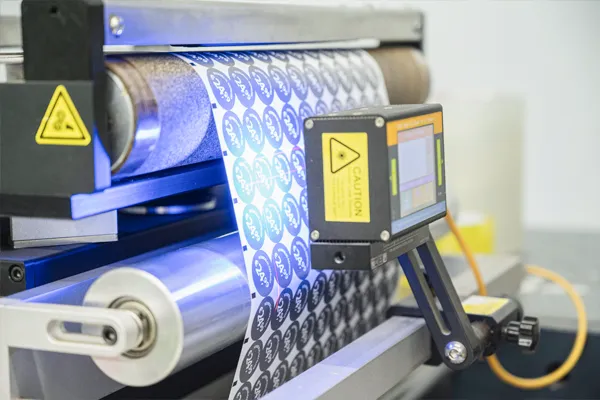
Achieving exact brand matching requires systematic hardware and software integration on the shop floor. Relying on simple visual checks during a print run leads to noticeable deviations on retail shelves.
- Press Assignment: Modern plants utilize digital presses for short-run variable data to bypass plate charges, while reserving flexographic setups for high-volume consistency over 10,000 units.
- Color Calibration: Consistent brand representation requires G7 calibration and spectrophotometer measurements to maintain a color tolerance below Delta E 2.0.
- Standardized Workflows: Streamlined digital prepress pipelines support rapid 24- to 48-hour rush turnaround times when immediate inventory replenishment is necessary.
Converting, Die-Cutting, and Applicator Compatibility
A beautifully printed design is useless if the roll fails to feed, peel, or apply on an automated packaging line. Precision in the converting stage prevents mechanical failures downstream.
- Dimensional Tolerances: Automated labeling lines demand finishing machinery capable of holding critical die-cut tolerances within plus or minus 0.2 mm to prevent web breaks.
- Core and Roll Sizes: Automated lines require rolls wound on 3-inch cores, while manual dispensers typically use 1-inch cores.
- Back-End Throughput: Slitting, sheeting, and rewinding capacities must match printing press speeds to avoid bottlenecks during the final packaging stages.
Material Processing and Application-Specific Quality Standards
Environmental exposure dictates substrate and adhesive performance. High-speed application lines must be paired with material properties that withstand transport, temperature shifts, and storage conditions.
- Substrate Processing: Suppliers must verify their ability to handle specialized films like BOPP and apply custom adhesives engineered for moisture, UV, or chemical exposure.
- Compliance Standards: Production lines must satisfy distinct industry standards, including moisture-resistant food labels and chemical GHS hazard marking rules.
- Adhesive Verification: Running 24- to 72-hour container trials on physical packaging samples is essential to confirm adhesive performance under actual storage temperatures.
Selecting the right manufacturing setup keeps your production lines moving without unexpected shutdowns. Verifying these technical benchmarks upfront ensures your packaging performs exactly as expected from the warehouse to the retail shelf.
Eliminate Packaging Risks with AI-Driven Quality
Certifications for Custom Labels Suppliers
Verifiable third-party certifications eliminate supplier risk by providing objective proof of quality, safety, and technical capability in custom label manufacturing.
Evaluating a custom labels supplier requires a structured look at their operational credentials. Independent audits confirm that a facility can repeat processes accurately, protect brand assets, and satisfy complex regulatory standards without shipping delays or defect spikes.
Quality Management and Sector-Specific Standards
General manufacturing capability starts with fundamental operational benchmarks, but regulatory expectations shift dramatically when producing packaging for high-risk markets like healthcare or retail food service.
- ISO 9001: This framework serves as the baseline quality system standard to ensure consistent production, documented processes, and reduced print defects.
- ISO 13485: This standard establishes strict risk management, material traceability, and validation controls required for medical device and healthcare labeling.
- SQF and ISO 22000: These food safety certifications demonstrate that label production facilities follow rigorous food safety and hygiene protocols for primary packaging.
Safety, Regulatory, and Industry Agency Compliance
Regulatory non-compliance leads to costly product recalls and severe legal liability. Top-tier manufacturers maintain specialized compliance credentials to protect consumer safety and guarantee material durability under extreme environmental stress.
- UL Authorized Label Supplier: This status remains mandatory for printing official UL Marks and ensuring labels meet permanent durability standards.
- ANSI and GHS Compliance: This design compliance guarantees accurate layouts, specific signal words, and required color schemes for chemical warning labels.
- Hazardous Material Restrictions: Complete supplier knowledge of REACH, RoHS, and California Prop 65 protects electronics and consumer brands from hazardous material violations.
Environmental Sustainability and Ethical Sourcing
Nachhaltigkeit is no longer a soft marketing claim; it requires objective verification of the supply chain. Global brands rely on environmental management standards to verify the ethical extraction of raw materials and clean localized operations.
- ISO 14001: This environmental management standard guides suppliers in minimizing localized waste, controlling emissions, and running resource-efficient operations.
- FSC and SFI: These chain-of-custody credentials verify that paper-based label stocks originate from responsibly managed, sustainable forests.
- GOTS, GRS, and OEKO-TEX Standard 100: These textile guidelines ensure skin safety and verify recycled or organic material content in garment and fabric labels.
- SMETA and Sedex: These social compliance audits provide objective proof of ethical labor practices, safe working conditions, and social responsibility inside the factory.
Color Management and Technical Print Verification
Mismatched packaging on the retail shelf breaks consumer trust and dilutes brand power. True color consistency depends on objective measurement systems rather than human eyesight.
- GMI Certification: This print standard confirms a supplier can reliably match critical brand colors across diverse production runs and substrate types.
- Technical Color Control: Utilizing standardized densitometry and spectrophotometer measurements eliminates subjective color evaluations, maintaining package consistency.
Information Security and Digital Record Compliance
Industrial labeling processes require highly secure data transfers and pristine digital records. Managing variable barcodes, serialization data, and complex pharmaceutical designs leaves zero margin for data mishandling.
- ISO 27001: This information security standard provides assurance that the supplier securely processes variable data, tracking barcodes, and proprietary packaging artwork.
- FDA 21 CFR Part 11 and EU Annex 11: Aligning with these electronic record regulations enables audit-trail-backed digital approvals and validated workflows for sensitive pharmaceutical print jobs.
Questions to Ask Before Ordering Custom Labels
Before signing off on a custom label run, you must run your supplier through these four critical checks to avoid ruined adhesive, scuffed graphics, and costly application line downtime.
Asking the right questions before ordering custom labels is the only way to prevent adhesive failure, color drift, and production line halts. A container’s chemistry dictates adhesive performance, and mismatching them leads to immediate edge lift or bubbling.
Application Environment and Surface Compatibility
Your label must survive the real world. Chemical, physical, and mechanical stresses on the packaging line and in transit will quickly destroy poorly engineered constructions.
- What substrate and surface texture are we labeling? You need to match the adhesive formula to glass, PET, HDPE, metal, or cardboard, factoring in whether the surface is smooth, textured, flat, or curved.
- What environmental exposure will the label face? Map out exposure to moisture, condensation, direct UV light, freezer temperatures, or chemical contact like oils and cleaning solvents.
- How will we apply these labels? Confirm whether your team will apply labels by hand or run them through high-speed automatic dispensing machinery.
High-speed applicators demand perfect mechanical consistency. If the container has a slight taper, a standard rectangular label will wrinkle on the line, requiring a custom dieline instead.
Physical Dimensions and Material Specifications
Material choices directly influence both visual branding and operational performance. Standardizing these specs keeps your unit costs down and prevents web breaks during dispensing.
- What are the exact dimensions and delivery format? Specify the precise width, length, and shape of the label, and choose between rolls, sheets, or fan-folds.
- What are the machine roll specifications? For automated application, verify the required core size (usually 3 inches) and confirm the exact unwind direction your equipment needs.
- Do we need specialty material features? Identify requirements for tamper-evident stocks, eco-friendly materials, clear films, or matte and gloss finishes.
Selecting the wrong unwind direction on machine-applied rolls can halt your entire packaging line. Always verify your applicator’s configuration sheet before placing the order.
Artwork, Printing Technology, and Compliance
High-fidelity graphics are useless if the labels fail barcode scans or violate sector-specific packaging rules. Prepress coordination prevents these compliance issues.
- What artwork formats and color protocols are required? Confirm file formats (ideally vector PDF or AI with outlined fonts), design proofing steps, and color-matching targets like Pantone.
- Which print technology fits our run size and budget? Select digital printing for low-volume, multi-SKU runs, or flexographic printing for high-volume cost efficiency.
- Are we meeting regulatory and scanning standards? Address mandatory regulatory layouts (FDA, GHS, or warning panels) and verify that printed barcodes meet ISO/ANSI grading standards.
If your brand color drifts across SKUs, consumers notice. For color-critical work, demand G7-calibrated presses and a specified color tolerance of Delta E under 2.0.
Order Volume, Pricing, and Project Timeline
The commercial structure of a label run is highly sensitive to volume and setup times. Balancing these financial variables prevents expensive rush charges and inventory bottlenecks.
- What is our order volume and SKU mix? Evaluate minimum order quantities (MOQs) and see if you can group multiple product variations to lower setup fees.
- What are the lead times and shipping schedules? Clarify the turnaround from proof approval to shipment, and confirm if the supplier offers guaranteed rush options.
- Can we run physical prototypes first? Request printed samples or press proofs to verify adhesive tack, graphic scaling, and physical fit on actual containers.
Never skip real-world testing. Run physical samples through your actual filling line for at least 48 hours to confirm the adhesive handles condensation and mechanical stress.
Häufig gestellte Fragen
How do I choose a custom label supplier?
To choose the right custom label supplier, define your technical and business requirements before contacting vendors. This step requires detailing your container material, application method, environmental exposure, and expected volumes.
Build a structured Request for Quote (RFQ) packet with your dielines and artwork, then systematically compare multiple suppliers. Evaluate each candidate on print consistency, material range, lead-time reliability, and technical support using a weighted scorecard.
What makes a good label manufacturer?
A reliable custom label manufacturer manages the entire production workflow in-house rather than brokering orders. They possess deep domain expertise in your specific industry vertical—such as food and beverage, cosmetics, or industrial chemicals—and can engineer material-and-adhesive combinations that survive actual environmental conditions.
Look for suppliers who offer robust quality management systems, clear communication, and the capacity to scale from digital short runs to large flexographic orders.
What certifications should a label company have?
The baseline quality standard is ISO 9001:2015, which ensures consistent, documented, and repeatable manufacturing processes. For environmental management, look for ISO 14001:2015.
Specific industries require targeted compliance frameworks: UL Authorization for safety-critical electronics, GMI for strict brand color consistency, SQF (Edition 9) or BRCGS for food-contact packaging, ISO 13485:2016 for medical devices, and FSC or SFI for responsibly sourced paper labels.
How do I verify a label supplier before committing?
Verify legal registrations and operational licenses first. Request third-party quality audit reports from organizations like SGS or Bureau Veritas, checking the last two to three cycles for corrective actions.
Order physical samples of the exact material and adhesive quoted, then apply them to your production containers to test adhesion, scuff resistance, and barcode readability under expected storage conditions. Finally, place a small pilot order of 2,000 to 10,000 labels to evaluate application line performance before committing to full volumes.
What is the difference between a label printer and a manufacturer?
A printer focuses primarily on putting ink or toner onto stock label materials, often using standardized templates and sizes with limited technical support.
A manufacturer controls the entire production cycle, managing substrate and adhesive engineering, precision custom die-cutting, specialized finishes, and inline inspection systems. Choose a manufacturer when your packaging must withstand harsh environments, require regulatory compliance, or maintain exact color matching across multiple complex SKUs.
How long does custom label production take?
Standard custom label production typically takes 10 to 20 business days (2 to 4 weeks) from final proof approval to delivery, depending on the printing technology and order volume.
Digital printing for short runs under 5,000 labels can be finished in 3 to 5 business days, with expedited options delivering in 24 to 48 hours. Flexographic printing requires an additional 10 to 14 days for plate manufacturing and press setup. Woven and fabric labels generally require a stable production timeline of 10 to 15 business days.
Can custom label suppliers handle large-volume orders?
Ja, industrial label manufacturers operate automated, multi-line facilities designed to scale annual output into the tens of millions of labels. They use high-speed flexographic presses to maximize production efficiency, driving down unit costs for bulk runs.
Enterprise-level suppliers can manage high volumes through vendor-managed inventory (VMI) systems, drop-shipping to multiple distribution centers, and palletized shipping logistics.
Can I get physical samples before placing a full order?
Ja. Manufacturers commonly provide free material swatch kits containing various paper, film, and adhesive combinations so you can test adhesion on your containers.
If you require a custom printed sample using your specific artwork and size, manufacturers typically charge a flat fee (often around $80) to cover prepress and proofing setup. Many suppliers will credit this sampling fee back to your account when you place your first bulk production order.
Final Thoughts
While low-cost brokers promise cheaper upfront pricing, committing to a verified Quality Factory Standard remains the only way to safeguard your automated packaging lines against adhesive failures and color drift. Securing direct manufacturer control over substrates, calibrated G7 color matching, and ISO-certified quality assurance protects your brand reputation from the warehouse to the retail shelf.
We recommend initiating a low-volume pilot run of 2,000 to 10,000 labels to verify release liner performance, peel strength, and sensor compatibility on your physical filling lines. You can also request a physical material sample kit featuring our specialized films, textured paper stocks, and high-performance adhesives. Contact our engineering team to share your artwork dielines and review custom OEM specifications.