Choosing the right custom labels requires balancing your product requirements, packaging material, storage conditions, and budget. Different products require different label constructions, as factors such as moisture exposure, container shape, and handling conditions can affect label performance.
Packaging managers often overlook how different packaging surfaces, such as glass and low-energy plastics, require suitable adhesive solutions to prevent issues like peeling, lifting, or poor adhesion during storage and transportation.
This guide compares custom label materials, printing methods, and finishes to help brands select the right solution based on product requirements and application environments.
How to Choose the Right Custom Labels for Your Products
Selecting the right custom label requires matching your container geometry, environmental exposure, and regulatory requirements with compatible adhesives and face materials to prevent failure.
Define the Label’s Core Purpose and Function
Before choosing materials or adhesives, define the role your labels need to perform. For custom roll labels, consider factors such as application speed, container shape, and labeling requirements. Some labels focus on branding, while others must meet logistical or regulatory needs.
- Product Identification: Clear, high-contrast branding that identifies the product name, variant, scent, or flavor at a glance.
- Regulatory Compliance: Legible areas dedicated to ingredient lists, allergen warnings, nutrition facts, or hazard pictograms.
- Logistical Tracking: GS1-compliant barcodes, QR codes, or serial numbers that support inventory control and retail scanning.
- Construction Formats: Single-purpose designs for basic decoration, or multi-purpose configurations like front-and-back setups and peel-and-reveal formats that house extensive compliance copy.
Determining these functions early dictates your overall size, print area, and structural layout requirements before you purchase substrates.
Assess Container Characteristics and Environmental Exposure
A label cannot perform if it lifts, wrinkles, or fades during its lifecycle. You must analyze the physical container, your application machinery, and the environmental stresses the product encounters from production to consumer use.
- Container Curvature: Small diameters or tight curves require flexible film labels to prevent edge lifting and flagging.
- Surface Energy: Low-surface-energy plastics like polypropylene and polyethylene require specialized, high-tack adhesives to form a secure bond compared to high-energy surfaces like glass or metal.
- Application Methods: High-speed automated labeling lines dictate strict requirements for roll unwind direction, core size, and fast-setting adhesives to prevent skew.
- Environmental Conditions: Real-world exposures like freezer storage, heavy bathroom condensation, chemical spills, UV exposure, and transit abrasion.
Compromising on these parameters often results in adhesive failure, bubbling, or unreadable barcodes on store shelves.
Select the Right Facestock Material and Protective Finish
The facestock material and finish define both the visual appeal and physical durability of your label. Your selection should balance your unit cost targets with performance expectations.
- Paper Facestocks: Cost-effective, high-quality printing substrates ideal for dry, indoor goods like boxed foods or shipping cartons.
- Synthetic Films: Moisture-resistant polypropylene (BOPP), polyethylene (PE), or polyester (PET) stocks engineered for refrigerated, wet, or chemically harsh environments.
- المواد المتخصصة: Textured estate papers for artisanal branding, metallic foils for premium shelf appeal, or tamper-evident materials for security seals.
- Protective Finishes: Matte coatings to reduce glare, gloss finishes for vibrant colors, or heavy-duty lamination for robust scuff and water resistance.
Using a paper label on a refrigerated beverage will cause the substrate to disintegrate once condensation forms. Always match the material family to the use case.
Determine Adhesive Requirements and Surface Compatibility
Adhesives are highly specialized chemical formulations. A permanent adhesive meant for a flat cardboard box will behave differently when applied to a cold, wet glass bottle.
- Permanent Adhesives: Standard for retail packaging, designed to prevent removal without destroying the label facestock.
- Removable Adhesives: Formulated for clean peeling without residue, ideal for reusable containers or promotional pricing stickers.
- Repositionable Adhesives: Provide a delayed bond, allowing manual operators to adjust placement errors during application.
- Specialty Adhesives: Cold-temperature formulas designed to tackle frost and condensation, or ultra-high-tack adhesives for rough surfaces.
Applying your labels at room temperature and allowing 24 hours of bond development before cold exposure significantly improves long-term adhesion.
Establish Layout, Information Hierarchy, and Compliance Standards
Your artwork layout must reconcile aesthetic design with print production tolerances and legal requirements. Failing to plan for mechanical cutting variations results in ruined runs.
- Safe Zones and Bleeds: Keeping critical text 0.125 inches inside the die line while extending background graphics 0.125 inches beyond it to prevent white edges.
- Visual Hierarchy: Placing the brand name and primary product benefits in high-contrast focal areas while positioning supporting details cleanly on secondary panels.
- Barcode Compliance: Verifying that UPC, EAN, or logistics codes maintain proper quiet zones and sizing to ensure reliable scanning on retail registers.
- Sector Standards: Adhering to specific guidelines for allergen declarations, hazard symbols, or net weight placement based on your industry.
Before committing to full production, print a 1:1 scale paper mockup. Testing it directly on your container allows you to catch text legibility issues and curve distortion prior to press setup.
Custom Labels Materials: Paper, الفينيل, and Film Options
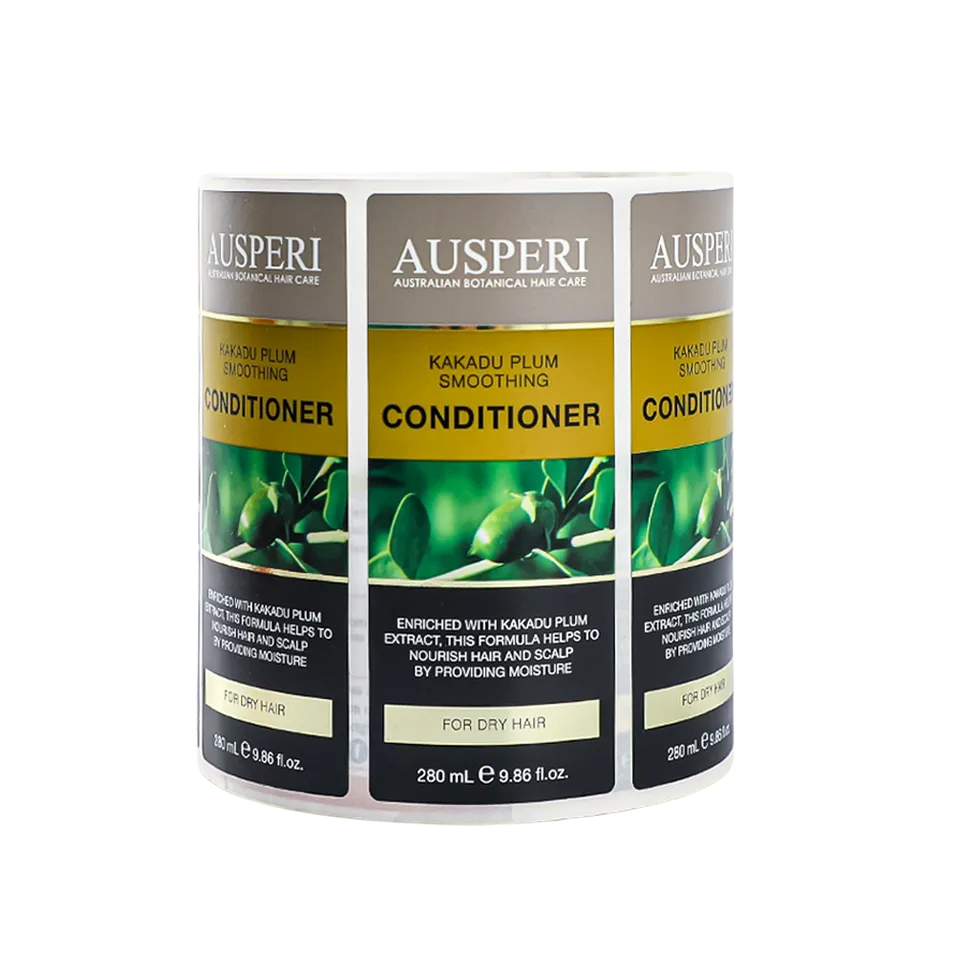
Selecting the right label material requires balancing performance and cost. Paper labels are often suitable for budget-conscious applications, while synthetic films such as BOPP or PET are preferred when brands need better moisture resistance and durability.
| Material Family | Moisture Resistance | UV / Weather Resistance | Best Use Case |
|---|---|---|---|
| Paper | Low | Low | Dry, indoor retail, packaging, and artisan branding |
| Film (BOPP, PET, PE) | High | Moderate to High | Refrigerated goods, cosmetics, and squeezable tubes |
| الفينيل (PVC) | Very High | Very High | Industrial equipment, safety signs, and outdoor decals |
Paper Label Materials
Paper remains the standard for high-volume packaging where environmental exposure is controlled. Its porous structure absorbs inks deeply, allowing for sharp text and rich color reproduction at a lower unit cost than synthetic alternatives.
- Composition: Cellulose-based facestock ideal for indoor, dry, and low-abrasion environments.
- Economics: Most cost-effective material family, supporting high-quality graphics and fine text.
- Aesthetics: Available in premium textured, matte, kraft, and gloss finishes for artisan and retail branding.
- Upgrades: Can be enhanced with varnishes or clear film overlaminates to improve scuff and light moisture resistance.
Synthetic Film Options
When packaging must survive refrigeration, handling, or direct contact with oils, synthetic films provide the necessary barrier properties. These plastic-based substrates do not degrade when exposed to water, keeping the branding intact throughout the product lifecycle.
- BOPP (Polypropylene): The industry standard for durable, waterproof retail packaging and “no-label” look designs.
- PET (Polyester): High-performance film with extreme temperature resistance (-94°F to 302°F) and chemical stability.
- PE (Polyethylene): Highly flexible and conformable film designed for squeezable tubes and curved containers.
- Specialty Films: Holographic and specialty films used to create premium visual depth, reflective patterns, and security features.
الفينيل (PVC) for Extreme Durability
Vinyl is engineered for harsh industrial applications and long-term outdoor exposure. It features high physical conformability, allowing it to stretch and stick to textured metal, curved pipes, and rugged plastic housings without lifting at the edges.
- Durability: Highly rugged material optimized for long-term outdoor exposure, UV stability, and weather resistance.
- Conformability: Excellent conformability on uneven, curved, or heavily textured surfaces.
- Applications: Standard choice for industrial warning labels, equipment rating plates, and safety-critical notices.
- Installation: Requires specific application conditions, including clean surfaces and temperatures above 50°F (10°C) for optimal bonding.
Comparative Selection and Application Guide
The best label choice balances material cost with the performance requirements of your product. Selecting an incorrect substrate can lead to peeling, illegible barcodes, or regulatory non-compliance if warning data is lost.
- Environmental Matching: Match material choice to the specific environment: paper for dry storage, BOPP for moisture, and PET/vinyl for harsh industrial settings.
- Lifecycle Cost: Evaluate total lifecycle costs: higher upfront costs for films prevent failure, peeling, and compliance risks in tough environments.
- Adhesive Compatibility: Ensure adhesive compatibility with the target substrate (glass, plastic, metal) and required bond type (permanent vs. removable).
- Hybrid Constructions: Incorporate hybrid material constructions to achieve premium paper aesthetics alongside synthetic durability.
Reliable Custom Labels for Your Product Requirements
Create custom labels that match your product requirements, packaging materials, and application conditions.
MEIKEI helps brands develop reliable label solutions with professional material recommendations, advanced printing capabilities, and flexible production options for different order volumes.
Custom Labels Printing Methods for Different Applications
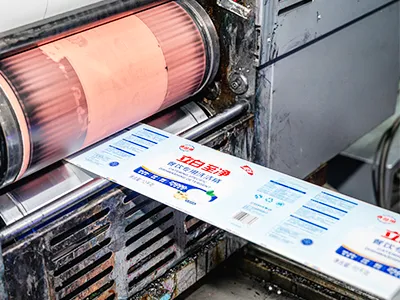
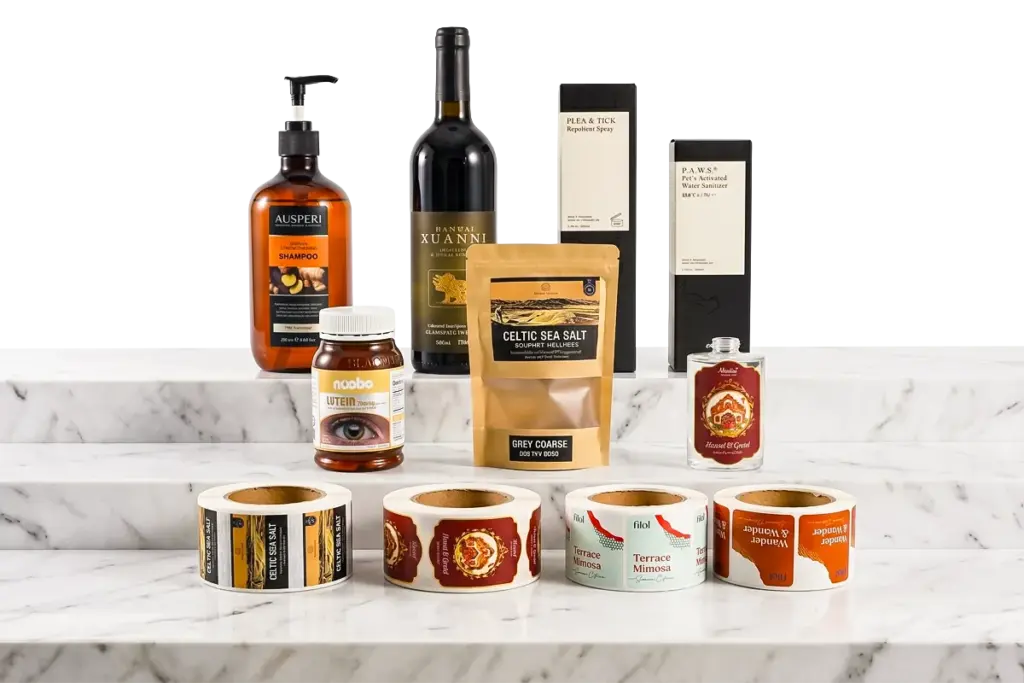
Selecting the correct label printing method prevents adhesive failures, ink smearing, and unnecessary tooling costs by matching your production volume directly to substrate-compatible print technologies.
Digital Label Printing
Digital printing bypassed the traditional requirement of physical plates by transmitting artwork files directly from digital systems to the printheads. This direct-to-printer workflow eliminates mechanical setup delays and makes on-demand production highly responsive.
- طباعة البيانات المتغيرة (VDP): Supports real-time serialization, unique barcodes, and custom QR codes on each sequential label.
- Color Spectrum: Handles complex gradients, photographic imagery, and high-fidelity CMYK color profiles.
- Production Target: Most economical for short-to-medium print runs, seasonal SKUs, and rapid prototyping.
- Cost Scalability: Carries a higher unit cost at massive volumes compared to conventional inline rotary presses.
Flexographic and Offset Printing
Conventional printing methods rely on physical plates and complex cylinder configurations to achieve rapid, continuous material throughput. These heavy-duty industrial systems represent the standard for high-volume supply chains.
- Flexographic Relief Plates: Utilizes flexible photopolymer plates on rotary cylinders for high-speed, roll-to-roll inline production.
- Offset Lithography: Transfers ink from plate cylinders to a rubber blanket, delivering the highest typographic resolution and sharpest fine details.
- Inline Converting: Integrates die-cutting, cold foiling, lamination, and varnish application in a single mechanical pass.
- Financial Break-Even: Demands high initial plate-making and setup costs, but provides the lowest per-unit cost on long production runs.
Thermal Transfer and Direct Thermal Printing
Thermal printing systems serve as the operational backbone for logistics and industrial identification. The technology splits into two distinct mechanical processes based on service-life requirements.
- Thermal Transfer: Melts resin, wax, or hybrid ribbons onto synthetic stocks, creating durable, chemical-resistant monochrome graphics.
- Direct Thermal: Applies heat directly to chemically treated, heat-sensitive paper, eliminating ribbon costs entirely.
- Direct Thermal Limit: Fades, darkens, and degrades when exposed to heat, UV rays, or heavy physical abrasion.
- Application Match: Thermal transfer handles long-term asset tracking, while direct thermal serves short-life shipping and pick tickets.
Screen Printing and Specialty Finishing
When environmental conditions are severe or premium brand positioning requires tactile differentiation, specialty printing and curing systems provide physical durability and dimensional depth.
- Screen Ink Application: Forces heavy, opaque inks through stencil meshes, achieving rich color deposits on dark or highly textured substrates.
- LED UV Curing: Instantly cures specialized ink systems with low heat, protecting thin plastic substrates from thermal distortion.
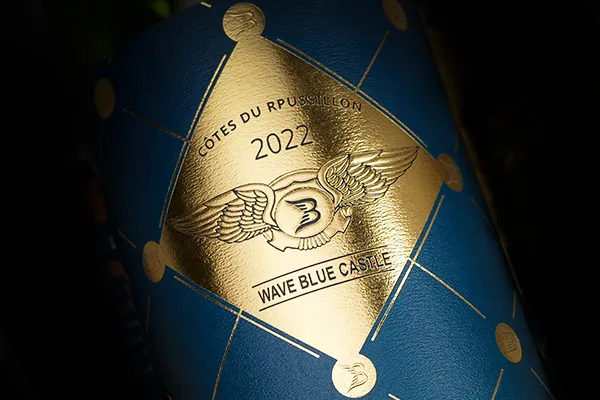
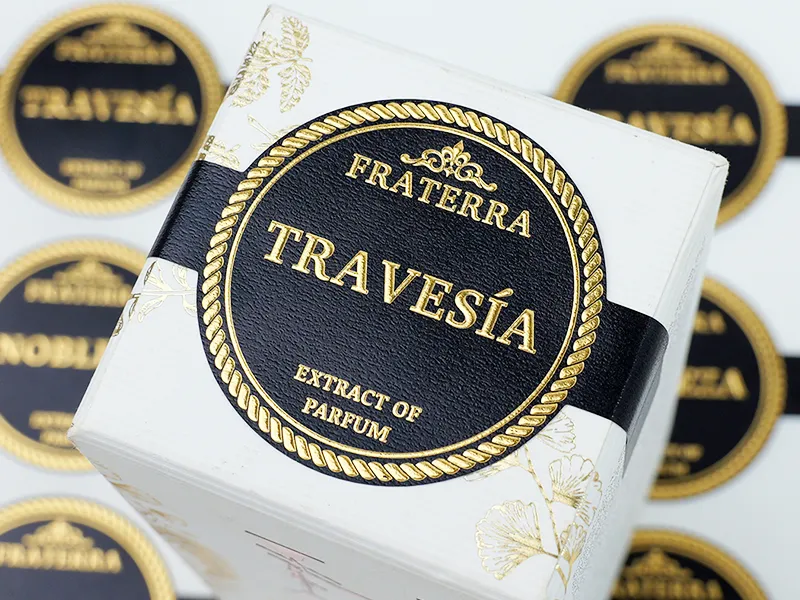
- Tactile Enhancements: Integrates spot gloss, hot foil stamping, النقش, and matte lamination to build dimensional contrast.
- Primary Targets: Best for outdoor industrial decals, heavy machinery ratings, and luxury beverage packaging.
Method Selection and Material Matching
A successful label build requires precise technical alignment between the print method, the adhesive chemistry, and the container surface characteristics.
- Substrate Compatibility: Pairs cellulose paper with dry, indoor retail applications, and synthetic films like BOPP or PET with wet, cold environments.
- Prepress Validation: Verifies safe zones, bleed margins, line weights, and barcode density prior to plates or digital imaging.
- Eco-Integration: Deploys water-based inks, energy-efficient UV curing, and FSC-certified stocks to meet corporate environmental mandates.
Waterproof and Durable Custom Labels Solutions
Relying on paper substrates in moisture-heavy environments leads to label failure, so high-performance film stocks must be paired with matched adhesives and protective laminates.
Selecting the Right Face Stock Materials
Selecting a durable custom label starts with isolating the correct face stock material for your specific application. Paper substrates fail when exposed to moisture or abrasion, making synthetic films the standard for demanding conditions.
- Polyester and Vinyl: These materials offer maximum resistance to moisture, heavy wear, and curved-surface applications. Polyester handles extreme temperature ranges and chemicals, while vinyl provides high conformability.
- Polypropylene: Biaxially Oriented Polypropylene (BOPP) serves as a highly cost-effective, moisture-resistant choice for general packaging, retail containers, and cosmetics.
- Polycarbonate and Anodized Aluminum: These stocks suit tough industrial environments, rating plates, and heavy machinery labeling where physical impact is common.
Applying Protective Coatings and Laminates
Print protection prevents ink degradation, running, or scuffing during shipping and retail handling. While varnishes offer basic protection for dry environments, true durability requires physical barriers.
Adding a laminating sheet or a protective top layer seals the printed ink beneath a clear plastic barrier. This prevents surface scratches and chemical contact from destroying the legibility of your graphics.
Securing complete construction protection requires matching the face stock, لاصق, and topcoat together. For example, pairing a UV-resistant laminate with outdoor-grade vinyl preserves label legibility during long-term exposure to sunlight and harsh weather.
Artwork and File Preparation Standards
Prepress precision directly impacts final print quality and edge durability. Proper file construction prevents registration issues and ensures compliance information remains scannable.
- Color Mode and Resolution: Designers must use CMYK color mode and high-resolution raster images of at least 350 dpi to ensure crisp output on digital or flexographic presses.
- Bleeds and Safe Zones: Files require a minimum 3 mm bleed on all sides to prevent white edges after die-cutting, alongside a minimum line thickness of 0.57 pt (0.2 mm) for fine design elements.
- Typography Legibility: Keep critical information, regulatory warnings, and ingredient lists at 10 pt or larger to guarantee reading contrast.
Defining Environmental and Substrate Exposure Requirements
Adhesive performance relies on a complete understanding of the application environment. A label that adheres perfectly to a warm, dry cardboard box will quickly peel if applied to a cold, wet plastic bottle.
Buyers must assess moisture levels, UV exposure, chemical contact, and temperature swings before ordering. These field conditions dictate whether you need a standard acrylic adhesive or a specialty freezer-grade formulation.
Make sure to match the adhesive formulation to your container surface and application conditions. Low-surface-energy plastics like polypropylene and polyethylene often require high-tack adhesives to prevent edge lifting. Experienced custom label manufacturers can help brands select suitable adhesives and meet specific performance and compliance requirements.
How to Choose Custom Label Finishes for Appearance and Protection
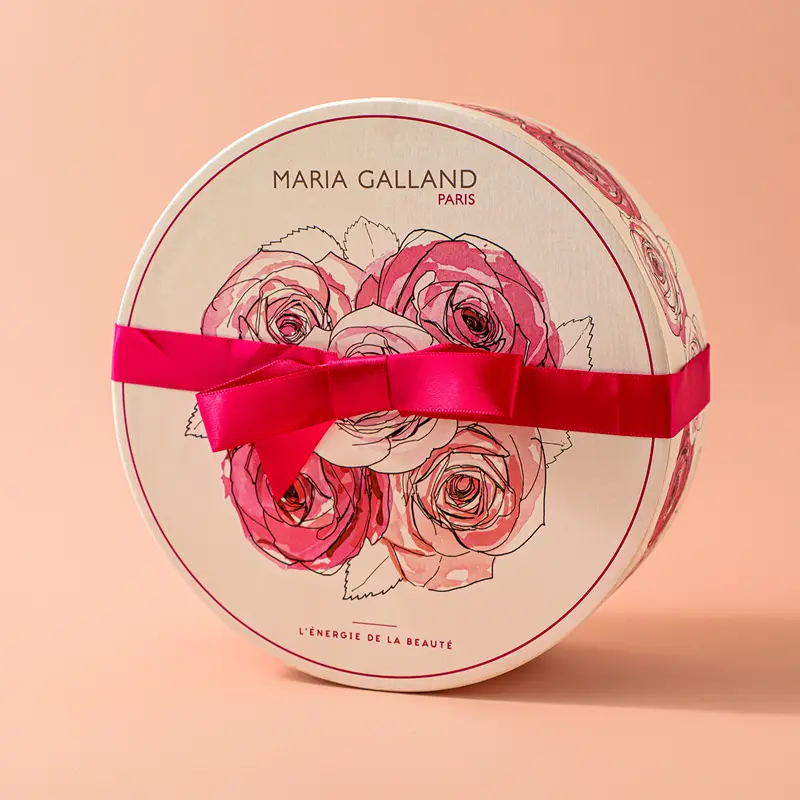
Label finishes enhance packaging appearance and help protect printed designs from damage. Brands can choose different finishes based on their visual preferences, product requirements, and expected handling conditions.
Tactile Finishes That Create Premium Physical Connections
Physical interaction with packaging heavily influences purchasing behavior. Adding sensory depth to product labels shifts the consumer experience from a passive glance to active physical engagement, which establishes a stronger memory of the brand before the container is even opened.
- Soft-touch lamination: This upgrade adds a velvety, high-end texture to packaging. It significantly increases the perceived retail value of a product at a relatively low production cost.
- النقش: By creating raised, three-dimensional elements, embossing makes logos, brand marks, and seals feel crafted and structurally distinctive.
- Tactile feedback: Raised textures encourage customers to hold the product. This physical handling strengthens shopper connection and reinforces brand recall.
Visual Contrast Techniques to Highlight Key Brand Elements
A successful label design guides the buyer’s eyes to the most critical product details first. Combining flat backdrops with reflective metallic elements or targeted glossy highlights creates a dynamic visual structure that commands attention on competitive retail shelves.
- بقعة الأشعة فوق البنفسجية: Applying this targeted gloss coat creates a sharp visual contrast against matte backgrounds, drawing immediate attention to brand logos or product names.
- Foil accents: Hot foil stamping and cold foil applications introduce metallic highlights that communicate premium luxury and high quality.
- Selective application: Limiting high-impact finishes to key areas prevents visual clutter, ensuring the label remains clean, legible, and easy to read.
Overall Coatings to Establish Brand Personality and Presence
The overall sheen of your label serves as the visual voice of your product. Whether a brand aims for energetic shelf pop or a restrained, minimalist aesthetic, the top coat establishes an immediate emotional connection with the target demographic.
- Glossy finishes: These coatings maximize light reflectivity to make colors appear brighter and more saturated under harsh retail display lights.
- Matte coatings: By reducing glare, matte finishes support a modern, understated, or highly sophisticated premium brand identity.
- Die-cut shapes: Custom outer contours break the standard rectangular grid of retail displays, helping a brand stand out as highly unique and innovative.
Protective Finishes That Maintain Brand Credibility and Trust
A premium design loses its impact if the label degrades before the consumer uses the product. Protective layers ensure that transit friction, moisture exposure, and handling do not compromise the professional presentation of the brand.
- التصفيح: This clear film barrier shields printed graphics from moisture, oils, abrasion, and temperature fluctuations during shipping and distribution.
- Varnishes: A budget-friendly liquid coating that offers essential surface protection to keep labels looking clean throughout their commercial lifecycle.
- Pristine packaging: Preventing scuffed, worn, or damp labels protects consumer trust and signals reliable, professional product quality.
الأسئلة المتداولة
What material is best for product labels?
There is no single best material, as selection depends on your product’s environment. Coated or uncoated paper is highly cost-effective and premium-looking for dry, indoor goods. For products exposed to moisture, refrigeration, or oils, biaxially oriented polypropylene (BOPP) or polyethylene (PE) films are ideal. For long-term outdoor, industrial, or heavy-abrasion applications, polyester (PET) or vinyl films offer the best durability.
Are vinyl labels better than paper labels?
Vinyl labels are superior to paper labels in terms of durability, water resistance, tear resistance, and outdoor longevity, making them ideal for bath products, beverages, and industrial gear. But paper labels are better when you require a highly cost-effective option for dry, short-term indoor applications, or when your brand relies on a natural, textured, or artisanal aesthetic.
What makes a label waterproof?
A label is waterproof when it combines three technical elements: a synthetic film facestock (such as BOPP, PET, or vinyl) that does not absorb moisture, a permanent acrylic-based adhesive that maintains its bond when wet, and a protective layer like film lamination or UV-cured inks to seal the print against water degradation and physical scuffing.
What type of adhesive is used for product labels?
Most product labels use pressure-sensitive adhesives (PSA) made from acrylic or rubber chemistries. These are formulated into permanent grades for long-term branding, removable grades for clean peeling without residue, or repositionable grades for precise alignment during application. Specialized variations include freezer-grade, high-temperature, and ultra-high-tack adhesives.
Can custom labels withstand refrigeration?
نعم, custom labels can reliably withstand refrigeration if they are constructed with moisture-resistant synthetic films like BOPP or vinyl, paired with a cold-temperature or freezer-grade adhesive. For best results, apply the labels to a clean, dry container at room temperature and allow the adhesive to cure for 24 hours before exposing the package to cold or condensation.
What labels are best for bottles?
Waterproof BOPP film labels with a permanent adhesive are the overall best choice for most bottles, particularly for refrigerated beverages, craft beers, and cosmetics. For dry luxury products like wine, textured paper labels offer a premium feel, while shrink sleeves are best for highly contoured or uniquely shaped bottles.
What is the difference between paper and film labels?
The main differences lie in composition, durability, and cost. Paper labels are made from organic cellulose, making them economical and tactile but vulnerable to tearing and moisture. Film labels are made from synthetic polymers like polypropylene or polyester, offering excellent tear, water, chemical, and UV resistance at a higher unit cost.
How are premium labels made?
Premium labels are manufactured using high-quality substrates like textured papers, metallic foils, or clear films. They are printed with advanced digital, flexographic, or offset technologies, and enhanced with high-value embellishments such as soft-touch lamination, spot UV, hot foil stamping, and embossing, followed by high-precision die-cutting.
What label finish should I choose?
Choose a gloss finish if you want high-impact, vibrant colors and a modern, high-shine appearance. Select a matte finish for a sophisticated, low-glare, and elegant look that improves text readability. For a velvety tactile feel, go with a satin or soft-touch finish. Always ensure you pair the finish with a protective lamination if your product faces moisture or heavy handling.
Final Thoughts
Choosing the right custom labels requires balancing appearance, durability, and application requirements. The right materials, مواد لاصقة, and finishes help brands maintain consistent packaging quality and avoid common issues such as peeling or poor adhesion.
Before moving into full production, brands should test label samples on their actual containers. Working with an experienced label manufacturer can help identify the right solution and ensure reliable production results.
📖 Complete Guide
← Back to “What Are Custom Labels?” — The Complete Guide
Learn everything about custom labels: types, مواد, printing techniques, cost factors, and how to choose the right solution for your brand.
Related Products You May Like
Want to know more about Meikei? Visit check our FAQ or explore explore our custom label printing services.