Supplement shelves are changing faster than the formulas inside the bottles. New formats, stricter legibility expectations, and tamper-evident features are reshaping what a supplement package has to do. Emerging trends in supplement packaging reward brands that plan the pack as carefully as the pill inside it.
Most of the shifts below come from three pressures: compliance rules that keep tightening, retailers that demand clean, scannable shelves, and shoppers who read labels more carefully than ever. This guide walks through the formats, the design moves, and the practical checks for each update, with supplier questions at the end.
Supplement Packaging Formats Gaining Ground
Format choice now leads the packaging conversation: stick packs, tubs, and blisters each win different shelves and different shoppers.
Stick Packs and Sachets
Stick packs keep gaining share for powders and drink mixes because they dose precisely, travel well, and cost less to ship than bottles. The label area is small, so brand and benefit language has to lead, with the fine print moving to the back or a peel-open panel. Print quality carries the load, because a soft dot or a crooked fold shows instantly at that size.
Tubs and Canisters
Wide-mouth tubs stay the default for daily-use powders, and the trend pushes them toward cleaner wrap labels, tamper bands under the lid, and scoop-holding structures. The larger label panel makes room for a readable Supplement Facts panel without shrinking the brand. Matte film wraps now dominate the tub, because they survive the constant two-handed handling.
Blister Packs
Blister formats grow where single-dose control matters, especially in clinical and travel lines. They protect each dose, but they ask more of the printed foil and board, because the lot code and expiry have to survive through individual cavities. Push-through lids and peel-open foils split the market between easy access and child safety. Every format above answers a different shelf moment, which is why the packaging decision starts with where the product will be sold.
Packaging Trends for Capsules, Powders, Liquids, and Gummies
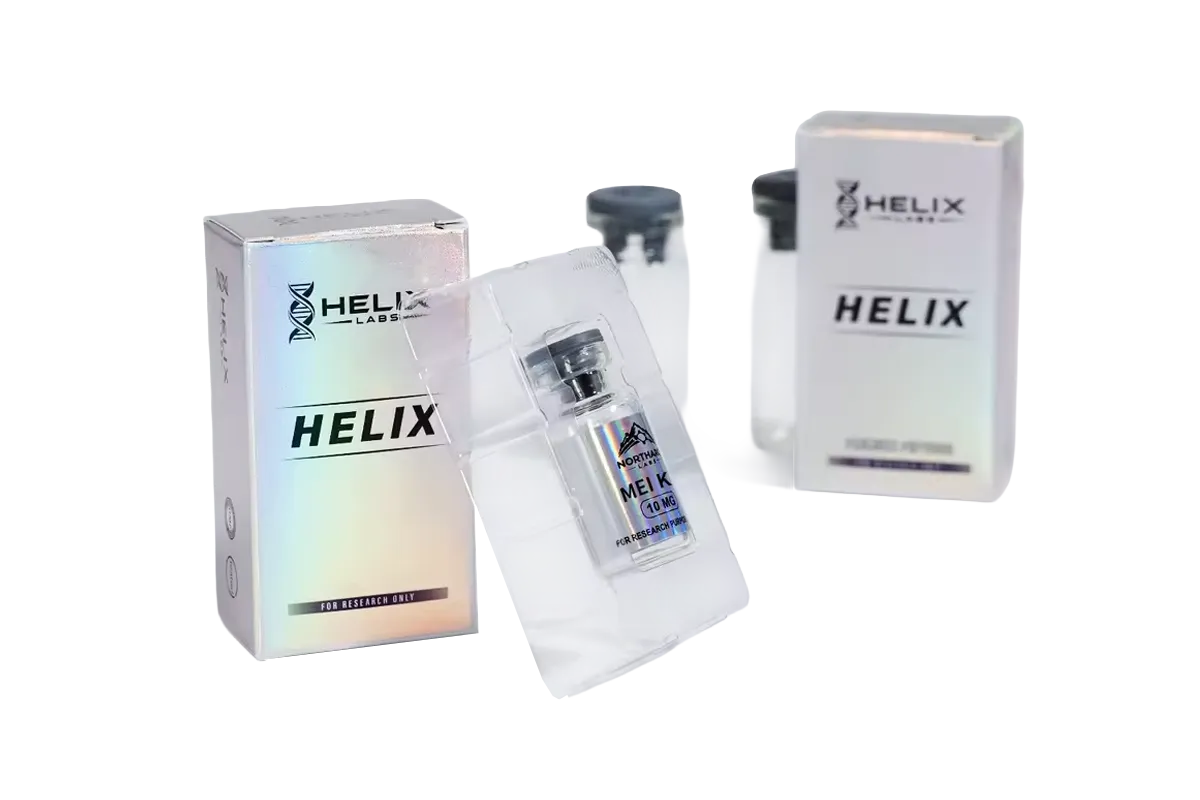
Each delivery format pulls its own packaging logic: capsules want protection, powders want resealability, and gummies want labels that survive handling.
The format decides the packaging problem, so trends split cleanly by delivery type. The table below maps the current direction for each.
| شكل | Typical Packaging | Trend Driver |
|---|---|---|
| Capsules and tablets | Bottles with shrink bands, carton wraps | Moisture protection and trust |
| Powders | Tubs, stick packs, resealable pouches | Convenience and portability |
| Liquids | Glass or PET bottles with dropper labels | Stability and dosing accuracy |
| Gummies | Wide-mouth jars with wraparound labels | Handling-heavy shelf life |
Capsules and Tablets
Capsule bottles keep the classic silhouette but add more protection layers: induction seals, shrink bands, and desiccant-friendly closures. The format-by-format comparison sits in our article on the best packaging options for supplement products. The label has to wrap cleanly around the bottle shoulder, which keeps sizing work at the center of every capsule line update. Square and rectangular bottles are also gaining floor space, because they pack more doses per pallet.
Powders
Powder brands split between large tubs for the pantry and stick packs for the gym bag, and many now run both. The tub label carries the full Supplement Facts story, while the stick pack keeps a scannable code and a one-line benefit. Resealable pouch formats sit between the two, offering the portability without the per-dose packaging cost.
Liquids and Gummies
Liquids favor amber glass and dropper labels that survive the dosing ritual, while gummy jars need labels tough enough for constant opening and greasy fingers. Film facestocks keep winning both formats because they shrug off the moisture and the handling. Dropper bottles also push labels into booklet and peel-back formats as dosing details multiply.
Design Trends for Supplement Bottles and Labels
Supplement design is splitting into two clear lanes: clinical minimalism for trust, and flavor-driven color for everyday lines.
Minimal and Clinical Design
White space, clean typography, and a restrained palette signal purity and science, which is why clinical brands avoid decorative clutter. The risk is sameness, so the brand mark and one accent color carry most of the differentiation load. Soft-touch coatings and embossed logos add the premium feel that flat print cannot.
Color and Flavor Cues
Everyday lines go the other way, using fruit colors and soft gradients to make gummies and drink mixes feel like food rather than medicine. The color still has to leave enough contrast for the Supplement Facts panel, which is the part regulators and careful shoppers read first. Flavor naming follows the color, and both get proofed together before plates are made.
Label Hierarchy and Supplement Facts
Bottle labels now follow a strict reading order: benefit, brand, then facts. The facts panel moves to the back or a peel-out booklet when the front gets busy, and its type size has to stay above the minimum even at that distance. Sizing the panel to the bottle is its own discipline. See our article on standard label sizes for the measurement side.
Supplement Packaging Printed to Compliance Standards
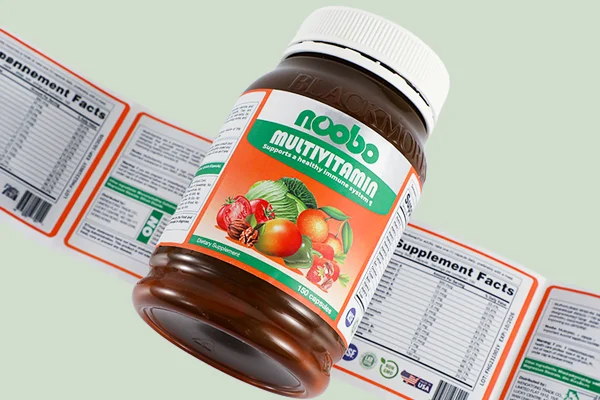
Tamper Evidence, Convenience, and Product Protection
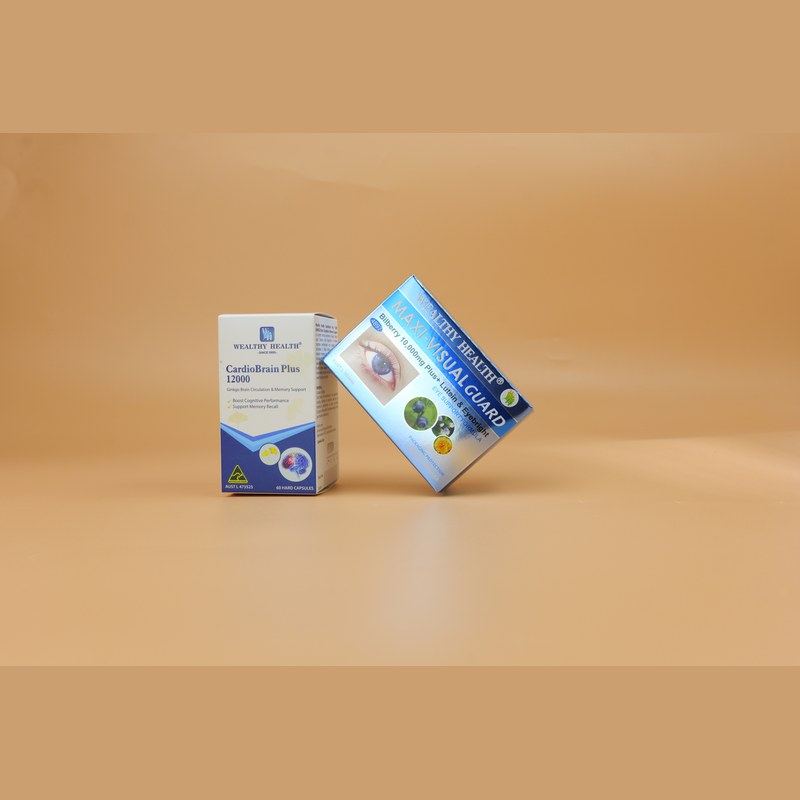
Protection features are moving from compliance boxes to selling points: shoppers now look for the seal, the freshness, and the easy open.
Tamper-Evident Seals and Bands
Induction seals, shrink bands, and tear strips give shoppers the confirmation that the pack has not been opened. The printed band doubles as a brand strip, so the security feature and the label artwork get designed together rather than layered on. Void and destructible label materials add a second layer for high-value clinical products.
Convenience Features
Wider openings, one-hand lids, and peel-and-reseal pouches respond to the aging core shopper and the grab-and-go channel. Every convenience feature adds a sealing or labeling step, which is why the format and the packaging line get specified together. Convenience also changes the label: reseal edges need the label clear of the closure zone.
Moisture and Oxygen Protection
Potency claims die in humid cabinets, so barrier films, foil liners, and desiccants are standard on premium lines. The label material plays the same game. See our article on what makes film labels different from paper labels for the durability side of the choice. Storage tests on the actual filled pack settle the argument faster than any material sheet.
Supplement Packaging Updates by Private Label Brands
Store-brand supplement lines update on a different rhythm: category resets, compliance deadlines, and range-wide rollouts drive their packaging changes.
Why Store Brands Update Packaging
Retailer-owned supplement brands refresh packaging when the aisle resets, when a supplier changes, or when a compliance deadline arrives. The updates favor formats that stack well on the shelf and labels that read clearly from two positions away, because store brands compete on trust and price together. A single reset often touches dozens of SKUs, so the artwork workflow decides how fast the aisle turns over.
Compliance and Trust Signals
Store-brand labels lean on the same signals as national brands: a clean Supplement Facts panel, benefit language the formula supports, and verification marks where the retailer holds them. The compliance burden is identical, which is why these programs demand documentation with every order. Government resources such as Nutrition.gov lay out the shopper-side expectations that these labels answer.
Working with Packaging Suppliers on Updates
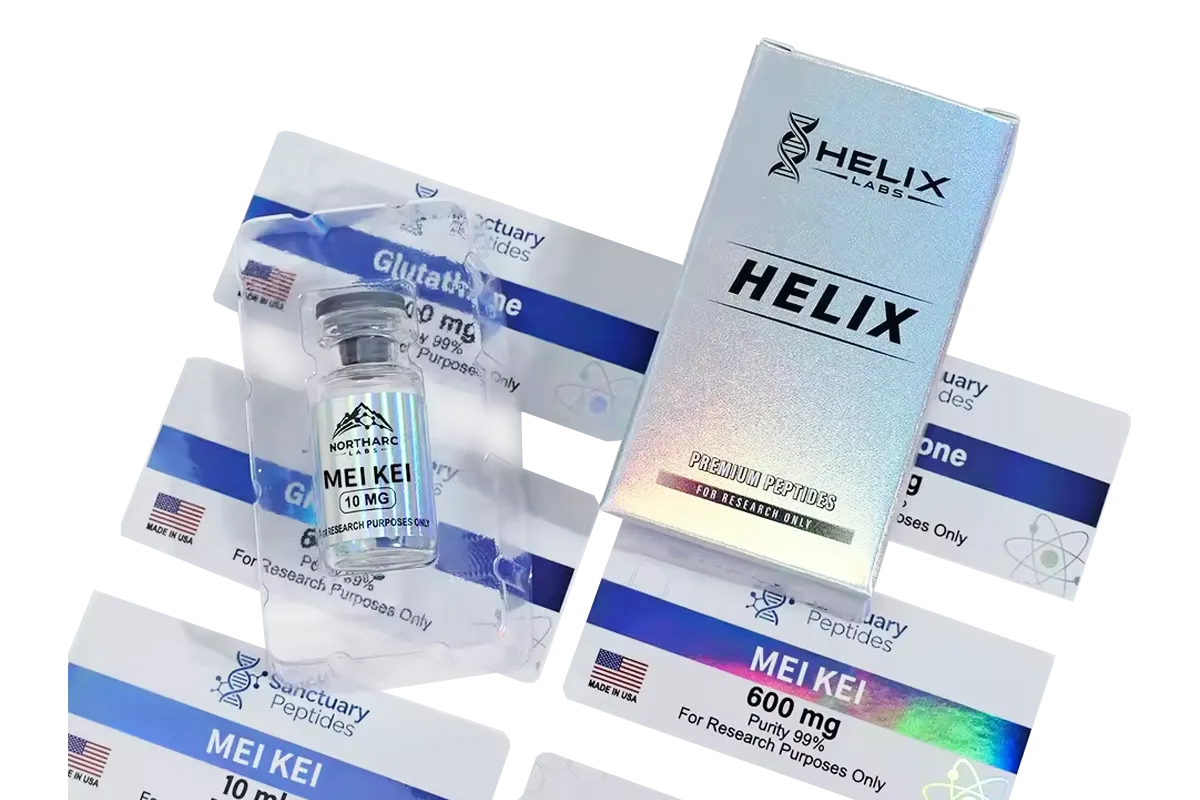
Range-wide updates multiply artwork versions, so the supplier workflow matters as much as the design. See our article on peptide labels for how a supplement label program runs from spec to production. Batching versions under one color standard keeps the whole aisle consistent.
الأسئلة المتداولة
What is the most trustworthy supplement company?
No single company holds the title, because trust is signaled rather than ranked: third-party testing, transparent sourcing, and clean manufacturing records matter more than the brand name. On the shelf, that trust translates into verification marks, complete Supplement Facts panels, and benefit language the formula supports. Buyers who compare those signals make better choices than ones who follow brand recognition alone.
Why do brands change packaging?
Brands change packaging to refresh shelf presence, meet new compliance rules, cut material costs, or support a reformulation. In supplements, the usual triggers are updated Supplement Facts rules, a new format like a stick pack, or a sustainability target. The redesign is often the visible part of a deeper supply-chain decision.
What are the 5 P’s of packaging?
The five P’s most often cited are product, protection, presentation, preservation, and price, though versions vary between textbooks. For supplement packaging, the list reads as a checklist: what is inside, what protects it, how it looks, how long it stays potent, and what the pack costs per unit.
What are the regulations surrounding dietary supplements?
In the United States, dietary supplements are regulated under the Dietary Supplement Health and Education Act, with labeling, manufacturing, and claim rules enforced by the FDA and advertising rules by the FTC. Labels must carry a Supplement Facts panel, an ingredient list, and manufacturer details. Brands should route label copy through a compliance review before printing.
What is the most purchased supplement?
Multivitamins remain the most purchased supplement category, with vitamin D, magnesium, and omega-3s among the leading single-ingredient products. The answer shifts with region and survey year, but the packaging lesson holds: the biggest sellers use the clearest benefit language on the front panel.
What should you check when buying supplements?
Shoppers are advised to check the Supplement Facts panel, the ingredient list, the serving size, and any third-party verification marks. On the packaging side, that means the panel must be readable at small label sizes and the claims must match what the formula supports. Poor legibility reads as poor quality before a single capsule is opened.
What does DV mean on a vitamin bottle?
DV stands for Daily Value, a reference amount set for nutrients and shown as a percentage on the Supplement Facts panel. It tells the shopper how much of the daily reference a serving provides. The printed percentages come from the brand’s formula data, so label artwork must match the certified values exactly.
Why are vitamin D, calcium, iron, and potassium listed on labels?
These four nutrients appear on Nutrition Facts labels because the FDA requires them, since intake data shows they are commonly under-consumed. Supplement Facts panels follow their own required list, which changes with the product formula. Both panels are compliance documents, so the print has to match the rulebook, not the marketing plan.
Does a dietary supplement need to be FDA approved?
No. Dietary supplements do not need FDA approval before they are marketed, unlike drugs. Manufacturers are responsible for safety and for labeling that complies with FDA rules, and the agency can act when products are unsafe or mislabeled. That is why brands build their own compliance review into every label order.
How do I find out if a supplement is FDA approved?
There is no FDA approval to find for a conventional dietary supplement, because the agency does not approve them before sale. What brands can show instead is compliance documentation: label review, facility registration, GMP records, and third-party test results. Those documents are the practical equivalent that shoppers and buyers should ask for.
Why does the FDA not regulate dietary supplements?
The premise is not quite right: the FDA does regulate dietary supplements, just under a different framework than drugs. Under the Dietary Supplement Health and Education Act, manufacturers are responsible for safety and labeling, and the agency acts when products are unsafe or mislabeled. The practical difference is no pre-market approval, which pushes more responsibility onto the brand’s own quality process.
Conclusion
Supplement packaging trends all point the same direction: formats chosen for the delivery type, labels built around a legible Supplement Facts panel, and protection features that double as trust signals. Brands that specify those three layers together ship updates that hold up on the shelf and in review, without reprinting because a panel fell out of tolerance.
For supplement brands planning a packaging update, Meikei prints labels, folding cartons, and rigid boxes with Supplement Facts precision, أخذ العينات, and reorder consistency in one workflow.