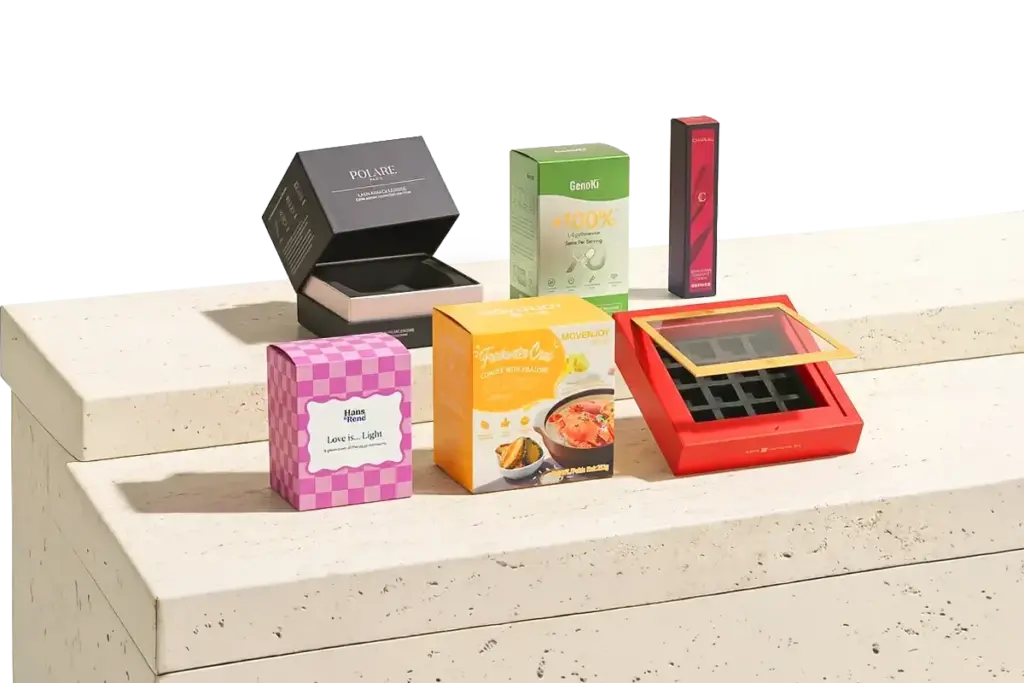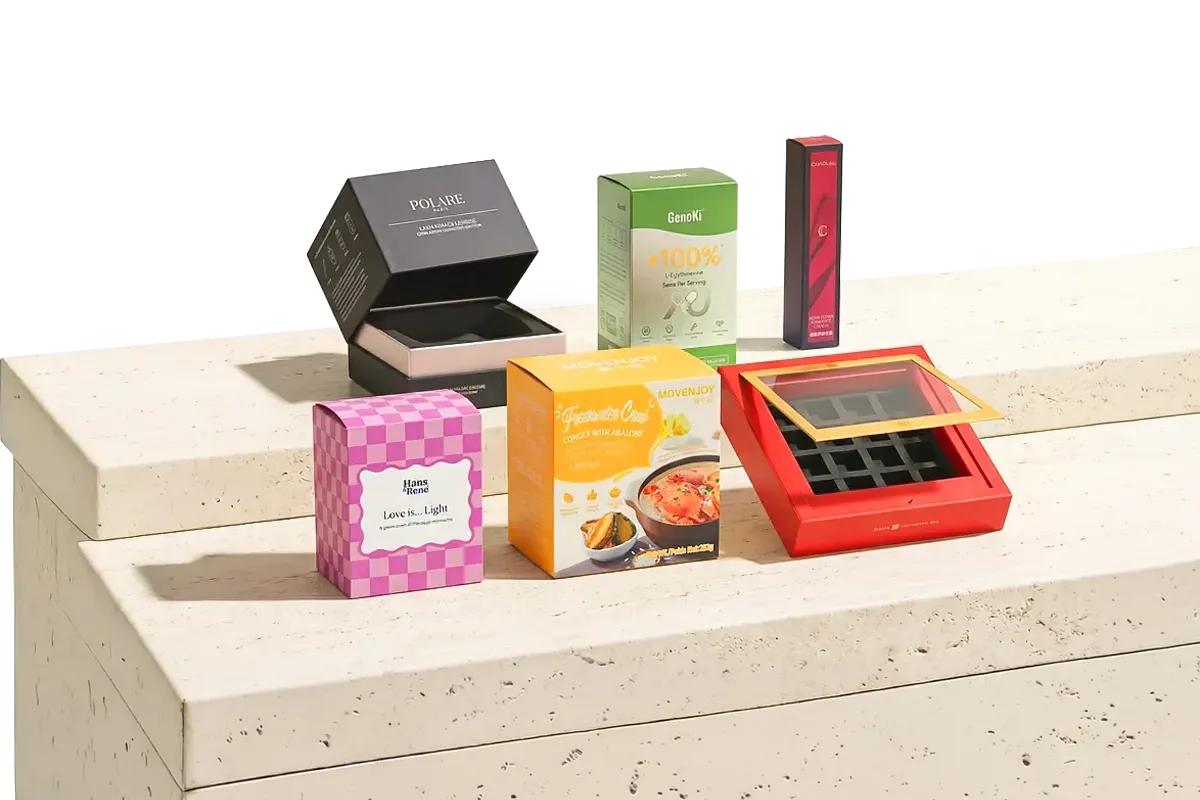
Folding cartons are the printed paperboard boxes that carry skincare sets, supplements, electronics, and confectionery to the retail shelf. Brands order them by the thousand because they ship flat and hold premium print better than other formats.
Ordering them well takes more than picking a board and a shape. Board grade, structure, print method, and finishing interact, and a shallow crease can crack a beautiful print. The sections below cover what cartons are, what goes into them, and how a factory turns flat sheets into finished packaging.
What Are Folding Cartons?

Carton quality comes from board grade, structural design, die cutting, creasing, and finishing working as one system.
A folding carton is built from a single sheet of paperboard, typically 0.3 to 1.1 mm thick, printed, die cut, creased, and folded into its final form. The defining trait is delivery state: cartons leave the factory glued but flat and open through folds rather than rigid walls.
Because the board starts flat, printers run it through high-speed presses and stack thousands of cartons in little space. The same geometry suits automated erecting and filling lines, which is why food and pharma brands run them at scale.
The delivery state also shapes the buying process. Cartons quote by sheet size, print process, and finishing rather than by assembled volume. The same order can scale from short test runs to full production without changing tooling, which is why the format spans launch brands and global product lines alike.
Folding Cartons vs. Rigid Boxes vs. Corrugated Boxes
Three formats dominate paper packaging, and buyers confuse them constantly. Each one trades print quality, strength, and shipping cost differently.
- Folding cartons use thin, printable paperboard and rely on creases for shape.
- Rigid boxes use thick wrapped board, arrive pre-assembled, and cost far more to ship.
- Corrugated boxes sandwich a fluted medium between linerboards, trading print finesse for stacking strength.
| Format | Board | Ships As | Best For |
|---|---|---|---|
| Folding carton | 0.3 to 1.1 mm paperboard | Flat, glued | Retail-ready primary packaging |
| Rigid box | 1 to 3 mm wrapped board | Assembled | Luxury gift and flagship products |
| Corrugated box | Fluted medium plus liners | Flat, unglued | Shipping and secondary packing |
For products under roughly 1 kg that need shelf presence, the folding format wins on unit cost and freight.
Why Brands Choose Folding Cartons
The format earns its place across cost, logistics, and shelf performance. Four advantages explain most purchase decisions.
- Freight compression: a pallet of folded cartons holds tens of thousands of flat units.
- Machine compatibility: auto-bottom styles keep filling speeds high and labor low.
- Print quality: coated board delivers graphics and foil that corrugated struggles to reproduce.
- Recyclability: paperboard recycles through established fiber streams, and FSC-certified grades add a credible claim.
The format also travels well through the retail chain. Flat delivery keeps warehousing cheap, and standardized footprints slot into existing shelf planograms without custom fixtures. Printed panels carry the messaging a secondary package would otherwise have to hold.
Anatomy of a Folding Carton
Every carton shares a small vocabulary of parts, and suppliers use these terms in quotes and dielines. Learn them before your first technical conversation with a manufacturer.
- Panels: the large front, back, and side faces of the box.
- Tuck flaps: closure flaps that slide into the body.
- Dust flaps: small flaps covering the side gaps.
- Glue seam: the bonded edge that forms the tube.
- Crease lines: pressed channels that let the board fold without cracking the print.
What Products Use Folding Cartons?
Any product under a kilogram that sells boxed is a natural fit for the format.
Cartons serve any product that needs protection, branding, and shelf communication at consumer scale. Four sectors dominate demand.
Cosmetics, Skincare and Fragrance
Beauty brands treat the carton as part of the product, carrying the brand before the customer touches the jar.
- Premium SBS board with hot foil and embossed logos.
- Soft-touch lamination for a velvet surface feel.
- Sleeves and windowed cartons that let the product show.
Limited editions and seasonal coffrets push this further, since short-run digital cartons let a beauty brand refresh artwork without commissioning new plates.
Food, Beverage and Confectionery
Food applications add compliance constraints. Cartons for pasta, cereal, tea, and chocolate run at high volume on automated lines, so machine compatibility matters as much as design.
- Food-grade board with grease barriers for bakery items.
- Clear lot and expiry marking printed at line speed.
- Structure sized for standard filling equipment.
Regional compliance adds another layer, because food-contact rules differ by market and the board, ink, and coating all need to qualify together.
Healthcare, Supplements and Pharma
Pharma cartons carry compliance features other sectors never see. Certification discipline is the entry ticket.
- Leaflet panels and dosage windows.
- Braille, required on EU medicine packaging.
- Tamper-evidence features and traceable lot data.
- ISO 9001 quality systems with traceable board sourcing.
Serialization requirements keep tightening across markets, so cartons increasingly carry data-matrix codes and tamper features designed in from the first dieline rather than squeezed in later.
Retail, Electronics and Luxury Gifting
Small electronics, accessories, and gift programs use cartons with custom inserts and trays. The carton frames the product while the insert does the protective work.
Unboxing has become part of the product experience in this segment, and the carton is where it happens. Magnet closures, ribbon pulls, and layered inserts turn a simple box into a ritual that buyers remember.
What Materials Are Used for Folding Cartons?
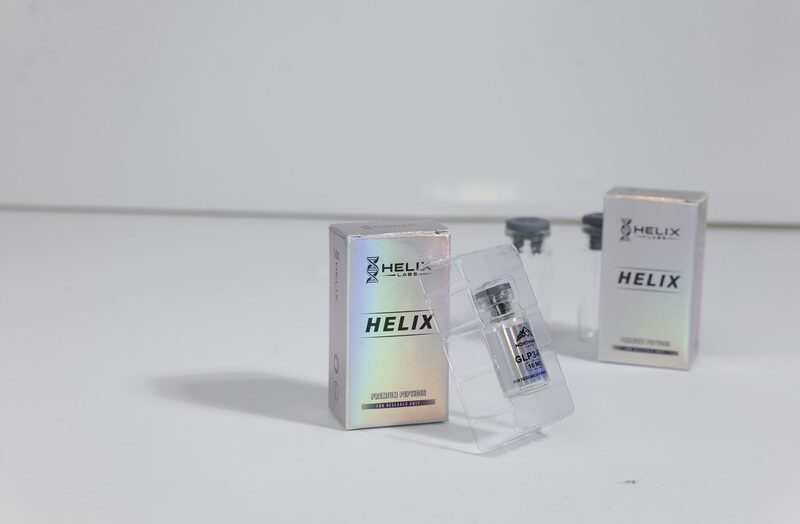
Board choice sets the ceiling on print sharpness, structural strength, and finish compatibility.
Suppliers quote by grade and caliper, so knowing the commercial grades makes quotes comparable.
SBS, FBB, Coated Kraft and Recycled Board
SBS (solid bleached sulfate) is the premium grade: brilliant white, clay-coated, and smooth enough for the sharpest halftone and foil work.
FBB (folding boxboard) layers mechanical fiber between chemical liners, delivering stiffness at lighter weights. Coated kraft trades whiteness for strength, while recycled board hits the lowest cost tier.
| Grade | Surface | Strength | Typical Use |
|---|---|---|---|
| SBS | Premium white, coated | Good | Cosmetics, premium food |
| FBB | White, multi-layer | High stiffness | Food, pharma, retail |
| Coated kraft | Natural, warm tone | Very good | Hardware, eco styling |
| Recycled board | Grey-brown back | Adequate | Value retail, indirect food |
Specialty Paperboards and Decorative Substrates
Beyond the commodity grades sits a decorative layer that defines premium packaging.
- Textured art papers in linen, felt-mark, and hammer finishes.
- Uncoated natural kraft for an honest, eco-first aesthetic.
- Soft aluminum lamination for metallic surfaces with paperboard stiffness.
- Film layers that add barrier properties for sensitive contents.
Foil, embossing, and spot UV interact differently with textured versus coated surfaces, so choose substrate and finish together.
Substrate choice also changes cost arithmetic. Commodity grades price by the ton and perform predictably, while decorative options carry minimums and longer lead times because many are made to order. Premium lines budget for that gap. Value lines stay on coated commodity grades and let print and finish carry the premium impression instead.
Matching Board Thickness to Product Weight and Structure
Caliper follows load, and spec errors here fail in transit rather than in the showroom. Three bands cover most retail products.
- 0.3 to 0.5 mm for light goods such as cosmetics, teas, and small accessories.
- 0.5 to 0.8 mm for standard cartons holding supplements, food, and electronics.
- 0.8 to 1.1 mm for products near a kilogram or structures with wide spans and lock bottoms.
Beyond 1.1 mm, creasing becomes unreliable and a rigid box is the better format. Build in a structural upgrade before jumping to heavier board.
What Are the Common Folding Carton Styles?
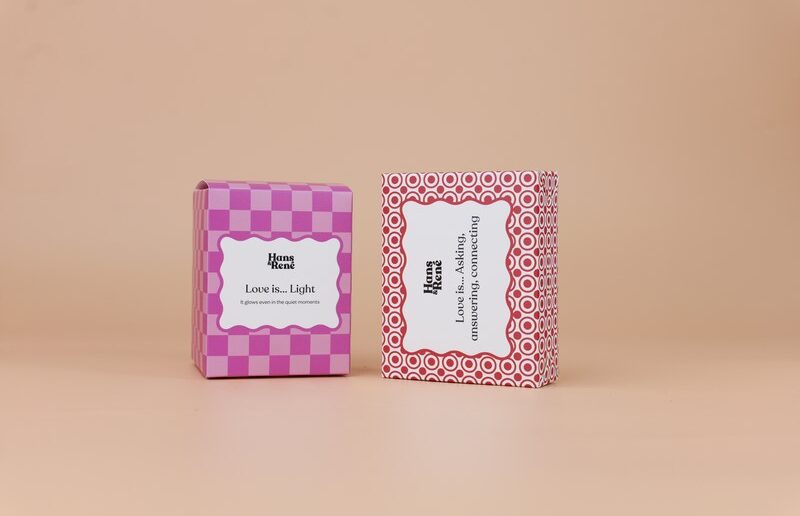
Each carton style trades assembly speed, board efficiency, and shelf behavior differently.
Carton styles multiply endlessly, but commercial packaging leans on a compact set of workhorse structures.
Tuck-End and Lock-Bottom Styles
Tuck-end boxes are the default of retail packaging. Four closures cover most briefs.
- Straight tuck end (STE): both flaps fold the same direction, hiding the raw edge from the front.
- Reverse tuck end (RTE): flaps fold from opposite directions, the standard pick for cosmetics and pharmacy boxes.
- Snap-lock bottom: folds into a locking base that carries real weight, assembled by hand.
- Auto-bottom: a pre-glued crash base that snaps square when opened, for machine erecting.
Sleeve, Folder and Wrapper Styles
Sleeves slide over a tray or bottle, adding print real estate without enclosing it. Folders and wrappers fold around the product and lock with tucks or a seal.
These styles earn their place through economy. A sleeve can refresh an existing carton for a promotion at a fraction of a full redesign. Folders ship the flattest of all formats, which trims both storage and freight, and retail teams use them for multi-packs, gift-with-purchase wraps, and seasonal overwraps on standard products.
Windowed, Tray-and-Lid and Display Styles
Windowed cartons die cut an opening and laminate clear film, letting bakery or gift sets show through. Tray-and-lid pairs a glued tray with a telescoping lid, and display styles turn the shipper into the merchandiser.
| Style | Closure | Best For | Erecting |
|---|---|---|---|
| Reverse tuck end | Tuck flaps | Light retail goods | Hand or machine |
| Snap-lock bottom | Locked base | Heavier contents | Hand |
| Auto-bottom | Pre-glued base | Automated lines | Machine |
| Sleeve | Friction | Promotions, trays | Machine |
| Tray and lid | Telescoping | Premium, gifting | Hand or machine |
How Are Folding Cartons Made?
Five production stages, and each one hands constraints to the next.
A carton moves through five production stages. Understanding the sequence explains most factory questions, from why dielines need approval before plates to why samples precede bulk.
Step 1: Structural Design, Dieline Creation and Sampling
Structural engineering starts with the product: weight, footprint, and how it enters and leaves the box. The designer draws a dieline, a flattened map of every cut, crease, and panel, calibrated to board caliper.
A white sample follows, then a printed proof, so buyers confirm fit and artwork before bulk. Skipping samples to save three days is how brands catch a 2 mm interference a hundred thousand units too late.
Step 2: Printing the Paperboard
Printing runs on flat sheets before any cutting. Meikei runs offset, flexo, screen, and digital presses under one roof, so the team matches process to run length and finish plan.
Ink choice must anticipate later steps. A foil stamp bonds very differently to UV-coated stock than to uncoated kraft.
Step 3: Die Cutting and Creasing
A steel-rule die holds sharpened blades and creasing rules in plywood. One pass cuts the outline while pressing fold channels into the printed sheet.
Creasing matters as much as cutting. A proper crease compresses the fibers so the board folds straight without cracking the print, and sub-millimeter registration keeps artwork centered.
Step 4: Folding and Gluing
The folder-gluer picks up cut sheets, folds them along their creases, and applies adhesive to the seam at rates of thousands of cartons per hour. Sensors reject misfeeds and misaligned seams on the fly.
Adhesive choice is a real specification, not a default. Hot-melt glues set fast for high-speed lines, while water-based cold glues suit porous recycled boards and food-adjacent applications. State the filling environment when ordering, because heat, cold, and product contact all change the right answer.
Step 5: Quality Inspection and Packing
Final inspection checks what buyers experience: fold registration, glue integrity, color against the proof, and finish placement.
Under ISO 9001, each batch carries inspection records tracing to the board lot. Cartons pack flat, wrapped and palletized for export.
Get Custom Folding Cartons Built for Your Products

How Are Folding Cartons Printed and Finished?

Print converts board into branding, and finishing converts print into perceived value.
The two decisions belong together because every finish has a print-method and substrate preference.
Choosing Between Offset and Digital Printing
For most branded cartons the real choice is between offset and digital. Sheet-fed offset delivers the sharpest image, the most consistent brand color, and the lowest unit cost at volume.
Digital eliminates plates, making it right for short runs, market tests, and versioned artwork where five variants would need five plate sets. Flexo earns its place on high-volume simple graphics, and screen printing stays for metallic and thick coatings.
| Method | Best Run Length | Strength |
|---|---|---|
| Offset | Mid to long | Color quality, cost at volume |
| Digital | Short, versioned | No plates, fast turnaround |
| Flexo | Long, simple | Speed, economy |
| Screen | Specialty | Thick and specialty inks |
A practical rule: let the artwork decide. If a design runs unchanged for a full season at steady volume, offset amortizes its plates and wins on unit cost. If artwork changes often, ships in several language versions, or launches in small test quantities, digital keeps each version affordable.
Hot Foil, Embossing, Spot UV and Soft-Touch
Finishes are where a carton stops competing on price and starts competing on feel. Four options define most premium briefs.
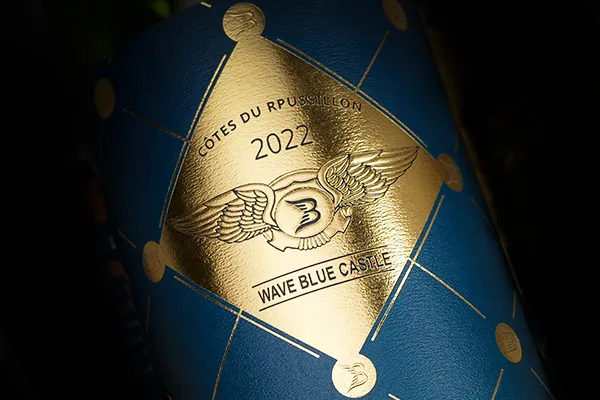
- Hot foil presses metallic pigment into the sheet with a heated die, the luxury cue on cosmetics and spirits.
- Embossing raises logos and patterns in relief, and blind embossing does it without ink.
- Spot UV drops high-gloss accents against a matte field.
- Soft-touch lamination seals the whole surface in a velvet-feel film that resists fingerprints.
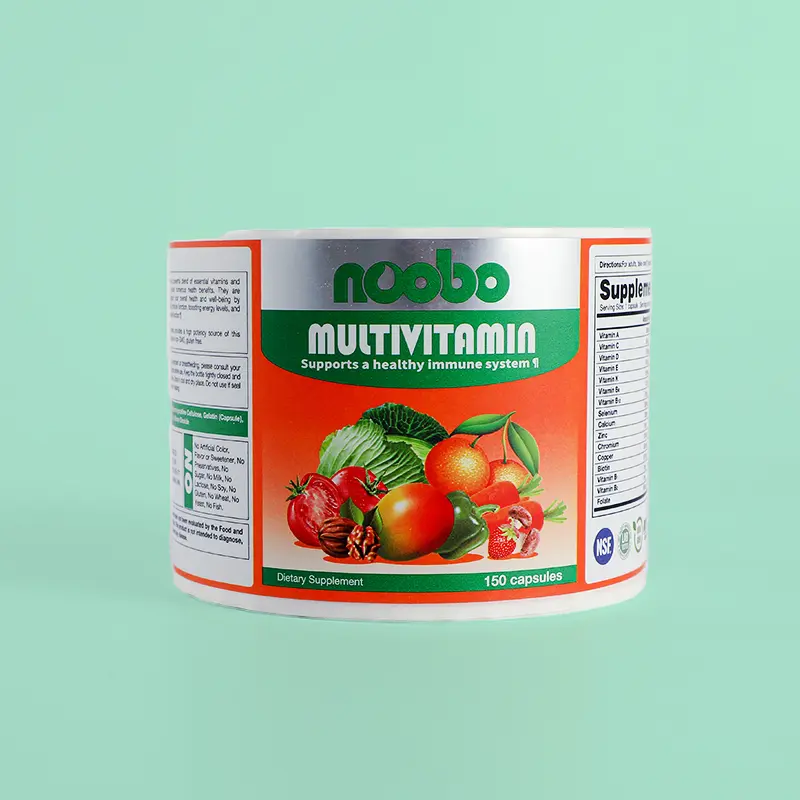
If you are weighing foil options, hot foil and cold foil differ in cost and detail in ways that apply to cartons exactly as they do to labels. A protective film also changes how colors read, so choosing the right lamination belongs in the artwork stage.
Color Proofing and Print Consistency
Brand color either repeats across every reorder, or it drifts. G7 calibration matches gray balance and tonality across presses, keeping a brand’s navy the same navy on a proof, a press sheet, and a reprint.
Meikei runs documented color control as standard practice. Ask any custom packaging manufacturer how reprints stay locked to original color, and accept only process answers, not promises.
Proofs come in grades, and the grade matters. A soft proof on a calibrated screen settles layout questions, while a contract proof on the actual board stock settles color questions, because substrate changes how every ink reads. Approve the contract proof and hold reprints to it.
What Should Buyers Consider When Ordering Folding Cartons?
The gap between a good carton program and a painful one usually traces to information, not manufacturing.
Three preparation areas decide the outcome, each one a conversation to have before the deposit.
Matching Structure to Product and Shelf Requirements
Start from the product outward: weight, fragility, how it inserts, and how the customer opens the box. A 600g candle set needs a lock bottom that a 30g lipstick carton never will.
- Product weight and fragility, measured on the real item.
- Insertion method on your filling line, hand or machine.
- Opening behavior the customer experiences on the shelf.
- Display orientation: standing, hanging, or through a window.
A structural drawing reviewed against the physical product beats a rendering of the wrong box.
Shelf context belongs in the same conversation. A carton that looks strong on a rendering can disappear in a crowded fixture. Review tear strips, hang holes, and panel hierarchy against the real retail environment, not just the product.
Sampling, MOQ and Lead Time Expectations
Reputable manufacturers insist on a proof cycle before any bulk run.
- White sample for fit, then printed proof for color and finish.
- Two proof rounds when finishes or structures are new.
- 5 to 7 day production after proof approval at Meikei.
- Short-run digital printing for market tests without offset volumes.
Minimum order quantities flex with size and print method. Plan seasonal launches backwards from the proof calendar, not the factory promise.
Quality and Sustainability Checks
Ask for the paperwork before the deposit. Certifications that cannot be produced on request are not certifications.
- ISO 9001 certificate covering process discipline.
- ISO 14001 coverage for environmental management.
- FSC chain-of-custody documentation proving the fiber story.
- Written per-batch inspection records for fold, glue, and color.
Sustainability questions deserve the same rigor as quality ones. Ask where the fiber originates, which coatings limit repulpability, and whether the supplier can document recycled content, because claims that cannot be traced do not survive an audit.
Frequently Asked Questions
What are folding cartons?
Folding cartons are printed paperboard boxes made from a single sheet, typically 0.3 to 1.1 mm thick, die cut, creased, and folded into shape. They ship flat and erect on packaging lines, keeping freight low for retail products.
How are folding cartons made?
Production runs five stages: structural design and dieline, printing, die cutting and creasing, folding and gluing, then inspection and flat packing. Each stage feeds the next, so proofing happens before bulk to lock fit, color, and finish.
What material is used for folding cartons?
Common grades are SBS for premium white surfaces, FBB for stiffness at light weight, coated kraft for strength, and recycled board for value. Specialty options include textured art papers and soft aluminum lamination.
What is the difference between folding cartons and rigid boxes?
Folding cartons use thin paperboard (0.3 to 1.1 mm) that creases and ships flat, economical at scale. Rigid boxes use thick wrapped board, arrive assembled, and convey luxury at several times the shipping cost, suiting flagship gifting over volume retail.
Are folding cartons recyclable?
Yes. Paperboard cartons recycle through standard mixed-paper streams, since the fiber re-pulps cleanly. Uncoated board, soy-based inks, and FSC stock strengthen the claim, while heavy foil and film windows modestly reduce recyclability.
Final Thoughts
Folding cartons earn their place through one system working together: the right board carrying the right structure, printed and finished for its shelf. Learn the vocabulary of grades, styles, and the five stages, and every supplier conversation gets shorter.
Weight under a kilogram, shelf presence, and volume economics point the same direction. SBS covers premium surfaces, FBB adds stiffness, and kraft or recycled board handles value programs. Proof every stage before bulk.
When you are ready to specify cartons for your own line, explore custom paper boxes from a manufacturer who reviews your dieline before quoting. Both steps cost nothing and prevent the mistakes this guide has mapped.